Are There Any Incas Left Today and Who Are Their Descendants
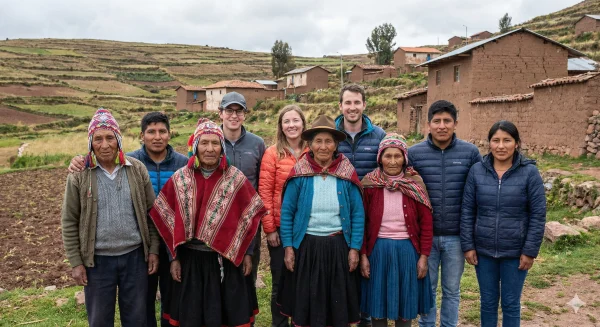
Technically, the "Inca" referred only to the ruling noble class, which was politically dismantled, but biologically and culturally, there are millions of descendants of the Incas today forming the demographic backbone of the Andes. To answer "are there any Incas left today," one must look at the indigenous Quechua populations who maintain the genetic markers and cultural heritage of the pre Columbian era.
Recent genetic studies by the National Geographic Genographic Project and Peruvian universities have traced specific chromosomal lineages in modern Cusco residents directly back to the Panacas (Royal Families) of the Inca period. Therefore, while no one holds the title of Emperor, the Quechua people and Inca ancestry remain physically present in the very lands their ancestors conquered.
The Connection Between Quechua People and Inca Ancestry
The Quechua people and Inca ancestry are inextricably linked through language (Runasimi) and shared historical memory, representing the largest indigenous linguistic group in the Americas. When analyzing are there any Incas left today, we find the answer in the Runakuna ("The People") who continue to inhabit the vertical ecology of the Andes.
These descendants of the Incas today have retained the physical adaptations for high altitude living such as larger lung capacity and distinct hemoglobin levels that allowed the Inca civilization to thrive at 11,000 feet. The connection is not just biological but deeply cultural; the social structures found in remote villages today are direct continuations of the Inca Ayllu system.
How Is Inca Culture Preserved Today Through Oral Tradition
Inca culture is preserved today through a rigorous system of oral storytelling, myth making, and intergenerational instruction that functions as a living library in the absence of written texts. How is Inca culture preserved today? It relies on the transmission of legends such as the myth of Inkarri, which prophesies that the severed head of the last Inca is growing a new body underground and will one day return to restore order.
Living Inca traditions in Peru are maintained by community elders who teach the younger generation to read the stars (Chaska) for agriculture and recount the history of the land, ensuring the legacy of the Inca civilization today survives in the collective mind of the people rather than in books.
Modern Day Inca Culture and the Traditional Andean Lifestyle
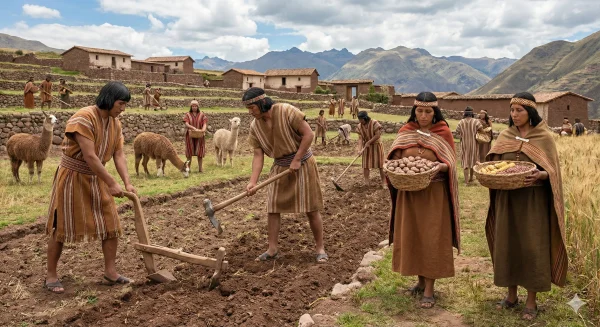
Modern day Inca culture is a syncretic adaptation that blends pre Hispanic survival strategies with elements introduced during the colonial era to create a unique traditional Andean lifestyle today. This lifestyle is characterized by a reliance on community cooperation over individual competition, a necessity in the harsh high altitude environment.
Living Inca traditions in Peru are functional, not decorative; they are seen in the continued use of llamas for transport in roadless areas and the consumption of chicha (corn beer) as a caloric staple and ritual beverage. The modern day Inca culture is resilient precisely because it is practical the ancient methods often work better in the Andes than modern Western solutions.
The Influence of Inca Culture in Modern Peru and Daily Life
The influence of Inca culture in modern Peru is woven into the very fabric of society, particularly through the concept of Ayni (sacred reciprocity), which dictates that today for you, tomorrow for me.
Modern day Inca culture manifests in the communal work parties known as Minka, where entire villages gather to harvest crops or build infrastructure without monetary payment. These Inca customs still practiced are vital for economic survival in rural areas.
Furthermore, the influence is dietary; the "superfoods" cultivated by the Incas quinoa, maca, and diverse potatoes remain the nutritional staples of the daily Andean diet, resisting the encroachment of processed industrial foods.
The Inca Language Spoken Today in the High Andes Communities
The Inca language spoken today is Quechua (specifically the Cusco Collao dialect), which serves as the mother tongue for millions and acts as the primary vehicle for transmitting the Andean worldview.
The link between Quechua people and Inca ancestry is linguistic; the language is agglutinative and highly expressive regarding the natural world, containing specific terms for the sound of falling water or the texture of stone that Spanish cannot replicate. How is Inca culture preserved today? It is preserved through Runasimi ("The Mouth of the People"), which encodes values of respect and connectivity. For example, the word Pacha simultaneously means "time" and "space," reflecting a non linear perception of reality inherited directly from the Inca sages.
Ancient Practices Surviving as Inca Customs Still Practiced
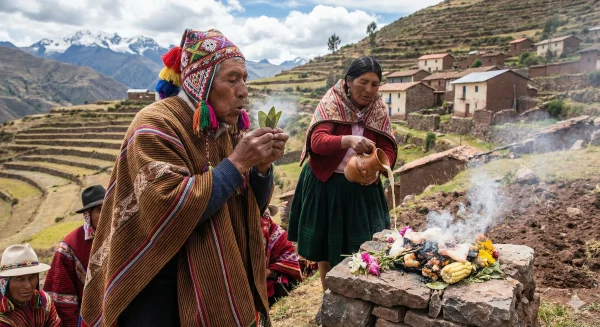
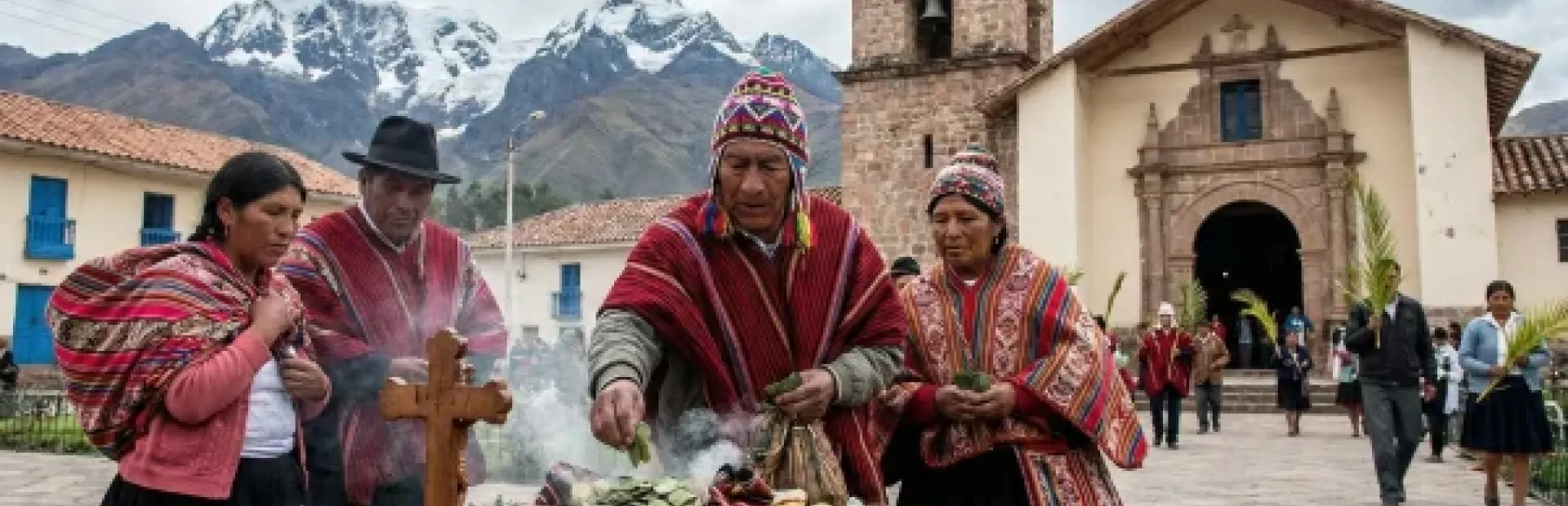
Inca customs still practiced are pervasive in the Andes, most notably in the spiritual relationship between the human and the non human world, known as animism. Living Inca traditions in Peru include the daily ritual of the K’intu, where three perfect coca leaves are blown upon and offered to the mountains before hiking or working.
The traditional Andean lifestyle today treats the environment not as a resource to be exploited, but as a living entity; miners still ask permission from the Tio (guardian spirit) before entering the earth, and farmers pour the first drops of their drink on the ground for the Pachamama.
Inca Agricultural Techniques Used Today in the Sacred Valley
Inca agricultural techniques used today remain the most efficient method for farming the steep slopes of the Andes, proving that 15th century engineering is still superior to modern machinery in this terrain. The influence of Inca culture in modern Peru is visible in the active maintenance of pre Columbian Andenes (terraces) which prevent soil erosion and optimize water usage.
Farmers in the Sacred Valley still utilize the Chaquitaclla, a foot plow designed by the Incas that aerates the soil without disturbing the delicate microbiome, unlike heavy tractors. Additionally, the technique of freeze drying potatoes to create Chuño utilizes the natural frost of the high Andes, a preservation method invented by the Incas that is still essential for food security today.
Inca Textiles and Weaving Traditions Today and Natural Dyeing
Inca textiles and weaving traditions today serve as a visual language, where specific patterns and pallays (designs) communicate the wearer's region, marital status, and social role. Modern day Inca culture reveres the weaver as a keeper of history.
Using backstrap looms identical to those found in archaeological tombs, artisans produce textiles using alpaca and sheep wool. Crucially, they maintain the ancient science of natural dyeing using the cochineal insect for crimson, Q’olle flowers for yellow, and mineral mordants to fix the colors.
These textiles are not merely clothing; they are "woven books" that preserve the iconography and cosmology of the culture.
Modern Andean Religion and Beliefs Rooted in the Past
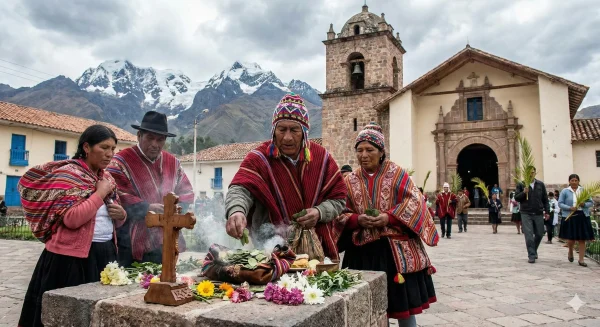
Modern Andean religion and beliefs are characterized by a profound syncretism, where Catholic saints are venerated alongside the ancient Apus (Mountain Spirits) and Pachamama (Mother Earth).
Inca customs still practiced have not been replaced by Christianity but have absorbed it; the cross is often viewed as a symbol of the Southern Cross constellation (Chakana) rather than just the crucifix. Living Inca traditions in Peru operate on the principle of Yanantin (complementary duality), meaning the Andean person sees no contradiction in attending Mass on Sunday morning and making a burnt offering (Despacho) to the mountains on Sunday afternoon.
The Celebration of Inti Raymi Today and Solar Worship
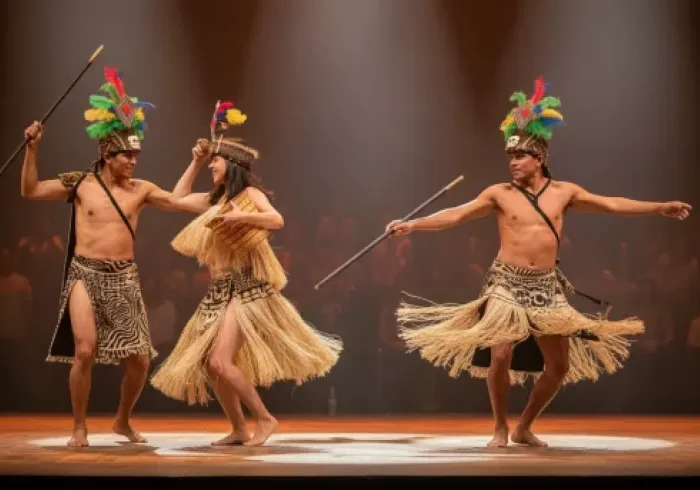
The celebration of Inti Raymi today is a monumental re enactment of the Inca Festival of the Sun, taking place every June 24th to mark the winter solstice and the Andean New Year. While the theatrical element attracts thousands, the legacy of the Inca civilization today is found in the authentic spiritual significance the date holds for locals.
Modern Andean religion and beliefs view the solstice as a critical cosmic reset. In remote communities, away from the cameras of Cusco, families still light fires and offer prayers to Tayta Inti (Father Sun) to ensure the return of the light and a successful harvest, proving that solar worship has evolved rather than vanished.
Syncretism and How Native Beliefs Blend with Catholicism
Syncretism describes the seamless blending of two belief systems, creating a distinct modern Andean religion and beliefs system where the divine figures of the Inca pantheon took on the names of Catholic saints. Inca customs still practiced are evident in festivals like Corpus Christi, which historians believe replaced the Inca procession of the Royal Mummies (Mallquis). Today, statues of saints are carried with the same reverence and along the same routes as the ancient mummies.
The Virgin Mary is widely worshipped as the Pachamama, and the image of Christ is often associated with the suffering and endurance of the earth itself, exemplified by the Lord of Earthquakes (Taytacha Temblores) in Cusco.