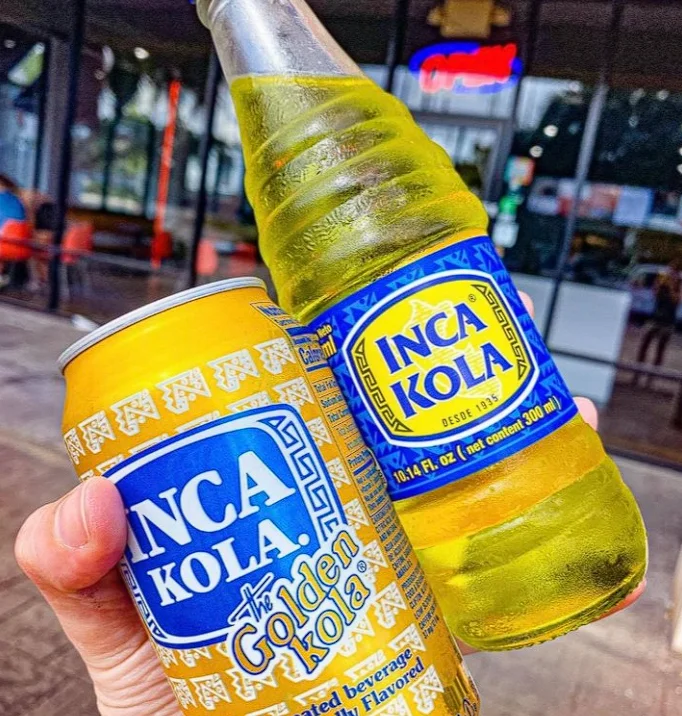
If you are wondering what is inca kola made of the exact answer includes carbonated water high fructose corn syrup citric acid sodium benzoate caffeine and artificial yellow coloring.
Beyond this chemical list the true soul of the beverage comes from Lemon Verbena extract which provides its signature bubblegum and cream soda flavor. This bright golden Peruvian soda delivers a unique sweet taste designed specifically to balance the bold spices found in traditional Andean dishes making it an indispensable part of the local culinary culture.

Inca Kola Ingredients Details And The Homemade Recipe
To understand the exact inca kola ingredients details you need to examine both the botanical extracts and the precise syrup boiling process used to recreate this golden soda at home.
While the commercial formula remains a closely guarded corporate secret locked away by the Lindley family food scientists and local chefs have identified the exact base components used in every single bottle. By analyzing these elements you can successfully recreate the syrup in your own kitchen using accessible household items and fresh herbs.
Required Ingredients And Equipment
Gathering the correct components requires visiting a local market for fresh herbs and ensuring your carbonated water is extremely cold before mixing. You will also need specific glassware to serve the final product correctly.
| Item Category | Exact Quantity Needed | Function In The Recipe |
|---|---|---|
| Fresh Lemon Verbena | One large bunch of leaves | Provides the essential aroma and bubblegum flavor |
| White Granulated Sugar | Two full cups | Creates the dense syrup base and intense sweetness |
| Fresh Lemon Juice | One tablespoon | Adds necessary acidity to cut through the heavy sugar |
| Yellow Food Coloring | Five to eight drops | Essential to achieve the trademark golden appearance |
| Carbonated Water | One chilled liter | Provides the aggressive fizz for the final beverage |
| Serving Equipment | Tall highball glass and ice cubes | Keeps the soda refreshing and perfectly diluted |
Step By Step Preparation Guide And Timing
Making exactly what is inca kola made of at home requires strict temperature control and precise timing to extract the essential herbal oils without burning the delicate sugars.
- Step 1 The Herbal Infusion Twelve Minutes Begin by bringing exactly two cups of filtered water to a rolling boil over medium heat. Add your fresh Lemon Verbena leaves and immediately reduce the heat to a gentle simmer. Cover the pot tightly to trap the essential aromatic oils and let it brew for exactly twelve minutes to create a highly fragrant green infusion.
- Step 2 Syrup Creation Five Minutes Turn off the heat and strain the liquid through a fine mesh sieve to remove all organic plant matter. Return the clear herbal water to the stove on the lowest possible heat setting. Slowly pour in the white granulated sugar while stirring continuously with a wooden spoon for five minutes until completely dissolved. Never let this mixture boil vigorously or the sugar will caramelize and ruin the authentic flavor.
- Step 3 Color And Acidity Two Minutes Remove the pot entirely from the heat source. Stir in the fresh lemon juice to brighten the taste profile and cut the heavy sugar density. Add your yellow food coloring one drop at a time stirring constantly until you achieve that trademark electric golden hue.
- Step 4 Cooling Process Two Hours Transfer the hot syrup into a sterilized glass jar and allow it to sit at room temperature for thirty minutes. Move the jar into your refrigerator for a minimum of two hours. The syrup must be completely cold and slightly thickened before mixing to ensure it binds correctly with the carbonation.
- Step 5 Mixing And Serving Fill a tall chilled highball glass to the top with solid ice cubes. Pour one part of your homemade cold syrup directly over the ice followed immediately by four parts of highly carbonated water. Stir the liquid gently with a long spoon exactly once from the bottom to mix the heavy syrup without killing the carbonation bubbles.
The Lemon Verbena Herb That Creates The Flavor
The distinct flavor profile relies heavily on an indigenous South American plant called Aloysia citrodora known locally as Hierba Luisa. This unique botanical compound delivers a powerful sweet aroma without the sour acidity of actual citrus fruits which often confuses the palate of first time drinkers.
Many international consumers mistake this herbal sweetness for bubblegum or champagne cola leading to the persistent myth that the beverage contains pineapple flavoring. The official company records confirm that no tropical fruit extracts are involved in the process making the herb the absolute critical aromatic backbone of the soda.

Tartrazine Yellow 5 And The Source Of The Golden Color
The visual impact of the soda is scientifically engineered using Tartrazine commonly known in the food industry as Yellow 5. Investigating the visual components proves that the golden hue is entirely synthetic because a natural Hierba Luisa infusion produces a dull brownish green liquid that looks highly unappealing inside a clear glass bottle.
This specific artificial additive is the most controversial yet essential item on the recipe list because the bright color primes the human brain to expect a specific sweetness intensity. Without this precise artificial tint the consumer experience feels incomplete and the beverage fails to register visually as the authentic golden cola.

Carbonated Water Sweeteners And Preservatives
The physical body and mouthfeel of the beverage rely on a high volume of dissolved carbon dioxide to create an acidic bite that cuts through the extreme sugar density. The official production standards require a high level of effervescence to balance the heavy syrup preventing the drink from feeling cloying or flat on the tongue.
There is a distinct chemical difference between international markets as the authentic domestic production uses sucrose from real cane sugar which provides a very crisp and clean finish. In contrast the United States bottling plants often substitute this natural sugar with High Fructose Corn Syrup creating a thicker and slightly more viscous texture that coats the mouth differently.

Inca Kola Nutrition Facts And Health Impact Information
A standard twelve ounce can of regular Inca Kola contains exactly 140 calories and roughly 39 grams of added sugar making it a high energy recreational treat rather than a functional hydration beverage. Reviewing the detailed nutrition facts is essential for health conscious eaters who need to track their daily glycemic intake meticulously.
The beverage acts as a source of rapid carbohydrate energy derived almost exclusively from processed sugars which are absorbed immediately by the digestive system. This massive sugar load explains why local workers prefer drinking it during heavy afternoon meals as the glucose spike prevents the typical afternoon fatigue.

Does Inca Kola Have Caffeine And Is It A Stimulant
Yes the golden soda contains exactly 38 milligrams of caffeine per standard twelve ounce can making it a fully functional caffeinated stimulant. This precise measurement places its energy boosting power on the exact same level as a standard Pepsi or Coca Cola. While this is significantly less caffeine than a strong cup of coffee the combination of this stimulant with the massive glucose load creates a highly potent and rapid energy spike.
This functional chemistry explains why the soda remains the absolute preferred pairing for heavy carbohydrate meals like fried rice or roasted chicken as it actively helps combat the physiological food coma that follows a large feast.
Diet Inca Kola Ingredients And Zero Sugar Options
The diet inca kola ingredients completely remove the high fructose corn syrup and replace it with a highly engineered synthetic blend of Aspartame and Acesulfame Potassium. These high intensity artificial sweeteners allow the beverage manufacturer to maintain the classic bubblegum flavor profile while dropping the total caloric impact to absolutely zero.
Because these synthetic sweeteners require only microscopic amounts to equal the sweetness of real sugar the physical volume of dissolved solids in the liquid drops dramatically. This significantly alters the viscosity causing the zero sugar version to feel much lighter crisper and slightly more watery on the palate compared to the heavy syrupy texture of the original.

| Feature | Original Golden Soda | Zero Sugar Diet Version |
|---|---|---|
| Total Calories | 140 calories per can | 0 calories per can |
| Sugar Content | 39 grams of added sugar | 0 grams of sugar |
| Sweetener Source | High Fructose Corn Syrup or Cane Sugar | Aspartame and Acesulfame Potassium |
| Mouthfeel Texture | Thick syrupy and heavy | Light watery and crisp |
Origin And Production History Of The Brand
The fascinating history of this beverage begins with Joseph Robinson Lindley a British immigrant who established a small bottling plant in the Rimac district of Lima in 1910. The golden soda itself was not officially born until 1935 when the family created the unique herbal formula to celebrate the four hundredth anniversary of the founding of the city.
They marketed it aggressively with slogans highlighting its national flavor securing its place as an absolute staple of the local culture. Decades later the brand achieved the impossible by continuously outselling Coca Cola in the domestic market which eventually forced the global beverage giant to purchase a fifty percent stake in the corporation just to share in the profits.

Where To Buy Inca Kola In The USA And Worldwide
You can reliably buy the authentic golden soda across the United States at major retail grocery chains like Walmart HEB and Publix typically located within their dedicated international or Hispanic food aisles. The strategic partnership with The Coca Cola Company granted the brand access to a massive global distribution network ensuring a steady and reliable supply to North American supermarkets.
For economy and large family events you can easily find bulk packs and large two liter plastic bottles at warehouse clubs which significantly reduces the price per ounce. It is also important to clarify for new international consumers that this is strictly a non alcoholic soft drink safe for children although local bartenders frequently use it as a sweet mixer for traditional cocktails.

frequently asked questions
The primary ingredients in Inca Kola include carbonated water, high fructose corn syrup (or sucrose in the Peruvian version), citric acid, sodium benzoate, caffeine, artificial and natural flavorings, and Yellow 5 (Tartrazine). While the full formula is a trade secret, the distinct taste profile relies heavily on the essential oils derived from Lemon Verbena, a plant native to South America. This combination creates the drink’s signature sweetness and acidity balance that pairs perfectly with Peruvian cuisine.
Inca Kola tastes like a sweet combination of bubblegum, cream soda, and tropical fruits, with a distinct herbal finish from the Lemon Verbena. Unlike spicy or caramel heavy dark colas, the golden soda has a “tutti frutti” profile that is often compared to champagne cola. This high sugar content and fruity aroma make it an ideal palate cleanser for spicy Peruvian dishes like Ceviche or Lomo Saltado.
Yes, Inca Kola contains caffeine, with approximately 37 mg of caffeine per 12-ounce (355 ml) can, which is roughly equivalent to the amount found in a can of Coca Cola or Pepsi. This stimulant content classifies it as an energy-boosting soft drink. However, because the flavor is so sweet and lacks the bitterness of dark colas, the caffeine “kick” is often masked by the sugar profile.
Inca Kola is yellow because it contains the artificial food coloring Yellow 5 (Tartrazine), designed to symbolize the gold of the ancient Inca Empire. When Joseph Robinson Lindley created the drink in 1935, he wanted a color that would evoke national pride and the legacy of the Tahuantinsuyo. The golden hue is essential to its branding as “The Golden Kola” (La Kola Dorada) and makes it instantly recognizable on any dining table in Peru.
The Inca Kola brand is owned by The Coca-Cola Company in all countries except Peru, where it remains a joint venture with the Lindley family (Corporación Lindley). In a historic business move in 1999, Coca Cola realized it could not beat Inca Kola in the Peruvian market the only country where Coke was not the number one soda so they bought a 50% stake in the company. This allows Coca-Cola to manufacture and distribute the soda globally while respecting its local heritage.
The main difference is that Peruvian Inca Kola is sweetened with real cane sugar, whereas the American version is typically sweetened with High Fructose Corn Syrup (HFCS). Connoisseurs of the soda often claim the Peruvian glass-bottle version has a cleaner, crisper finish compared to the syrup-heavy American canned version. Additionally, the carbonation levels can vary slightly depending on the bottling plant, with the Peruvian version generally being considered the “authentic” experience.