Understanding the Meaning of Quipus Inca and Its Role in the Empire
To truly grasp the Inca quipus definition, one must look at the etymology. The word comes from the Quechua khipu, simply meaning "knot." But functionally, the quipus were the central nervous system of imperial administration.
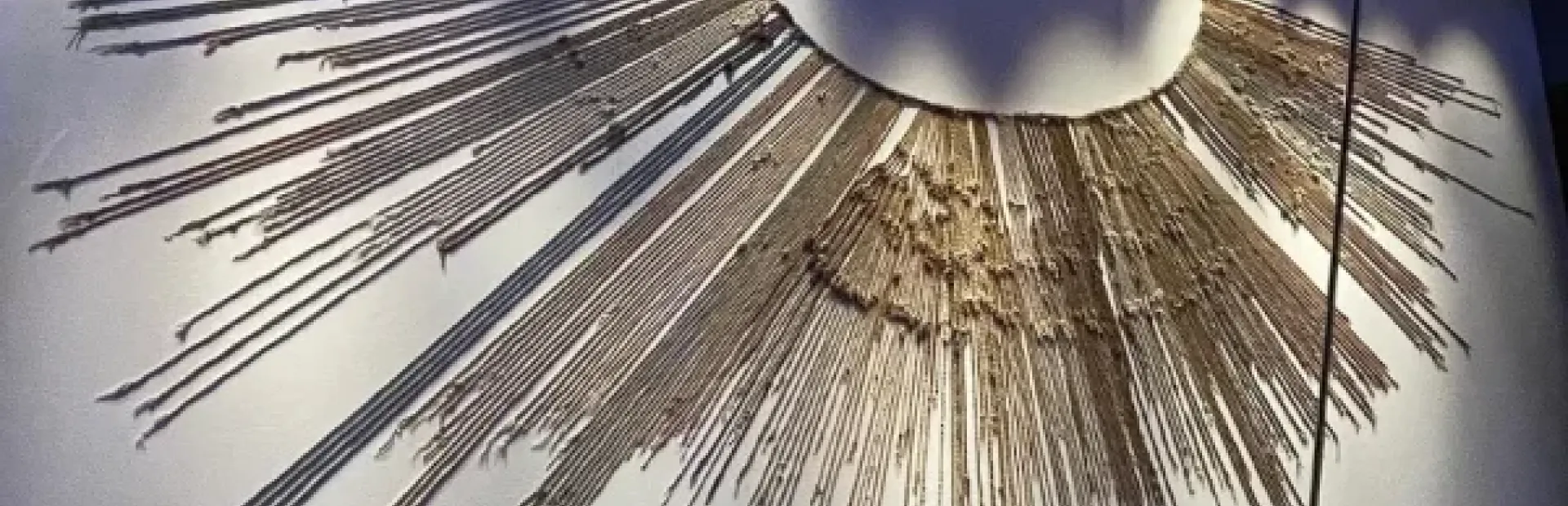
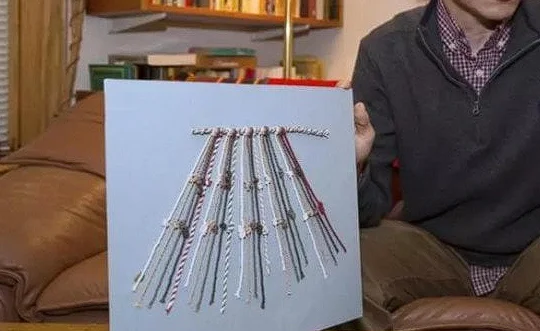
The geography of the Andes is vertical and unforgiving. Stone tablets were too heavy to transport across thousands of kilometers of Inca roads (Qhapaq Ñan). Historical Inca quipus information confirms that these devices were designed for portability. A quipu consists of a primary cord (the spine) from which hang pendant cords (the data). These pendant cords could have subsidiary cords attached, creating a "tree" of information that allowed for detailed categorization of data.
What is an Inca quipu? Beyond a recording tool, it was an instrument of state power. It allowed the Sapa Inca in Cusco to know exactly how much corn was produced in the Sacred Valley or how many soldiers were available in Quito, ensuring the efficient distribution of resources across the empire.
Inca Quipus Simple Definition: World History for Elementary Students
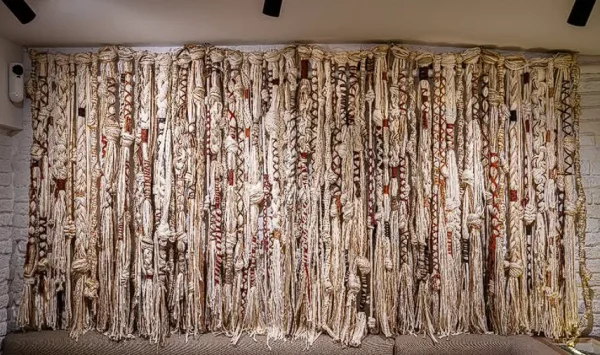
For younger learners or those new to Andean history, the Inca quipus simple definition in world history can be best described as an ancient "soft computer." Imagine a system similar to a modern Excel spreadsheet, but instead of digital cells, it is constructed from wool and cotton.
Instead of typing numbers into columns on a screen, the Incas tied specific knots on hanging strings to "save" their data. When teachers and students search for Inca quipus videos for elementary students, they often see them described as "talking knots."
But what is quipus from the Inca exactly? It is a sophisticated device where the vertical position of a knot determines its value (ones, tens, hundreds), and the specific color of the string identifies the object being counted yellow for corn, white for silver, or red for soldiers.
It was a brilliant, lightweight engineering solution to a complex problem: how to manage a massive empire's data without a written alphabet.
Defining What Is a Quipus Inca and Its Origin in the Andes
When defining what an Inca quipu is, we must acknowledge its deep ancient roots. The meaning of Inca quipus transcends the short period of the Inca Empire itself. While the name quipus inca is derived from the Quechua word for "knot" and is specific to the empire that ruled from 1400 – 1532 AD, the technology is actually thousands of years older.
The scholarly definition of Inca quipus implies a system of mnemonics (memory aids) and statistical recording. However, archaeologists have discovered "proto quipus" in the civilization of Caral (dating back to 2600 BCE, contemporary with the Pyramids of Giza) and more complex, colorful versions in the Wari culture.
This historical context proves that the Inca quipus were not a sudden invention, but the perfection of a 4,000 year old Andean technological tradition that valued textile engineering over stone tablets.
What Kinds of Information Did the Inca Record on Quipus Strings?
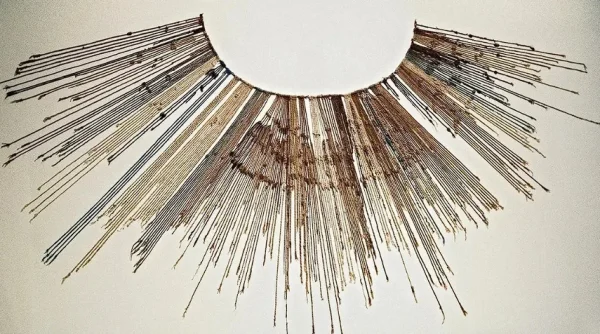
A frequent and fascinating question from our travelers at Machu Picchu Tours is: what kinds of information did the Inca record on quipus? The answer reveals the inner workings of a highly planned, moneyless economy that spanned almost the entire South American continent. The Inca kept records by using quipus to track two distinct categories of data: quantitative (statistical numbers) and qualitative (identifiers and categories).
According to Spanish chroniclers and modern Inca quipus information, these devices were the administrative backbone of the empire, recording:
Agricultural Inventory: They tracked exact measures of freeze dried potatoes (chuño), corn, and quinoa stored in the thousands of state warehouses (Qolqas) along the Inca Trail. This ensured the army and population could be fed anywhere, anytime.
Livestock Management: Detailed censuses of state owned llama and alpaca herds, categorized specifically by age, sex, and wool color to manage breeding and textile production.
Demographics and Census: The strings recorded births, deaths, and marriages within each Ayllu (local community), allowing the state to know the exact available workforce in every valley.
Labor Tax Obligations: The precise hours of work owed by each citizen to the state, and credit for work already completed.
Astronomy and History: Specialized quipus recorded calendars based on the movement of the sun and moon, and potentially historical narratives regarding the lineage of the Emperors.
The Incas Used Quipus To Track Census Data and Taxes
The Incas used quipus to manage the Mita, a mandatory public service system that functioned as the economic engine of the empire. Since the Andean civilization did not utilize currency or market trade, human labor was the currency. Why did the Incas use quipus for this purpose? To ensure absolute fairness and reciprocity.
The state needed a precise method to track which citizens had already fulfilled their labor duty whether building suspension bridges, farming state lands, or serving in the army and who still owed time to the Emperor. The quipu acted as an irrefutable ledger of these transactions. What was the purpose of the Inca quipus in this bureaucratic context? It was primarily for resource redistribution and disaster management.
If a province suffered a drought or crop failure, the local quipus would immediately show a statistical deficit in production. This data would travel to Cusco, prompting the state to unlock the storehouses (Qolqas) and send food aid from other regions. This precise accounting is the primary reason why famine was virtually unknown in the empire before the Spanish arrival.
The Quipucamayoc: Who Had a System of Accountability Called Quipus Incas?
The specific official who had a system of accountability called Inca quipus was known as the Quipucamayoc (Keeper of the Knots). These individuals were not simple scribes; they were a specialized class of accountants and historians, often nobles, who were rigorously educated in the Yachaywasi (House of Knowledge) in Cusco to master the complex code of knots and colors.
In the critical relationship between the Incas and the quipus, the Quipucamayoc held the "keys to the kingdom." What were quipus used for in the Inca civilization regarding accountability? They were the primary tool for state auditing. The Emperor sent high ranking inspectors known as Tukriq to verify regional data.
They would compare the physical inventory of a storehouse against the knots on the Quipucamayoc's cords. If the numbers did not match, the punishment for the local administrator could be severe, including death. This strict system ensured data integrity across the vast Andes.
The Debate on Ancient Writing Systems: The Quipus and The Quilca
There is a fascinating and ongoing academic debate regarding Inca writing, the quipus, and the quilca. For centuries, history books claimed the Incas were illiterate because they had no alphabet. However, modern anthropologists are re evaluating this claim, asking: Did the Incas really lack writing, or did history simply fail to recognize a non Western format? Current theories suggest a sophisticated dual system.
While the Inca writing on quipus (tactile knots) handled complex data, logistics, and possibly phonetic sounds, a parallel system existed. This Inca writing known as Quilca refers to graphic symbols and geometric codes painted on rocks, inscribed on wooden tablets (most of which were destroyed by the Spanish as "idolatry"), or woven into high status textiles known as Tocapu.
The interaction between the tactile Inca writing on quipus and the visual Quilca suggests the Incas utilized a "multimedia" approach to communication using texture for numbers and symbols for meaning.
Summary of Inca Writing: Quipus and Quilca for Students
For a clear summary of Inca writing: quipus and quilca, it is best to view them as two halves of a whole administrative system:
Quipu: The Database. This was used for math, statistics, census data, and linear information. It was the "hard drive" of the empire.
Quilca / Tocapu: The Symbology. These were visual ideograms used for religious concepts, linguistic cues, and rank based information, functioning like modern icons or badges.
A summary of Inca writing via quipus and quilca teaches us that the definition of "writing" is often culturally biased toward pen and paper. A paraphrase of the Inca writing systems would be: The Incas communicated complex administrative and narrative ideas through a combination of 3D knots and 2D geometric symbols, creating a resilient system that did not require ink to build the largest empire in the Americas.
Did Incas Do Quipus as a Form of Narrative or Phonetic Writing?
Did Incas do quipus to tell stories, record poems, or document history? This question represents the cutting edge of Andean archaeology. While traditionally viewed as statistical tools, leading researchers like Gary Urton at Harvard University argue that the answer is yes. The quipus of the Incas are not just collections of knots.
they are constructed with strings spun in specific directions either "S ply" (clockwise) or "Z ply" (counter clockwise). This binary construction functions remarkably like modern computer code (0s and 1s). By combining these spin directions with specific colors and knot types, the quipus of the Incas might have encoded non numerical data.
This could include the names of places (toponyms), the lineage of the Sapa Inca, or even phonetic sounds. If this theory is proven, it would reclassify the quipu as a true writing system, turning the knots into a "3D library" of history that modern science has yet to fully translate.
How to Make Inca Quipus and Interpret the Knot Structures
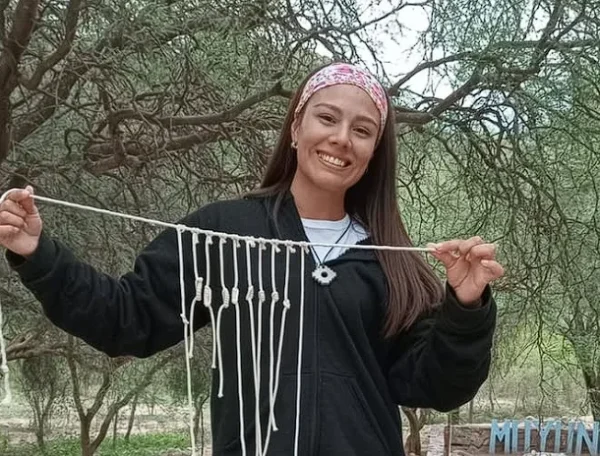
Understanding how to make Inca quipus requires grasping the sophisticated "decimal system" (Base 10) utilized by the empire. To master quipus inca and how to read them, one must look beyond the main cord and identify the hierarchy of the pendant strings. The reading process begins from the bottom of the string and moves upward, utilizing three specific knot types, each with a distinct mathematical value:
Figure Eight Knot: This knot represents the number 1. It is strictly used in the lowest position of the string (the "ones" place).
Long Knot: This complex knot represents numbers 2 through 9. The specific value is determined by the number of turns or loops within the knot itself (e.g., a knot with 4 turns equals the number 4). Like the figure eight, it is only found in the "ones" position.
Single Knot (Overhand Knot): These represent larger values: tens, hundreds, thousands, and ten thousands. They are always positioned higher up the string.
The Inca knot quipus utilized a positional system identical to modern mathematics: the higher up the string the knot is tied, the higher its value. Perhaps most impressively, an empty space on the string represented Zero an abstract mathematical concept the Incas understood and utilized for engineering long before many contemporary European cultures.
Reading the Inca Empire Quipu System by Color and Position
In the Inca Empire quipus, numerical data was useless without context. A knot representing "100" means nothing unless you know if it counts soldiers or llamas. The Peruvian Inca quipus (quipus peru incas) solved this problem through a sophisticated system of color coding and hierarchical positioning.
While Inca quipus (incas quipus) relied on knots for numbers, the color of the string acted as the label:
Yellow: Often represented gold or corn.
White: Could signify silver or peace.
Red: Typically denoted warriors, war, or the Emperor's own property.
Green: Indicated conquest, geography, or crops.
"Barber Pole" (Twisted Colors): Two colors twisted together often represented a relationship between two categories (e.g., "corn belonging to the state").
Furthermore, the Inca quipus utilized a branching structure. A primary cord held "pendant cords," which in turn could hold "subsidiary cords." This allowed for detailed sub categorization for example, a main string might represent a province, the pendant string a specific village, and the subsidiary string the number of men eligible for the army in that village. This allowed a Quipucamayoc to "read" the geopolitical state of the empire at a glance.
Visual Guides and Inca Quipu Drawings for Educational Projects
For students tasked with creating an Inca quipu drawing, accuracy is key. Start by drawing a thick, horizontal "primary cord" across the top of the page. From this spine, hang vertical "pendant strings" at uneven intervals. To make your Inca quipu drawing authentic, ensure the knots increase in size as they move higher up the string (representing larger numbers).
When searching for images of Inca writing to include in your project, it is vital to distinguish between the two systems. Use illustrations of knots to represent the Quipu (statistical data), and geometric squares to represent the Quilca or Tocapu (symbolic language found on textiles).
A strong conceptual map for a history project should place "Andean Communication" at the top center. From there, create two branches:
Quipu: Label as "Tactile/Statistical" (Keywords: Math, Census, Knots).
Quilca: Label as "Visual/Symbolic" (Keywords: Art, Rank, Geometric Symbols). This structure clearly demonstrates the "dual literacy" of the Inca Empire.
Historical Context and Where to Find Quipus in Museums Today
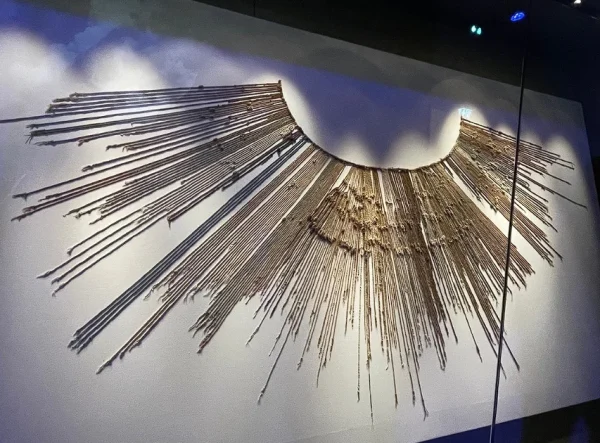
Tragically, the vast majority of these recording devices were lost to history. Following the Spanish Conquest, the Third Council of Lima (1583) ordered the systematic destruction of thousands of quipus, labeling them as "instruments of idolatry" and works of the devil. As a result, only about 800 to 1,000 authentic examples survive globally.
Today, you can view significant collections at the Inca quipus Brooklyn Museum exhibit or in specialized anthropological archives. For scholars and serious researchers, accessing Inca quipus PDF databases such as the open access Khipu Database Project managed by universities allows for the study of high resolution digital scans of these survivors. This digital preservation is vital for uncovering new information about Inca quipus that physical handling might damage.
Famous Collections at the Inca Quipus Brooklyn Museum and Lima
While the Inca quipus at the Brooklyn Museum form a small but historically significant collection in the United States, the true treasures reside in their homeland. In Lima, the Museo Larco and MALI (Museo de Arte de Lima) house incredible, well preserved quipus of the Incas (quipus de los incas), where you can see the vibrant dyes that have resisted fading for centuries.
However, context is everything. When you tour with Machupicchu Tours, we guide you to the Museo Inka in Cusco. Here, you don't just look at a glass case; you stand inches away from the quipus of the Incas (los quipus de los incas) while an expert guide explains the specific knot structures (S ply vs Z ply) used by the very administrators who walked the streets of Cusco 500 years ago.
Were the Inca the Only Ones to Use Quipus in Ancient Peru?
Were the Inca the only ones to use quipus? This is a common historical myth. While the Inca quipus (los quipus incas) are the most famous and standardized, they were not the first. The Wari culture (600–1000 AD), which dominated the highlands centuries before the Incas, used an earlier version of this technology.
The differences are technical but distinct: Wari quipus were often "wrapped" with colored threads rather than using the pendant knot system, and they frequently utilized a bright white cotton base. The Inca quipus (quipus incas) represented an evolution and standardization of this ancient Andean code, adapted to suit the massive scale, precision, and administrative power required to manage the largest empire in the pre Columbian Americas.