The Complete Chronological List of Inca Emperors and Their Dynasties
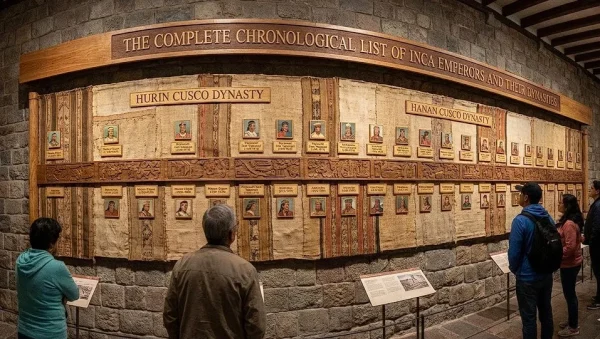
Scholars and historians generally recognize a list of inca emperors known technically as the Capaccuna. This official genealogy spans from the mythical founding of Cusco in the 12th century to the final tragic execution in the 16th century. This complete list of inca emperors is not merely a sequence of names, but a timeline of evolution from a small agrarian tribe in the Cusco valley to a continental empire.
The inca emperor list is traditionally divided into two distinct dynasties based on their residence and political function in Cusco: the Hurin Cusco (Lower Cusco, associated with religious priesthood) and Hanan Cusco (Upper Cusco, associated with military aristocracy).
Hurin Cusco Dynasty (The Lower House - Religious Rulers)
The first dynasty, ruling from the lower part of the city, focused primarily on religious consolidation and local alliances rather than military conquest.
- Manco Cápac (c. 1200 - 1230) The semi mythical founder who led his people from Lake Titicaca to the Cusco Valley. He drained the swamps, built the first Inticancha (Sun Temple), and established the code of laws.
- Sinchi Roca (c. 1230 - 1260) The first to wear the Mascapaicha (royal fringe). He famously expanded the kingdom not by war, but by consolidating alliances with neighboring tribes through strategic marriages.
- Lloque Yupanqui (c. 1260 - 1290) A ruler known for administrative foundations. He established the first public markets (catus) and created the "Acllahuasi" (House of the Chosen Women) to serve the state religion.
- Mayta Cápac (c. 1290 - 1320) Often called the "Hercules of the Andes." Legends describe him as a child prodigy born with a full set of teeth who grew into a warrior of immense physical strength, defeating early rivals.
- Cápac Yupanqui (c. 1320 - 1350) The last of the Hurin rulers and a fierce general. He was the first Sapa Inca to march his army outside the Cusco Valley, demanding tribute from more distant tribes.
Hanan Cusco Dynasty (The Upper House - Warrior Expansionists)
Starting with a political coup, the rulers moved to the "Upper" part of Cusco and shifted the empire's focus toward aggressive military expansion.
- Inca Roca (c. 1350 - 1380) The first to officially use the title "Inca." He moved the royal residence to the Hanan (Upper) sector, effectively separating the military powers from the religious priesthood.
- Yahuar Huaca (c. 1380 - 1410) Known as "He Who Cries Blood." His reign was tragic; legends say he was kidnapped as a child and wept blood in terror. He was eventually assassinated during a festival, signaling a time of instability.
- Viracocha Inca (c. 1410 - 1438) The first to rule over a significant territory, but his legacy is tainted. When the Chanka enemies invaded, he fled the capital, leaving the defense to his son, Pachacuti.
- Pachacuti (1438 - 1471) "He Who Shakes the Earth." The Napoleon of the Andes. He defeated the Chankas, reorganized the state into the Tahuantinsuyo, and ordered the construction of Machu Picchu and Ollantaytambo.
- Tupac Inca Yupanqui (1471 - 1493) The Alexander the Great of the Incas. A brilliant strategist who tripled the empire’s size, conquering the Chachapoyas in the jungle and marching south as far as the Maule River in Chile.
- Huayna Cápac (1493 - 1527) He ruled the empire at its zenith, stretching from Colombia to Chile. However, he died suddenly of smallpox (brought by Europeans) without clearly naming an heir, sparking the succession crisis.
- Huáscar (1527 - 1532) The traditional heir who ruled from Cusco. His claim was supported by the nobility, but his paranoia and poor military decisions led to his downfall in the civil war.
- Atahualpa (1532 - 1533) The battle-hardened victor of the civil war who ruled from the north (Quito/Cajamarca). His reign was cut short when he was captured and executed by Francisco Pizarro, marking the end of the imperial era.
Who Was the First Emperor of the Inca Empire Known as Manco Capac
When asking who was the first inca emperor, history and mythology blend together seamlessly. The first inca emperor was Manco Cápac. According to the foundational legends, he emerged from the cold waters of Lake Titicaca accompanied by his sister wife Mama Ocllo, sent by their father, the Sun God (Inti), to find fertile land where his golden staff (Tapac Yauri) would sink easily into the earth. This miraculous event reportedly occurred at Huanacauri Hill.
He is the emperor who founded the inca empire by establishing the city of Cusco (Qosqo) around 1200 AD in the chaotic aftermath of the Tiahuanaco civilization's collapse. Manco Cápac created the initial code of laws, built the first temple (Inticancha, which later became the Coricancha), and taught his people agriculture and irrigation, laying the cultural and religious foundation for all subsequent Inca emperors.
The Division Between the Hurin and Hanan Cusco Dynasties of Inca Emperors
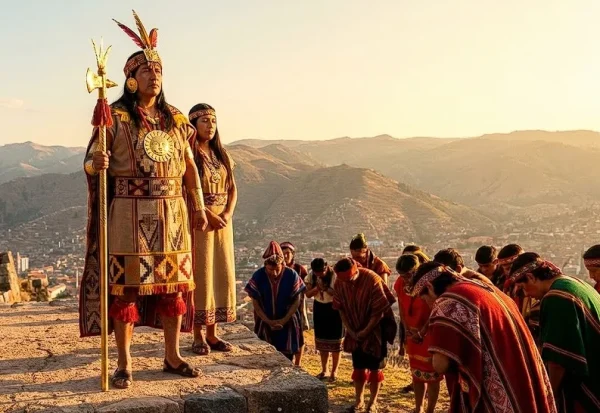
The ancient inca emperors are categorized by the moiety (a dual social and spatial division known as Yanantin) of the city they ruled from. The first five inca empire emperors, starting with Manco Cápac and ending with Cápac Yupanqui, belonged to the "Hurin Cusco" (Lower Cusco) dynasty. These rulers were primarily local warlords and high priests, living in the lower valley and focusing on religious consolidation rather than distant expansion.
The transition to the "Hanan Cusco" (Upper Cusco) dynasty began with a political coup led by Inca Roca. The emperors of the inca empire from this second dynasty moved their residences to the upper slopes, stripped the Hurin faction of political power (leaving them only religious duties), and became aggressive expansionists, eventually transforming the small regional kingdom into the massive Tahuantinsuyo (The Four Regions).
How Did Inca Emperor Pachacuti Rise to Power and Build the Empire
The most pivotal moment in Andean history answers the question: how did inca emperor pachacuti rise to power? Before taking the throne, he was a young prince known as Cusi Yupanqui, who was not the first in line for the crown; his brother Urco was the designated heir. In 1438, the fierce Chanka nation a warrior culture from the Apurímac region attacked Cusco with overwhelming force, threatening to annihilate the Inca civilization.
While his father (Viracocha Inca) and his heir fled the city in fear to the Sacred Valley, Cusi Yupanqui stayed behind to organize a desperate defense. According to the famous legend, he prayed to the stones on the battlefield, which miraculously transformed into soldiers (known as the Pururaucas) to help him defeat the enemy. This miraculous victory led to his coronation as Inca Emperor Pachacuti (Quechua for "He Who Shakes the Earth" or "World Reverser").
1 how did inca emperor pachacuti rise to power is a story of military genius combined with administrative brilliance. He did not just conquer; he built. Pachacuti reorganized the kingdom into the Tahuantinsuyo (Four Regions), established Quechua as the official administrative language, and rebuilt Cusco in the shape of a puma. He also initiated the Mitimaes system forced resettlement of loyal subjects to conquered lands to ensure stability, effectively creating the imperial structure that defined the Andes.
The Greatest Rulers and Who Was the Inca Emperor Who Built Machu Picchu
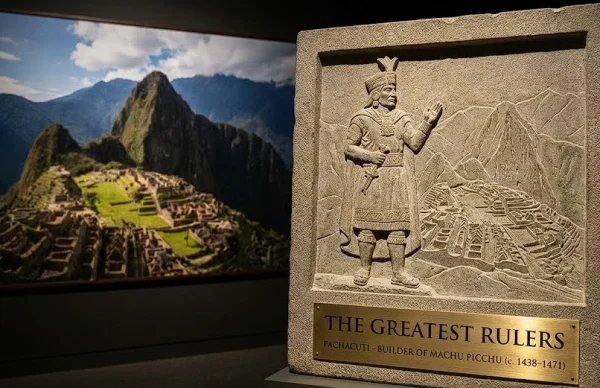
While the dynasty comprised thirteen rulers, the "Golden Century" of the Incas was defined by three successive leaders who expanded the borders and cemented the culture. Among them, one stands above the rest for his architectural and military genius. The most common question tourists ask standing amidst the granite ruins is: who was the inca emperor who built machu picchu? The answer invariably points back to the transformative reign of Pachacuti (1438 - 1471).
Historians agree that the greatest inca emperor was not just a warrior who saved Cusco, but a master urban planner who pioneered the "Imperial Style" of stonework precision cut stones without mortar. The famous inca emperors that followed him, specifically his son Tupac Inca Yupanqui and grandson Huayna Cápac, continued his legacy of conquest, but Pachacuti remains the intellectual architect of the Andean state, comparable to Alexander the Great or Napoleon in his influence.
Pachacuti Is Considered the Greatest Inca Emperor for His Expansion
Beyond mere military victories, Pachacuti is considered the greatest inca emperor for his expansion of the realm from a small Curacazgo (local chiefdom) into a vast, organized empire known as Tahuantinsuyo. He engineered the backbone of the economy: he designed the massive road system (Qhapaq Ñan) to connect the Andes and established a network of Qullqas (storehouses) that prevented famine during droughts, a logistical feat unmatched in the ancient world.
As a famous inca emperor, he is credited with ordering the construction of the citadel of Machu Picchu roughly around 1450 AD. It was not a military fortress, but a royal estate and religious retreat for his lineage (Panaca). While his son, the emperor of the inca empire tupac (Topa Inca Yupanqui), would later surpass him in terms of total square miles conquered pushing the borders into the Amazon and deep south it was Pachacuti who provided the administrative vision that allowed the empire to function.
Topa Inca Yupanqui Becomes the Second Emperor to Conquer New Lands
History remembers Pachacuti as the organizer, but his son was the unstoppable conqueror. In 1463 topa inca yupanqui becomes the second emperor of the expansionist phase, initially serving as the Auqui (Crown Prince) and chief general of the armies. Before officially taking the Mascapaicha (crown) in 1471, he had already annexed the powerful Chimú civilization on the northern coast the Incas' only true technological rivals.
Under the emperor of the inca tupac, the empire reached its absolute maximum geographical size, stretching deep into modern day Ecuador (where he founded the city of Quito as a second capital) and extending south to the Maule River in present day Chile. Tupac Amaru inca emperor (not to be confused with the later resistance leader of 1572 or the 18th century revolutionary) was a name that signified royalty, but Topa Inca Yupanqui was the true "Alexander the Great" of the Andes.
His ambition knew no bounds; historical chronicles and modern theories strongly suggest he led a massive maritime expedition of 20,000 men on balsa rafts into the Pacific Ocean. He reportedly returned months later with "black men, gold, and brass," fueling credible theories that the Inca navy reached the Galápagos Islands, Mangareva, or even Easter Island (Rapa Nui), showcasing a navigational capacity often underestimated by Western historians.
The Spanish Conquest and the Inca Emperor Captured by Pizarro's Forces
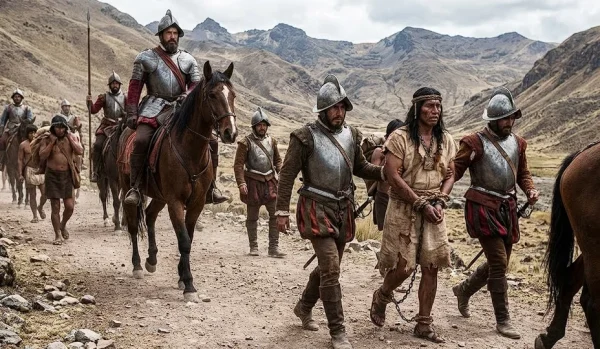
The fall of the Inca Empire was a pivotal moment in South American history, officially beginning with the Inca emperor captured by Pizarro's forces. The arrival of Francisco Pizarro in 1532 did not happen in a vacuum; it coincided with a fractured empire that had already been decimated by European diseases like smallpox and measles, which had arrived before the Spanish themselves.
The specific Inca emperor captured by Pizarro was Atahualpa, a ruler who had just emerged victorious from a bloody succession conflict. The dramatic interaction between the Inca Emperor, Pizarro, and the Spanish conquistadors at the Battle of Cajamarca marked the violent collision of two worlds.
This event signaled the end of indigenous sovereignty in the Andes and the beginning of Spanish colonial rule. Historians often note that the capture of Atahualpa was swift, as the Spanish used advanced weaponry and cavalry technology unknown to the Incas to ambush the royal retinue in the town's main square.
Who Was the Inca Emperor When the Spanish Arrived in the Andes
When students and historians ask who was the Inca emperor when the Spanish arrived, the answer is complex due to the political instability of the time. Technically, the Inca emperor in 1533 (the year of the empire's collapse) was Atahualpa, though his status was contested. He had not yet been officially crowned in Cusco with the Mascapaicha (the imperial fringe or crown), which was necessary to be considered the legitimate Sapa Inca.
Inca Emperor Atahualpa was resting at the thermal baths of Cajamarca (known today as the Baños del Inca) when Pizarro's small band of men arrived in the valley. Flushed with recent military victories, Atahualpa severely underestimated the foreign threat. He believed that a few ragged strangers could not topple the "Son of the Sun." This overconfidence led to the fatal decision to meet the Spaniards unarmed, a mistake that changed history when looking at who was the Inca emperor at the moment of the conquest.
The Civil War Between Brothers Huáscar and Atahualpa Inca Emperor
Before the Spanish set foot in the Andes, the empire was already crumbling due to the devastating Inca Civil War, also known as the "War of the Two Brothers." Atahualpa, the Inca Emperor, fought a bitter campaign against his half-brother Huáscar for the throne following the death of their father, Huayna Cápac, who died suddenly from the epidemic sweeping the land.
The political divide was geographical and deep: Atahualpa's loyalists were based in Quito (the northern capital), comprising the battle-hardened army generals. Meanwhile, Huáscar held Cusco (the traditional capital) and the loyalty of the priesthood.
To fully explain what happened to the Inca Emperor Atahualpa, one must understand that his pyrrhic victory over Huáscar left his army exhausted, divided, and resentful. This internal chaos made the empire vulnerable, allowing a small group of foreign invaders to exploit these divisions and recruit local tribes who were enemies of the Incas.
Details on How the Inca Emperor Captured by Pizarro's Forces Was Held for Ransom
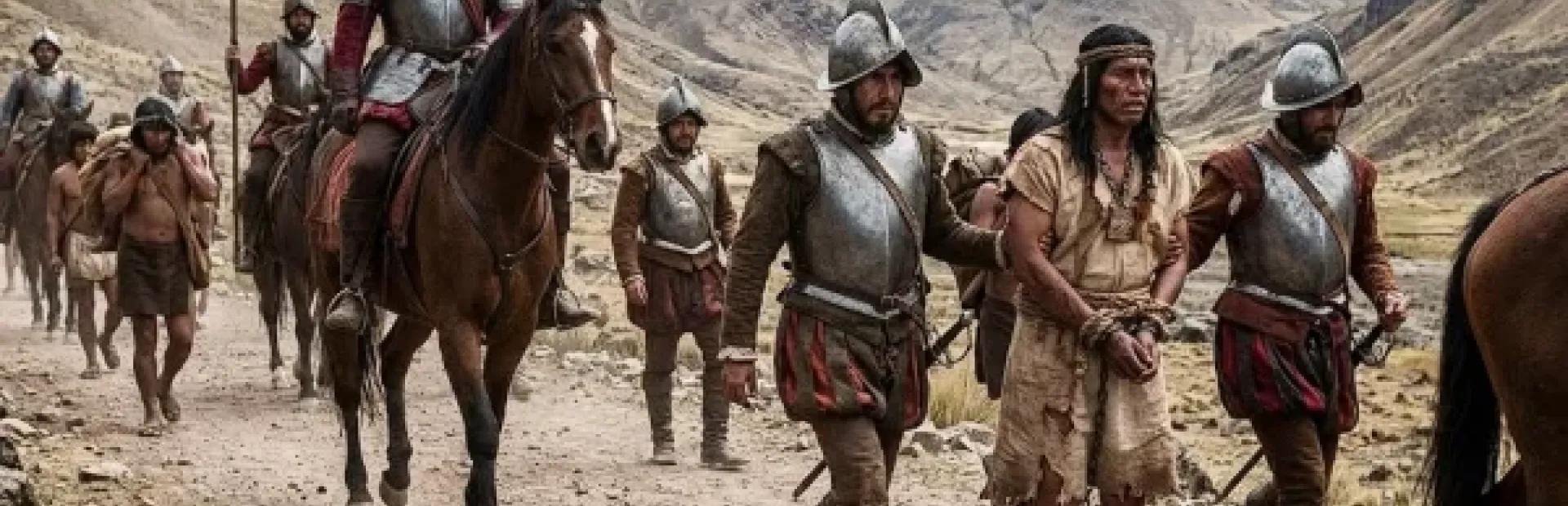
The capture itself was swift, brutal, and historically significant. Accounts of the Inca emperor captured by Pizarro's forces describe the Battle of Cajamarca not as a traditional war, but as a massacre. Thousands of unarmed attendants were killed by Spanish cannons and cavalry in the main square, sparking panic among the indigenous troops.
Once the Inca Emperor was captured and imprisoned, he quickly realized that the primary motivation of the strangers was not political power, but wealth. In a desperate bid to buy his freedom, the Pizarro-Inca Emperor negotiations resulted in a legendary offer:
Atahualpa proposed to fill a room once with gold and twice with silver, up to the reach of his arm (approximately 22 feet long by 17 feet wide). This famous "Ransom Room" (El Cuarto del Rescate) is the only major Inca structure still standing in Cajamarca today, serving as a grim monument to the largest ransom in history.
The Execution of the Last Inca Emperor Atahualpa Despite the Gold Payment
Despite fulfilling his promise and delivering tons of precious metals from across the empire, the execution of the last Inca Emperor (of the unified empire) proceeded essentially as a political necessity for the Spanish. Fearful of a counter-attack by Atahualpa's generals, Francisco Pizarro staged a mock trial.
The Spanish accused the sovereign of idolatry, polygamy, and fratricide (specifically for ordering the death of his brother Huáscar during captivity). Ultimately, Pizarro executed the last Inca Emperor, Atahualpa, on July 26, 1533. Although initially sentenced to be burned at the stake a fate terrifying to the Incas as it destroyed the body needed for the afterlife Atahualpa agreed to be baptized as a Christian in exchange for a different death. He was executed by strangulation (garrote).
It is important to clarify historical timelines: while the Inca Emperor died from smallpox (referring to his father, Huayna Cápac, years prior around 1527), it was this initial plague that caused the power vacuum and civil war, paving the way for Atahualpa's capture and eventual execution. His death allowed the Spanish to march on Cusco and install puppet rulers, marking the definitive end of the Tawantinsuyu.
The Neo Inca State Resistance and Who Was the Last Inca Emperor
Many history books abruptly stop the narrative at Atahualpa, but the Inca resistance actually continued for another 40 years in the remote high jungle. So, who was the last Inca emperor truly? After the fall of Cusco in 1533, a remnant of the nobility, led initially by Manco Inca, retreated into the dense jungle of Vilcabamba to establish a Neo-Inca State.
This "lost city" served as the headquarters for a prolonged rebellion. While Atahualpa was the last emperor of the unified empire, the last Inca emperor of this specific resistance movement was not Atahualpa, but his nephew, Tupac Amaru I. Under his leadership, the Incas fought a fierce guerrilla war against the Spanish Crown until 1572, burning haciendas and cutting off Spanish supply lines between Lima and Cusco.
Tupac Amaru Was the Last Emperor of the Inca Empire Executed in Cusco
Historically and technically, the last emperor of the Inca Empire was Tupac Amaru I. In 1572, the Spanish Viceroy Francisco de Toledo declared "fire and blood" on Vilcabamba and finally captured the stronghold. The last emperor of Inca resistance was dragged in chains to Cusco the very city his ancestors had built. In a dramatic and somber event, Tupac Amaru I was beheaded in the Plaza de Armas of Cusco on September 24, 1572.
Historical chronicles describe a massive crowd of indigenous people weeping and wailing until the Inca raised his hand for silence. His execution was a public spectacle intended to crush indigenous morale and extinguish the royal lineage forever. However, the Tupac Amaru Inca emperor legacy backfired on the Spanish. His death birthed the myth of Inkarri, the belief that the Inca would return.
This memory inspired future rebellions, most notably that of Tupac Amaru II (José Gabriel Condorcanqui) in the 18th century, cementing the name as an eternal symbol of anti-colonial resistance in the Andes.
Clarifying the Confusion Between Atahualpa and the Last Inca Emperor
There is often significant confusion among students and travelers when asking who was the last emperor of the Inca Empire. The answer depends on how one defines the empire. While Atahualpa was the last to rule over a vast, unified, and independent territory (Tawantinsuyu) before the Spanish set foot in the Andes, the last emperor of the Incas in the dynastic line was actually Tupac Amaru I.
Casual trivia games and puzzle apps often look for the answer "Atahualpa" for last Inca emperor CodyCross clues or crossword puzzles, simplifying history for the sake of brevity. However, historically speaking, the royal lineage survived in the Vilcabamba jungle for decades. It is accurate to say Atahualpa was the last imperial ruler of the functional empire, while Tupac Amaru was the last Sapa Inca (The Only One) of the resistance state.
Daily Life and Royal Privileges of the Emperor of the Incas
The daily life of the emperor of the Incas was defined by extreme opulence, strict ritual, and divine reverence. To describe the life of a Sapa Inca is to describe a living god on earth, known as the Intip Churin (Son of the Sun). The protocols surrounding him were rigid; even the highest nobles and subjects of the Inca emperor were not allowed to look him directly in the eye as a sign of absolute submission.
Movement was equally ritualized. The Emperor was carried in a magnificent golden litter (palanquin) lined with feathers and jewels. This was done so his feet would never touch the ground, as he was considered too sacred to walk on common soil. If a hair fell from his head or he spat, attendants would collect it to prevent it from falling into the hands of sorcerers who might use it for curses.
Description of Inca Emperor Clothing and Sacred Jewelry
Inca emperor clothing was not just fashion; it was a symbol of political and religious power. His tunic (uncu) was woven from the finest vicuña wool, known as cumbi. This fabric was softer than silk and considered more valuable than gold itself. Upon his head, he wore the ultimate symbol of kingship: a distinct headdress called the Mascapaicha. This royal fringe featured red wool and the rare black and white feathers of the Corequenque bird, serving as his crown.
Historical descriptions of Inca emperor jewelry mention massive gold ear spools so large that they stretched the earlobes, leading the Spanish to call the nobles orejones or "big ears." He also wore golden chest plates and heavy bracelets representing the sun.
Perhaps the most shocking display of wealth was that the Inca emperor never wore the same set of clothes twice. Once a garment was worn for a day, it was burned in a ceremonial fire to prevent impurities or sorcery, requiring a dedicated army of weavers just to clothe the king.
The Divine Role of the Emperor of Inca Sun God and Religious Advisors
As the Inca Emperor was the representative of the Sun God (Inti) on earth, the Sapa Inca served as the ultimate spiritual head of the state. His role went beyond politics; he presided over major religious festivals like Inti Raymi (Festival of the Sun), which is still reenacted in Cusco today. A common question is:
Did Inca emperors have advisors? Yes, absolutely. They relied heavily on the Willaq Umu (High Priest of the Sun), who was often a brother or close relative of the emperor. Additionally, the emperor governed with a council of nobles representing the four regions (suyus) of the empire.
The decisions of the Emperor of the Incas were rarely secular; they were often guided by divination, astronomy, and coca leaf readings performed by these religious elites. Before any military campaign or construction project, the priests would consult the huacas (sacred shrines) to ensure the cosmos remained in balance.
Pop Culture Myths and Is The Emperor's New Groove Inca Accurate
Modern audiences often get their first introduction to the Andes through Disney. But, is The Emperor's New Groove Inca accurate? While the movie is a beloved and entertaining classic, historians note that the Emperor's New Groove Inca setting is a loose pastiche of general "Latin American" tropes rather than a factual representation.
Visually, the Emperor's New Groove Inca culture references are heavily mixed with Mesoamerican elements. For example, the architecture in the film often resembles Mayan or Aztec pyramids with geometric reliefs, rather than the seamless, trapezoidal stonework characteristic of Inca architecture in Peru. Thus, the film creates a generic "ancient empire" aesthetic rather than a historically precise depiction of the Tawantinsuyu.
Comparisons Between the Inca Empire and The Emperor's New Groove Movie
When making comparisons between the Inca Empire and The Emperor's New Groove, there are indeed some correct elements: the heavy use of llamas as pack animals, the central importance of the sun imagery, and the steep, vertical geography of the Andean terrain. However, a deeper comparison between The Emperor's New Groove and the Inca Empire reveals linguistic nods that are accurate.
The protagonist's name, "Kuzco," is a direct phonetic reference to the city of Cusco (or Qosqo), which means "Navel of the World" in Quechua. Similarly, the peasant character "Pacha" derives his name from the Quechua word for "Earth," "World," or "Time" (as seen in Pachamama, Mother Earth). These "Easter eggs" show that the creators did some homework, even if the setting is stylized.
Historical Differences Between Real Emperors and the Cartoon Inca Emperor Kuzco
The Inca Emperor Kuzco in the movie is, naturally, a caricature designed for comedy. A real cartoon Inca emperor contrast becomes clear when looking at social hierarchy: a Sapa Inca would never dance casually or be disrespected by a peasant like Pacha without the latter facing severe, likely fatal, consequences. The Inca legal code was strict: Ama Sua, Ama Llulla, Ama Quella (Do not steal, do not lie, do not be lazy).
Is The Emperor's New Groove based on the Incas? Yes, visually and loosely in setting, but the personality of Kuzco does not reflect the stoic, god like nature of a real Sapa Inca. Real emperors like Pachacuti (the builder of Machu Picchu) were warrior kings who commanded absolute fear and reverence, far removed from the comedic, selfish antics of the film. Furthermore, there were no "poison labs" with levers in the Inca palaces; their power came from military might, road systems, and religious dogma, not mad science.