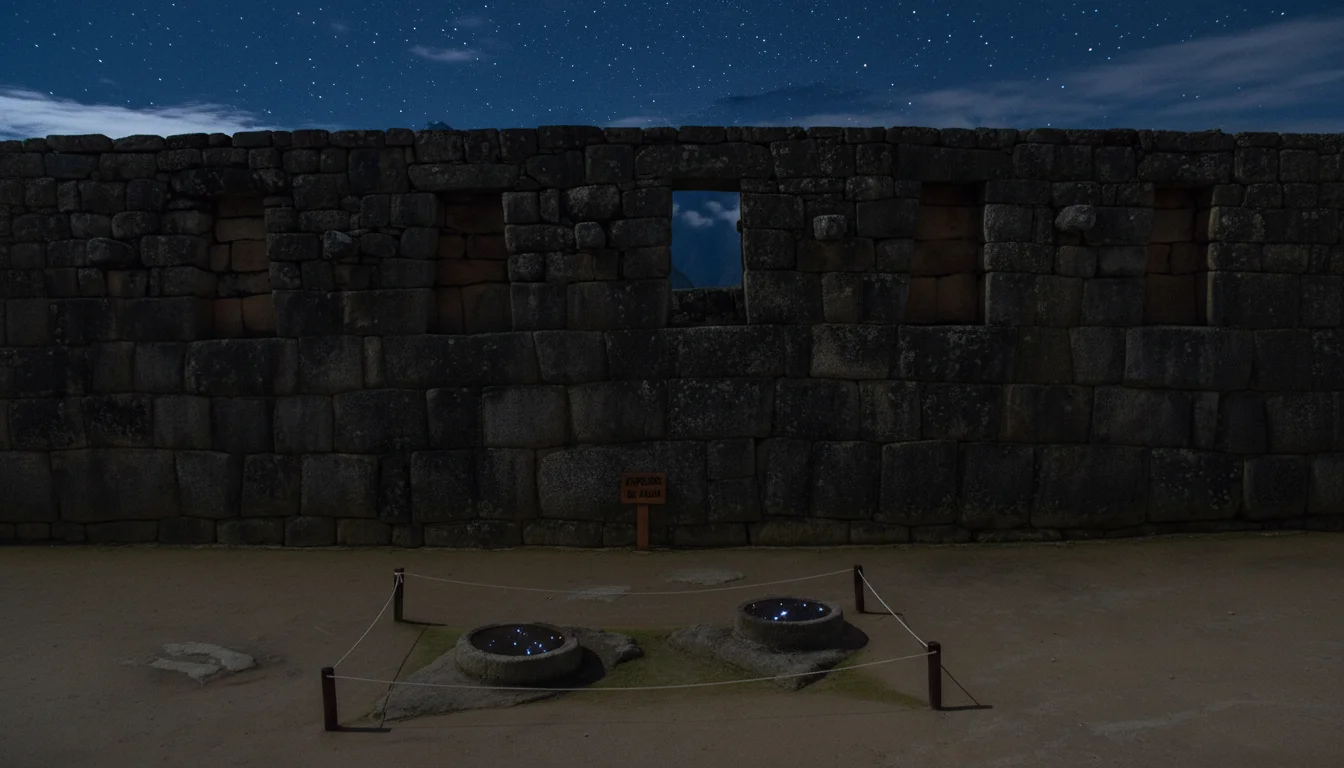
When travelers search for a massive reflective landscape in South America, they typically look toward the salt flats of Bolivia. However, the Peruvian Andes hide their own astonishing optical illusions, blending breathtaking natural geography with ancient Inca engineering.
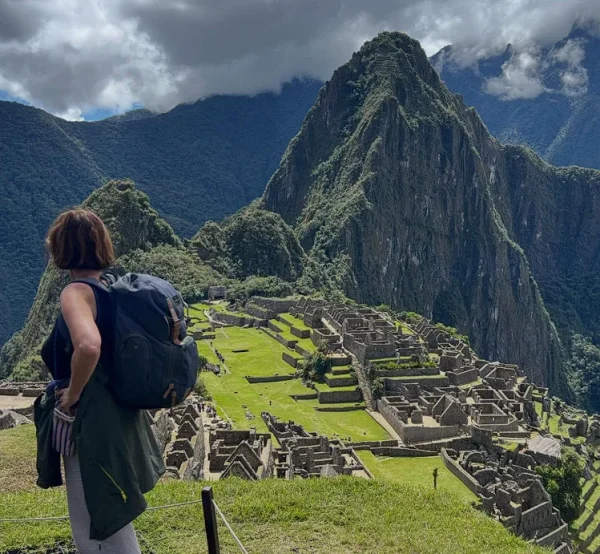
Hidden deep inside the most famous archaeological citadel in the world lies a highly sophisticated astronomical tool designed to pull the heavens down to earth. Beyond these ancient ruins, the high-altitude geography of the country offers perfectly still, glassy lakes. Let’s explore the history, exact locations, and science behind the most incredible reflective waters the Andean region has to offer.
| Location Name | Type of Mirror | Altitude | Best Time to Visit |
|---|---|---|---|
| Machu Picchu Mirrors | Archaeological / Astronomical | 2,430 meters | Year-round (Dry Season for night skies) |
| Laguna 69 | Natural Glacier Lake | 4,600 meters | May to September (Early morning) |
| Maras Salt Ponds | Fragmented Pools | 3,380 meters | December to March (Rainy Season) |
| Salinas y Aguada Blanca | Shallow Salt Flat | 4,300 meters | January to April (Flooded Season) |
The Water Mirrors of Machu Picchu as an Ancient Astronomical Observatory
Deep within the urban sector of the Inca citadel, adjacent to the Temple of the Sun, lies a roofless room that puzzles many first-time visitors. The floor features two perfectly circular depressions carved directly into the solid granite bedrock. Far from being simple puddles, The Water Mirrors of Machu Picchu were highly advanced archaeoastronomical instruments.
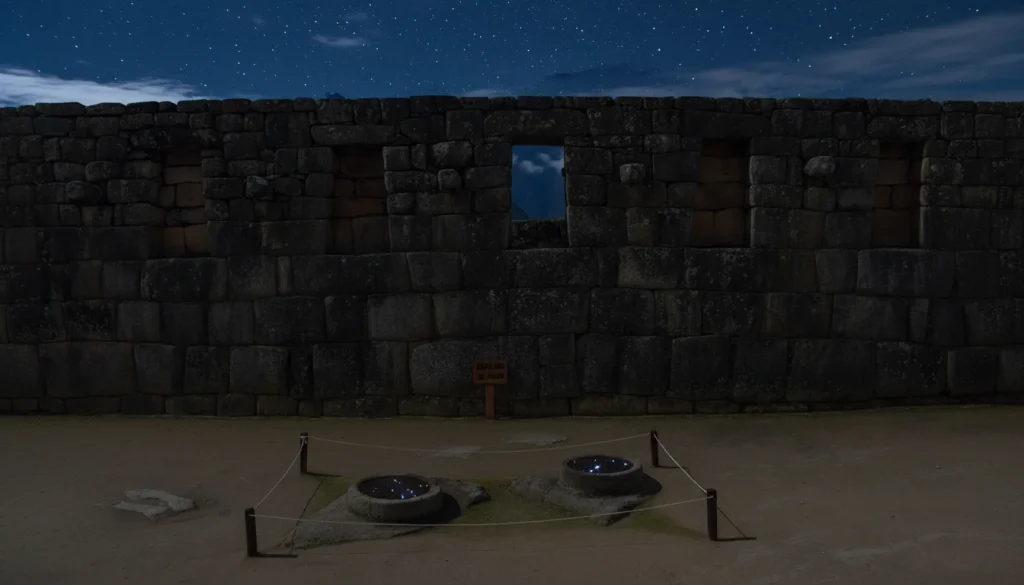
The Incas were master astronomers whose entire agricultural survival depended on tracking the stars without modern lenses or telescopes. By filling these carved stones with fresh water, the high priests created a brilliant sky mirror peru enclosed within massive stone walls, allowing them to study the cosmos with absolute precision and no wind disturbance.
How the Water Mirrors Sky Reflected the Stars and the Milky Way
For the Inca civilization, the Milky Way (known as “Mayu” or the celestial river) was the focal point of their religious cosmology. Studying its dark constellations required long, grueling hours of observation. By utilizing the Water Mirrors sky reflection, astronomers could comfortably look down at the still water instead of straining their necks upward in the freezing Andean night.
This optical method allowed them to trace the exact trajectory of specific constellations (like the Southern Cross, or “Chakana”) passing directly overhead, making this room the most historically significant sky mirror peru in the entire Tahuantinsuyu empire.
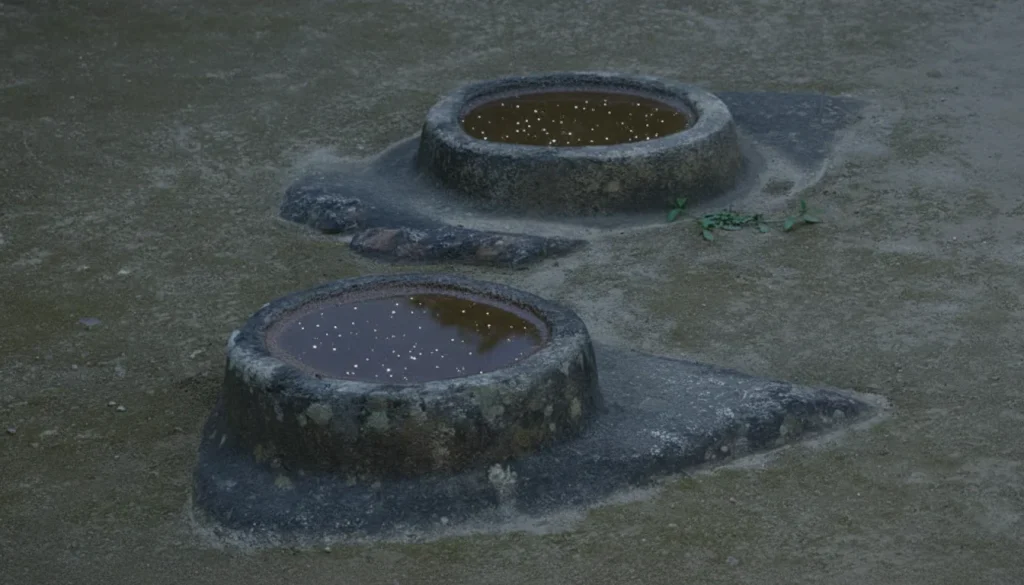
Understanding the Circular Mortars and the Night Sky Reflection
Because of their shape, early 20th-century explorers initially labeled this room the “Room of the Mortars,” assuming the stones were used to grind corn or prepare natural dyes. However, modern archaeological evidence strongly disproves this theory for several reasons:
- Lack of wear and tear: True grinding mortars show heavy friction marks. These circles are perfectly smooth and polished.
- Strategic location: The room is completely closed off from crosswinds, ensuring the water surface remains flat as glass.
- Open roof design: The Water Mirrors of Machu Picchu sit in a room that was intentionally left unroofed, allowing a clear 180-degree view of the zenith.
The Connection Between the Sacred Reflections and the Incan Solstice
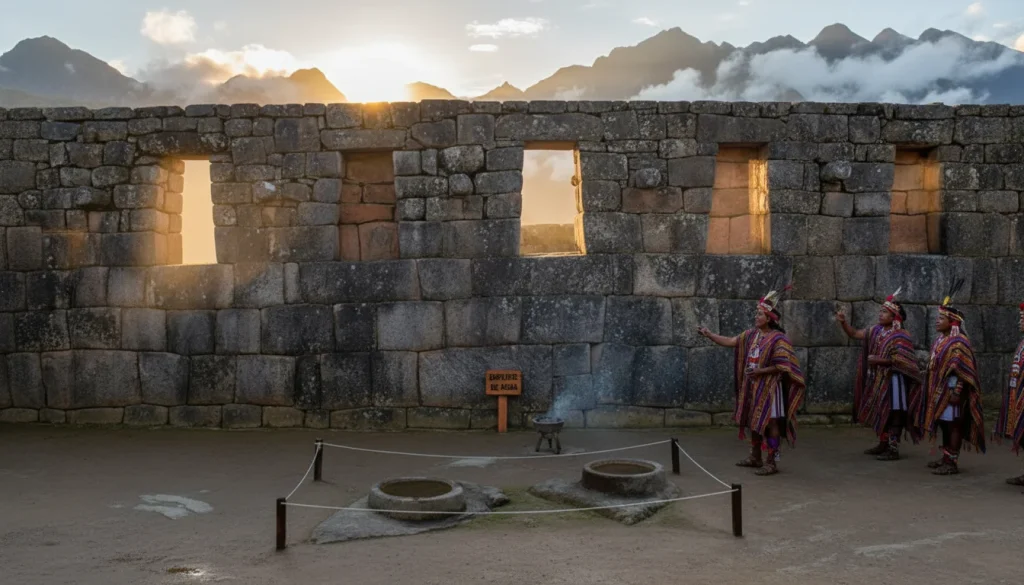
The Inca agricultural calendar depended entirely on predicting the changing seasons. The alignment of the room’s walls and the exact placement of the mirrors were constructed to capture the light of specific celestial bodies during crucial times of the year.
During the winter solstice in June (Inti Raymi), the alignment allowed the Pleiades star cluster (known as “Qollqa”) to reflect perfectly in the water. Observing this precise Water Mirrors sky phenomenon told the priests exactly when the dry season would end and when to begin preparing the terraced fields for the upcoming harvest.
Exploring Other Natural Sky Mirror Peru Locations Across the Andes
While Machu Picchu offers an incredible man-made reflective tool, the Peruvian landscape itself is full of breathtaking natural mirrors. If you are a landscape photographer or nature lover chasing the ultimate sky mirror peru experience, you must venture beyond the ruins and into the high-altitude glacier valleys and volcanic plateaus.
Laguna 69 A Crystalline Mirror Under the Peruvian Sky
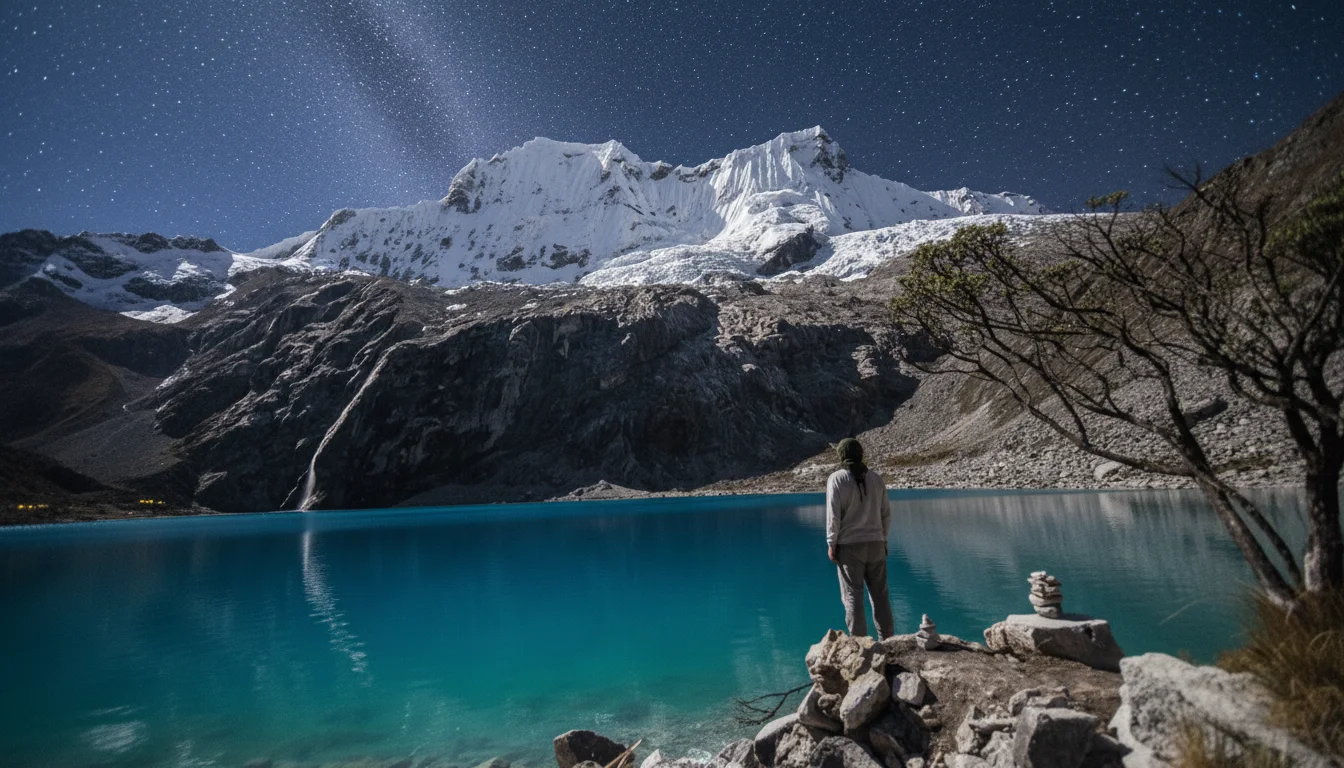
Located in the heart of the Huascaran National Park (Ancash region), Laguna 69 is widely considered one of the most beautiful bodies of water on the planet. When the fierce mountain winds settle during the early morning hours, the bright, mineral-rich turquoise water transforms into Laguna 69 a crystalline mirror under the Peruvian sky.
Because of the extreme clarity of the glacier meltwater and the lack of aquatic vegetation, the reflection is completely undistorted. Trekking to this remote location rewards hikers with what is arguably the most famous and photogenic natural sky mirror peru in the entire Cordillera Blanca.
The Glacial Waters That Reflect the Cordillera Blanca Mountain Peaks
Sitting at a breathless altitude of 4,600 meters (15,091 feet), the lake is surrounded by massive, vertical ice walls. The calm glacial waters flawlessly reflect the imposing, 6,112-meter snow-capped peak of Mount Chacraraju. This creates a mesmerizing, symmetrical sky mirror peru landscape where the dividing line between the real mountain and its icy reflection completely disappears.
Salinas and Aguada Blanca National Reserve Ponds in Arequipa
Located at 4,300 meters above sea level, situated right behind the towering Misti, Chachani, and Pichu Pichu volcanoes, this high-altitude protected reserve holds shallow salt lakes (Laguna de Salinas) that flood extensively during the wet season.
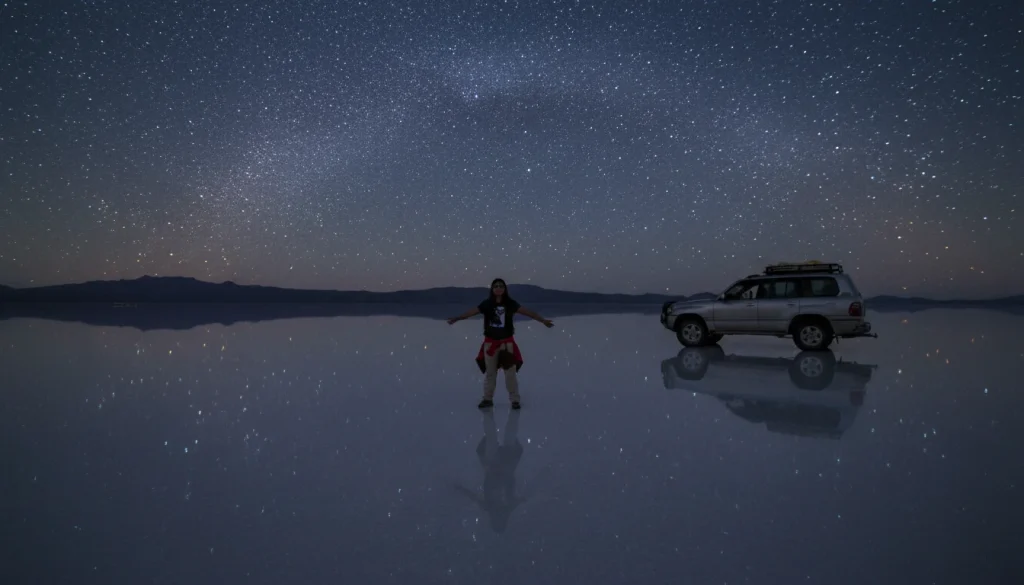
Because the water here is incredibly shallow and sits on a flat, expansive high-Andean plateau (altiplano), it creates a vast, uninterrupted sky mirror peru. It is common to see herds of wild vicuñas and rare James’s flamingos walking across the flooded plains, appearing in photographs as if they are literally walking on the clouds reflected perfectly beneath their feet.
Frequently Asked Questions About the Sky Mirror Peru
The Sky Mirror Peru refers to the famous “Water Mirrors” (Espejos de Agua) located directly inside the ancient Inca citadel of Machu Picchu. Found in the urban sector, specifically inside the Room of the Mortars, these are two perfectly carved circular stone basins on the floor. When filled with water, they act as flawless mirrors reflecting the Andean sky, used by Inca priests as an advanced astronomical observatory.
The absolute best time to visit the Machu Picchu sky mirrors is during the Andean dry season, which runs from May to October. During these months, the skies are mostly clear and blue, allowing you to clearly see the reflection of the sky and the surrounding stone walls perfectly captured in the still water of the carved basins.
To see the Sky Mirror, you do not need to look for a specialized “mirror tour.” Instead, you simply need to book a standard Machu Picchu guided tour through an authorized travel agency. When booking your entrance tickets online, make sure to choose the specific circuit that includes the urban sector and the Temple of the Sun area, as this is where the Water Mirrors room is located.
No, a boat tour is not required. The <strong>Sky Mirror Peru</strong> is not a lake or a beach, but rather a remarkable piece of ancient stone engineering located 2,430 meters high in the Andes mountains. You will reach this attraction by walking through the stone pathways of the Machu Picchu archaeological site.
Getting there involves a multi step journey. First, you must take a short domestic flight from Lima to the city of Cusco (about 1.5 hours). From Cusco or the Sacred Valley, you will take a scenic train ride to the town of Aguas Calientes. Finally, a 30-minute shuttle bus ride will take you up the mountain to the Machu Picchu entrance gates.
To capture the perfect reflection inside the ancient stone room, photographers recommend bringing a wide-angle lens, as the room itself is relatively compact. A Circular Polarizing Filter (CPL) is highly recommended; rotating it allows you to control the glare from the sun and capture the deep, crystal-clear reflection of the sky inside the stone basins.
The cost depends on your travel style, but visiting the Sky Mirror Peru requires purchasing an official Machu Picchu entrance ticket (around $41 to $62 USD for adults). You also need to factor in the cost of the train ticket from Cusco to Aguas Calientes (ranging from $100 to $200 USD round trip) and the bus ticket up to the ruins ($24 USD round trip).