When international travelers ask what is the capital of Peru, the answer reveals a city of profound complexity and contrast. Lima, the capital of Peru, is not merely a stopover on the way to Machu Picchu; it is a sprawling metropolis of over 10 million inhabitants that encapsulates the entire history of South America.
It is the only capital in the Americas located directly on the ocean’s edge, perched on cliffs overlooking the Pacific, creating a dramatic intersection between urban density and nature.
As the political, financial, and cultural powerhouse of the nation, the Peru capital generates nearly 50% of the country’s GDP and serves as the primary gateway for international tourism. Lima capital of Peru is a city of layers: beneath its modern skyscrapers lie ancient adobe pyramids (huacas), and within its colonial mansions, you find the remnants of the Spanish Empire.
From its status as the undisputed “Gastronomic Capital of the Americas” to its vibrant arts scene, Lima demands time to be understood, rewarding visitors with a deep dive into the modern Peruvian identity that blends indigenous, European, African, and Asian roots.
Essential Facts About the Capital City of Peru and Its Location
To truly grasp the dynamics of the country, one must first analyze what is the capital city of Peru. Lima is a desert metropolis, ranking as the second largest desert capital in the world after Cairo, Egypt. Despite receiving almost zero rainfall (less than 9mm annually), it sustains a massive population through the waters of the Rímac, Chillón, and Lurín rivers which descend from the Andes. This scarcity of water vs. density of population defines the daily challenges and engineering marvels of the Peru capital city.
If you are orienting yourself and asking where is the capital of Peru, it is situated on the central coast of the country at sea level (roughly 154 meters altitude on average). Its geographic location creates a unique microclimate.
The cold Humboldt Current from Antarctica cools the ocean, preventing tropical heat but creating a persistent layer of low clouds known as “La Garúa.” This mist protects the city from extreme heat but shrouds it in a moody, atmospheric grey for half the year, a feature that has deeply influenced Limeno literature and art.
Locating the Capital of Peru on the Map and Geographic Details
A detailed capital of Peru map reveals its strategic importance. Lima is the midpoint of the Pan American Highway in Peru, connecting the northern desert cities like Trujillo with the southern valleys of Ica and Arequipa.
The Peru capital map also highlights the constitutional province of Callao, which acts as the city’s maritime lung. Callao handles the vast majority of Peru’s imports and exports, making the conurbation of Lima Callao the logistical hub of the entire nation.
On a map of Peru with capital markers, you will notice Lima sits to the west of the Andes mountains. These mountains act as a natural wall, trapping humidity and pollutants but also providing the water and hydroelectric power the city needs.
As the capital of Peru country, Lima’s coastal position allowed it to dominate trade during the colonial era, a dominance that continues today as it serves as the headquarters for multinational corporations and the Andean Community of Nations.
What Is the Capital of Peru Called in Spanish and Local Terminology
For English speakers asking “what is the capital of Peru in Spanish?”, the name is identical: Lima (pronounced Lee ma). However, historically, it was founded as “La Ciudad de los Reyes” (The City of Kings). While this title is still used in formal or poetic contexts, the local name “Lima” prevailed.
Linguists believe “Lima” is a corruption of the Quechua word Rimaq (Speaker/Talker), referring to the Rímac River’s roaring waters during the rainy season. Thus, Lima is the “City of the Talker.”
In local slang and media, the capital de Perú is often referred to as “El Pulpo” (The Octopus) because of its centralist grip on the nation, or affectionately as “Lima la Gris” (Lima the Grey) due to its winter skies. The term “Limeño” refers to a male resident, and “Limeña” to a female.
The capital of Peru in Spanish nomenclature also distinguishes between “Lima Metropolitana” (the city proper) and “Lima Provincias” (the rural areas surrounding the department), a distinction vital for understanding the region’s governance.
History Behind Why Lima Is the Capital of Peru Instead of Cusco
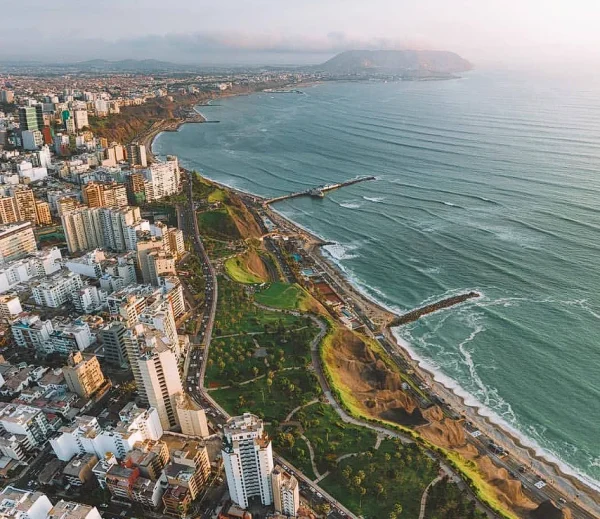
A common question is: Is Lima the capital of Peru by indigenous tradition? No. For centuries, Cusco (Qosqo) was the “Navel of the World” and the imperial capital of the Tawantinsuyu (Inca Empire). The history of Lima as the capital is entirely a colonial construct.
When Francisco Pizarro conquered Peru, he initially looked at Jauja in the central Andes as a capital. However, the Spanish realized that high altitudes, rugged terrain, and distance from the sea made logistical support from Spain impossible.
Lima the capital of Peru was chosen purely for geopolitical strategy. It had a natural harbor (Callao), a moderate climate, and friendly indigenous cooperation in the valley. While Cusco remained the symbolic heart of the Andean world, the capital of Lima Peru became the administrative brain of the Viceroyalty.
This decision shifted the axis of power in South America from the mountains to the coast, creating a duality that still defines Peruvian society today: the coast vs. the highlands.
The Foundation of the City of Kings by Francisco Pizarro in 1535
The official Peru capital name was established on January 18, 1535. Francisco Pizarro, the Spanish conquistador, traced the city’s blueprint with his own sword in the Plaza Mayor. He named it “Ciudad de los Reyes” to honor the Three Wise Men (Magi), as the search for the capital site began on Epiphany (January 6th).
However, the indigenous usage of Limaq or Rimaq was so strong that the Spanish name eventually faded in daily use, leaving us with Lima Peru capital.
Pizarro designed the capital of Peru name city on a classic “Damero de Pizarro” (checkerboard grid), a standard urban planning model for Spanish colonies designed to optimize defense and order.
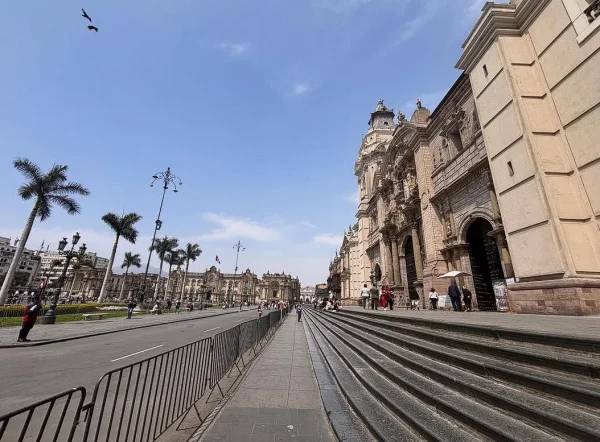
The Plaza de Armas was the nucleus, surrounded by the Church (Cathedral), the State (Governor’s Palace), and the Local Government (Cabildo). This layout remains intact today in the Historic Center, a testament to the meticulous planning that went into creating the most important Spanish city in South America.
Understanding the Shift from the Inca Capital to the Spanish Capital
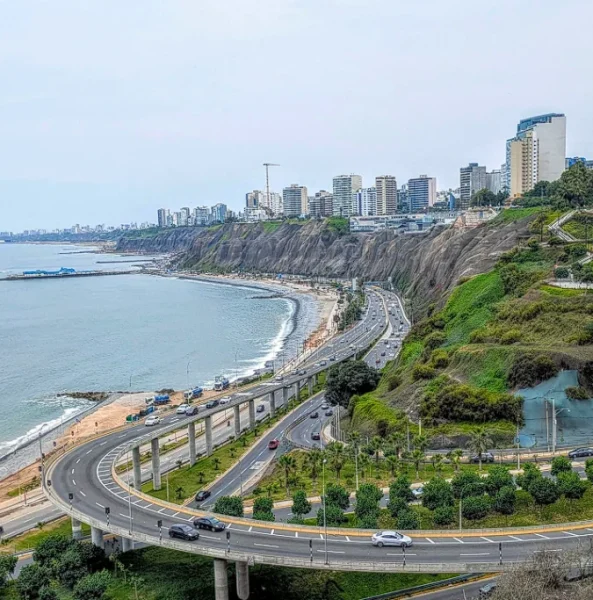
When discussing the capitals of Peru, we are really discussing two different civilizations. The Inca capital vs Spanish capital comparison highlights a clash of worldviews. Cusco was designed in the shape of a Puma, integrated with sacred geography (Ceque lines), and built with stone to last eternity.
The capital of Peru is now Lima, which was built with adobe, quincha (mud and cane), and wood, designed for trade, bureaucracy, and connection to Europe.
This shift marginalized the Andes for centuries. Lima became the “Pearl of the Pacific,” a city of aristocratic wealth, universities (San Marcos, the oldest in the Americas, founded in 1551), and vice regal courts. Meanwhile, Cusco became a secondary provincial city until its rediscovery as a tourism hub in the 20th century. Today, Peruvians recognize Cusco as the “Historical Capital” (Constitutionally recognized) and Lima as the “Political Capital.”
Best Districts to Visit in the Capital City of Peru for Tourists
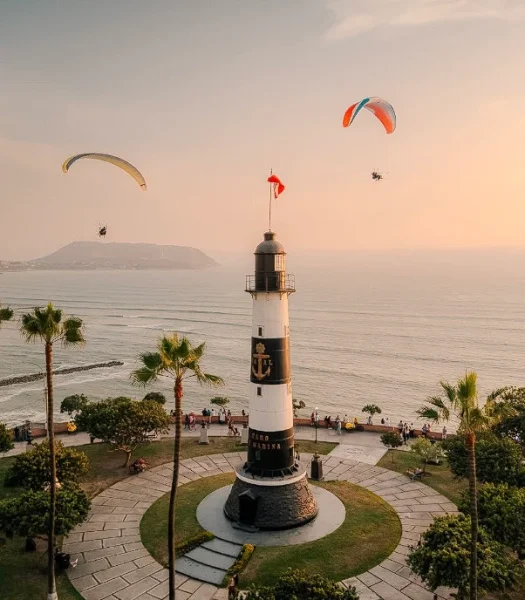
While the Peru capital and important cities like Arequipa and Trujillo offer distinct experiences, Lima is a universe of 43 micro cities (districts). Navigating the capital city in peru requires knowing where to go. The city is vast, but for tourists, the focus is on the “Modern South” (Miraflores, Barranco, San Isidro) and the “Historic Center” (Cercado de Lima).
The districts of Lima vary wildly in safety and vibe. San Isidro is the financial heart with manicured olive groves. Miraflores is the cosmopolitan face with parks and malls. Barranco is the artistic bohemian quarter.
The Historic Center is the museum of the past. Meanwhile, districts like Callao are transforming with street art initiatives (Monumental Callao), offering new cultural frontiers for adventurous travelers.
Miraflores and Barranco as the Tourist Hubs of the Capital
Modern Lima is best experienced in Miraflores. This district sits on cliffs 80 meters above the Pacific Ocean. The “Malecon” (boardwalk) connects parks filled with paragliders, joggers, and art installations (like the famous Parque del Amor).
It hosts the highest density of hotels in Miraflores, from global chains like Marriott to boutique options, making it the safest and most convenient base for exploring Lima capital Peru.
Adjacent to it is Barranco. If Miraflores is Miami, Barranco is hipster Brooklyn mixed with colonial charm. It was originally a beach resort for the 19th century aristocracy. Today, its colorful mansions house the city’s best art galleries (like MATE and MAC) and cocktail bars. Barranco represents the soulful side of the capital city of Peru, where poets and musicians gather, and where you can cross the wooden “Bridge of Sighs” (Puente de los Suspiros).
Historic Center of Lima and UNESCO World Heritage Sites
The Historic Center of Lima is non negotiable for history lovers. Declared a UNESCO site in 1991, it holds the highest concentration of colonial architecture in the Americas. Key sights include the Monastery of San Francisco (famous for its catacombs holding 25,000 skeletons) and the Basilica Cathedral of Lima, which houses the tomb of Francisco Pizarro.
This area is also the hub for museums in Lima. The Museo de la Inquisición (Inquisition Museum) and the Casa de la Gastronomía are here. The architecture here features the famous “Balcones de Lima” enclosed wooden balconies that allowed noblewomen to watch the street without being seen, a distinct architectural feature derived from Moorish Spain that is unique to Lima’s colonial identity.
Lima as the Economic Engine and GDP Concentration of the Country
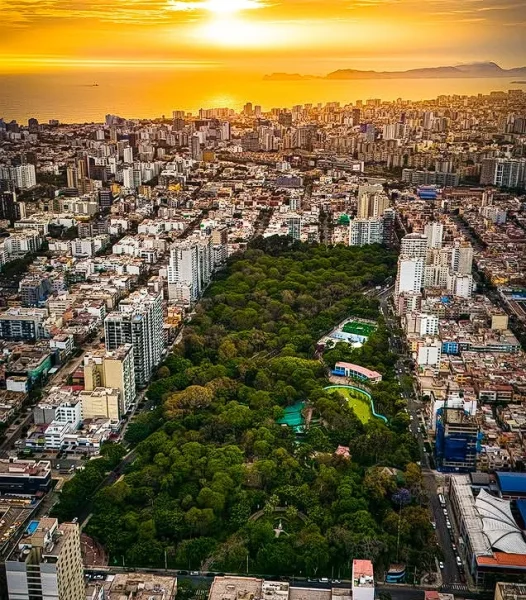
Lima is the leviathan of the Peruvian economy. The economy of Lima generates approximately 45-50% of the national Gross Domestic Product (GDP). It is the industrial, financial, and service hub. Almost all major banks, mining conglomerates, and international firms operating in Peru are headquartered in San Isidro or Surco.
This centralization means that Peru GDP per capita metrics are heavily skewed by the capital’s performance.
While the national per capita income Peru hovers around averages that include rural poverty, Lima possesses a consumer class with purchasing power rivaling parts of Southern Europe. However, this wealth attracts internal migration, leading to the “Conos” (Northern, Southern, and Eastern cones) vast residential areas of varying development that house the workforce powering the city.
Analysis of Peru GDP Per Capita and Economic Growth in Lima
Analyzing Peru GDP per capita 2024, the nation is recovering from post pandemic shocks, with Lima leading the charge. The GDP per capita of Peru is roughly $7,500-$8,000 USD (nominal), but in Lima, this can be double that of rural regions. The capital benefits from port logistics (Callao), a booming construction sector, and a sophisticated culinary industry that exports Peruvian cuisine globally.
The per capita income of Peru in Lima supports a thriving retail sector (massive malls like Jockey Plaza) and private education/healthcare systems. However, the informal economy remains huge roughly 60-70% of workers in Lima operate informally, driving taxis, selling street food, or running small unregistered businesses, which adds a layer of economic vibrancy not fully captured in official GDP statistics.
Why the Capital Concentrates the Wealth and Per Capita Income in Peru
The concentration of GDP per capita in Peru in Lima is a result of 500 years of centralist policy. Infrastructure roads, internet, airports was built radially to connect the provinces to Lima, not to each other. This ensures that raw materials flow to the capital for export, and finished goods flow out from it. Consequently, per capita GDP Peru stats reflect this bottleneck.
The high PIB per capita Peru in the capital draws talent from across the nation. The best universities and hospitals are here. This “brain drain” from the provinces to Lima reinforces the city’s dominance. While regional governments are gaining more autonomy, Lima remains the decision making center where the political and economic elites reside, making it the unavoidable engine of the country’s development.
Cultural Guide and Things to Do in the Gastronomic Capital
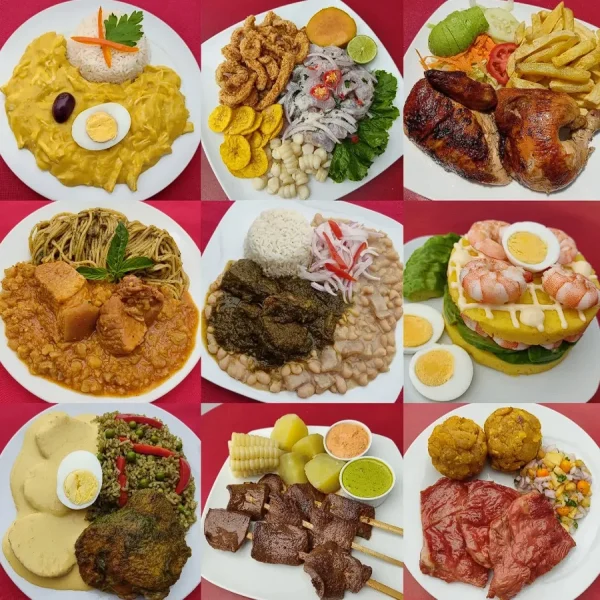
Lima is officially the Food Capital of Peru and holds the title of “Leading Culinary Destination in South America” (World Travel Awards) year after year. For many, gastronomy in Lima is the primary travel motivation. The city is a melting pot (crisol) of cultures: Andean, Amazonian, Spanish, African, Chinese (Cantonese), Italian, and Japanese. This fusion created a unique cuisine that is sophisticated yet soulful.
When looking for what to do in Lima, start with your palate. But don’t stop there. Visit the “Huacas” (like Huaca Pucllana), ancient adobe pyramids sitting right in the middle of modern residential neighborhoods. Surf the break at Waikiki Beach in Miraflores. Visit the Magic Water Circuit (Circuito Mágico del Agua), the world’s largest fountain complex in a public park.
Tasting the Best Cuisine in the Gastronomic Capital of the Americas
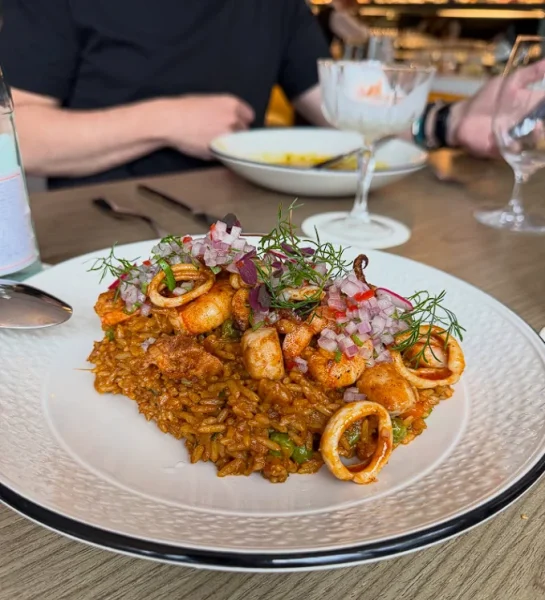
As the culinary capital, Lima is home to restaurants like Central (Virgilio Martínez) and Maido (Mitsuharu Tsumura), which consistently rank in the top 10 of “The World’s 50 Best Restaurants.” These best restaurants in Lima offer tasting menus that explore biodiversity, from 4,000 meter altitude tubers to Amazonian river fish.
However, real Peruvian food is also found in the “Huariques” (hidden spots). Try Ceviche (raw fish cured in lime) for lunch never dinner! Try Lomo Saltado (sti fried beef), a testament to Chinese influence. Taste Anticuchos (beef heart skewers), an Afro Peruvian delicacy, on a street corner.
Drink a Pisco Sour or the purple corn drink Chicha Morada. In Lima, eating is a ritual, a conversation starter, and a source of intense national pride.
Cultural Activities and Museums in Lima Capital Peru
Lima’s history is best preserved in its institutions. The Larco Museum is the crown jewel of museums in Lima. Housed in an 18th century vice royal mansion, it displays 5,000 years of pre Columbian history. Its collection of Moche erotic pottery and gold/silver regalia is unmatched. Its garden restaurant is also legendary.
The MALI Museum (Museo de Arte de Lima) in the Parque de la Exposición covers 3,000 years of art, from ancient textiles to modern photography. For archaeology, the National Museum of Archaeology, Anthropology, and History in Pueblo Libre is the oldest state museum. These visits provide the context needed to understand the Incas and pre Incas before you head to the mountains.
Frequently Asked Questions about Lima, Peru
Yes, but with caveats. Districts like Miraflores, Barranco, and San Isidro are very safe, with heavy “Serenazgo” (municipal police) patrols. The Historic Center is safe during the day but requires caution at night. Avoid displaying expensive cameras or phones on the street. Use ride sharing apps like Uber or Cabify instead of street taxis to avoid scams.
Plan for 2 to 3 days. Use Day 1 for the Historic Center (Cathedral, Catacombs). Use Day 2 for Modern Lima (Miraflores boardwalk, Huaca Pucllana, Larco Museum). Use Day 3 for a food tour or a visit to the bohemian Barranco district and the art galleries.
Summer (December to April) is the golden season: sunny skies, warm temps (25-28°C), and perfect sunsets. Winter (May to November) is overcast with the “Garúa” mist and cooler temps (15-19°C), but it never freezes or snows. It’s great for eating and museums, but the sky will likely be white/grey.
No. Do not drink tap water in Lima. The water is treated at the plant, but the pipe infrastructure in the city varies in quality. Stick to bottled water or boiled/filtered water to avoid stomach bugs. Brush your teeth with bottled water if you have a sensitive stomach.
Lima caters to all budgets. You can have a world-class tasting menu for $200 USD, or a delicious 3-course “Menu del Día” for $4 USD. Accommodation ranges from $10 dorms to $300 luxury suites. Transport is cheap (Metropolitano bus is approx $0.85 USD). Overall, it is affordable compared to US/EU standards but pricier than rural Peru.