Peruvian dances are a profound expression of a country rich in history and diversity. When you explore Peru music and dance, you quickly realize that every movement, costume, and rhythm tells an ancestral story. From the warm Pacific coast to the freezing Andes and the lush Amazon, dance in Peru blends Indigenous roots with African and Spanish influences into a vibrant cultural mosaic.
In many local communities, a traditional Peruvian dance is not just a performance. It is a sacred ritual to honor the earth, celebrate agricultural harvests, and preserve history. In this guide, we break down the most popular dances in Peru to help you understand the true soul of Peruvian dancing.
The Most Famous Dances of Peru
Every region in the country has its own specific style of Peru traditional dance. Here are the essential performances that define the nation’s folkloric identity.
Marinera The National Dance of Peru
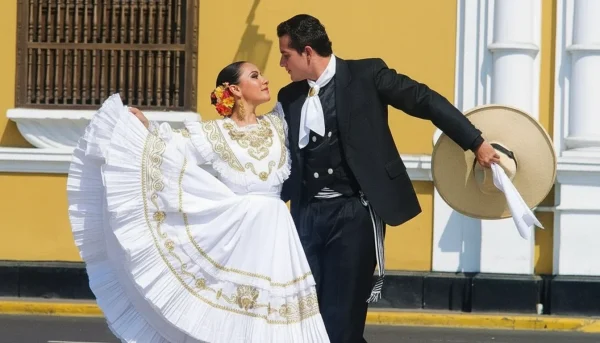
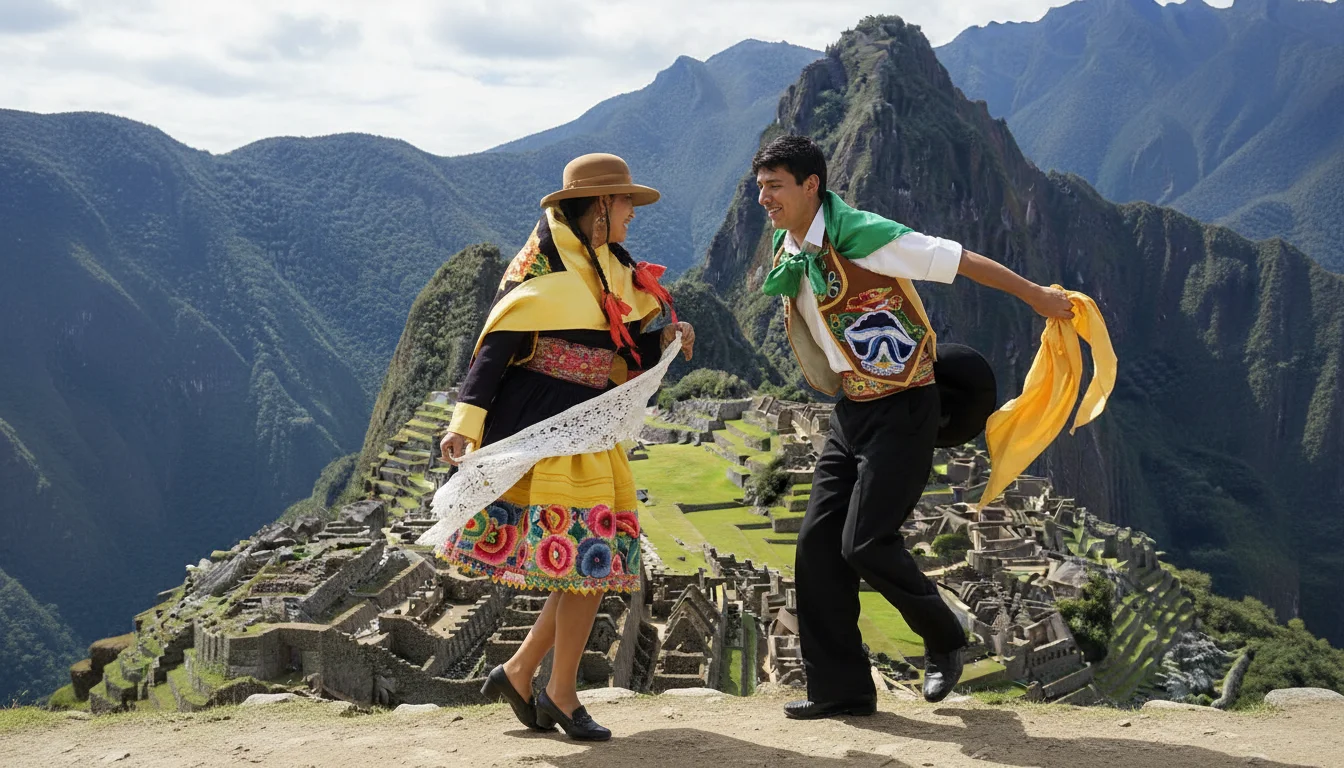
Originating from the northern coast, the Marinera is widely considered the crown jewel of traditional Peruvian dances. It is an elegant and complex romantic chase between a couple.
- The Technique: The woman dances barefoot to symbolize her connection to the earth, managing heavy skirts, while the man circles her gallantly with a straw hat.
- The Symbolism: Both dancers use white handkerchiefs to communicate, creating an incredible display of elegance and rhythm.
Huayno The Heartbeat of the Andes
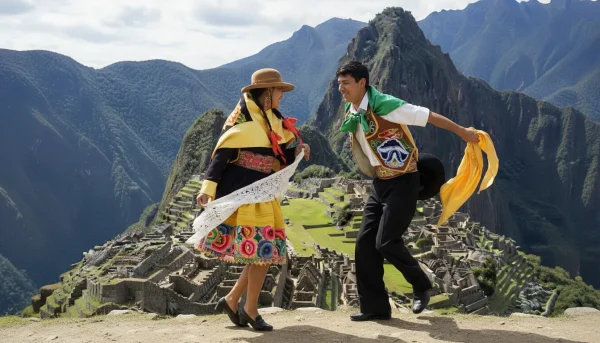
The Huayno is the most widespread and beloved peruvian folk dance across the Andean highlands. It is the definitive soundtrack of daily life, performed at Patron Saint festivals and local weddings.
- The Music: Driven by high pitched vocals and traditional instruments like the quena flute, harp, and charango.
- The Movement: Famous for its energetic footwork known as the zapateo, an earth-shaking rhythmic stomp that honors the Pachamama (Mother Earth).
Festejo Afro Peruvian Heritage
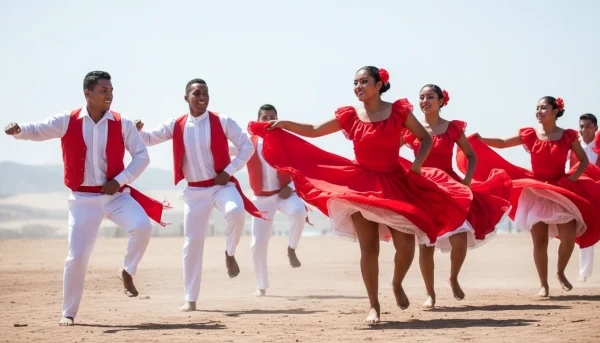
Rooted in the central and southern coast, specifically around Ica and Chincha, the Festejo is an explosion of rhythm. Born from the African communities who made Peru their home, this dance celebrates freedom and resilience.
- The Rhythm: Powerfully driven by the Cajón Peruano (a wooden box drum) and the quijada (a donkey jawbone).
- The Style: Dancers move with an athletic, loose energy involving rapid hip movements, making it one of the most vibrant styles of peruvian dancing.
Tondero Northern Peru’s Rural Expression
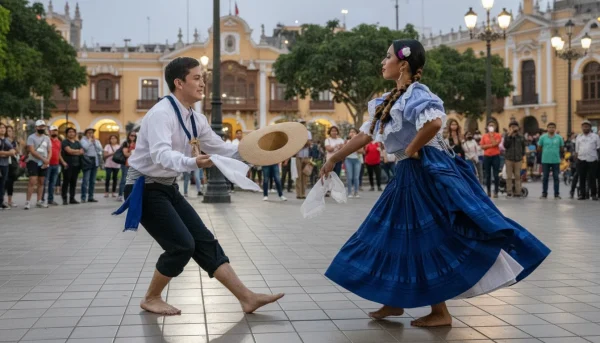
Born in the scorching heat of Piura the Tondero is the rebellious and earthy cousin of the Marinera. This traditional Peruvian dance represents everyday life as it exists in rural coastal communities. It is raw passionate and almost always danced barefoot because the performers need to feel the burning ground beneath them.
The choreography mimics a rooster chasing a hen starting with a slow soulful guitar intro before suddenly exploding into a fast foot stomping rhythm. The Tondero illustrates themes of working finding romance and adhering to local customs with freedom and creativity.
Cajamarca Carnival Dance
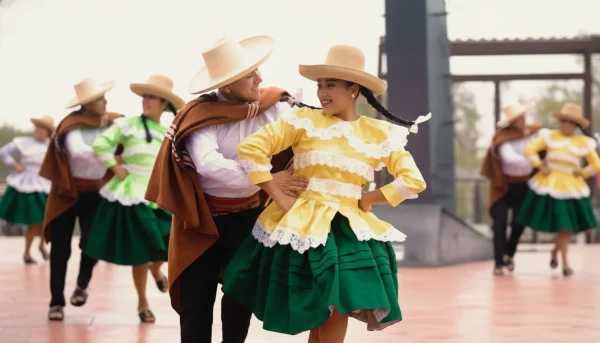
The Cajamarca Carnival is one of the most joyful and communal expressions of Peru dances. During February, entire neighborhoods form troupes and flood the streets to dance to live bands.
- The Experience: It is a spontaneous celebration that blends European carnival customs with deep Andean traditions, featuring vibrant costumes and playful rhymes.
Scissors Dance Danza de las Tijeras
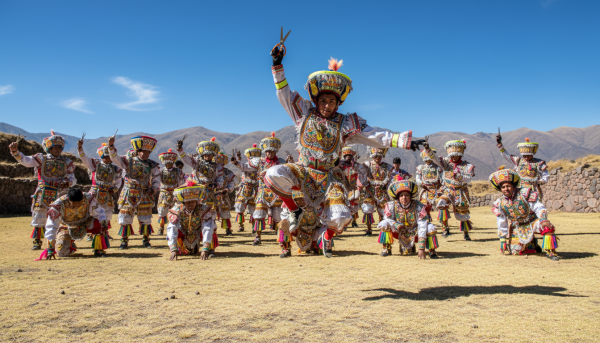
Originating in the highlands of Ayacucho and Apurímac, this is one of the most intense dances in Peru. It combines artistry, spirituality, and extreme physical endurance.
- The Performance: The dancers, called Danzaq, perform acrobatic jumps and contortions while aggressively clicking two heavy metal blades in their hands.
- The History: This traditional dance of Peru began centuries ago as a ritual competition between Andean priests and remains a mesmerizing symbol of cultural resistance.
Diablada Puneña Cultural Identity of Puno
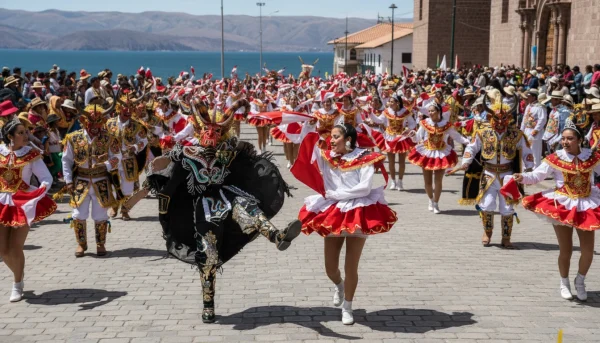
Puno is known as the folkloric capital of the country, and the Diablada is its most visually stunning performance, showcased massively during the Virgen de la Candelaria Festival.
- The Meaning: It acts out the eternal battle between the Archangel Michael (representing good) and an army of Demons (representing evil).
- The Attire: Dancers wear massive, terrifying devil masks with huge horns and heavily embroidered capes.
Shapis of Chupaca
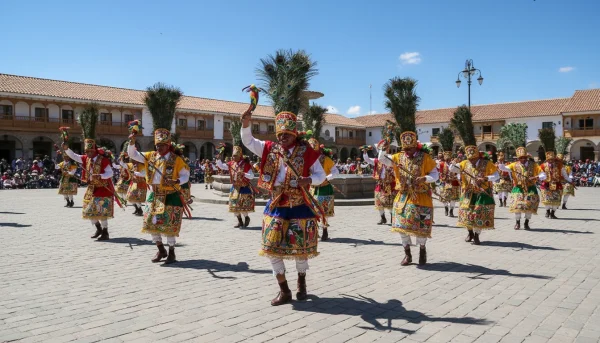
If you head into the central Andes specifically the Junín region you’ll find a dance of Peru that is pure pride and resilience. The Shapis isn’t just a performance; it’s a history lesson about survival.
The backstory is epic: it represents Wanka warriors who fled to the jungle to avoid being conquered, and then returned home years later, triumphant and changed. That’s why the costumes are so unique they mix mountain styles with “exotic” elements to show where they’ve been. The dancers wear masks that look like fierce elders with beards, strutting with an air of absolute confidence and elegance. Accompanied by upbeat huaynos, it is a proud, strutting display that stands out among traditional peruvian dances. It’s a powerful reminder that dance in Peru is often how people keep their history alive.
Puno Pandilla
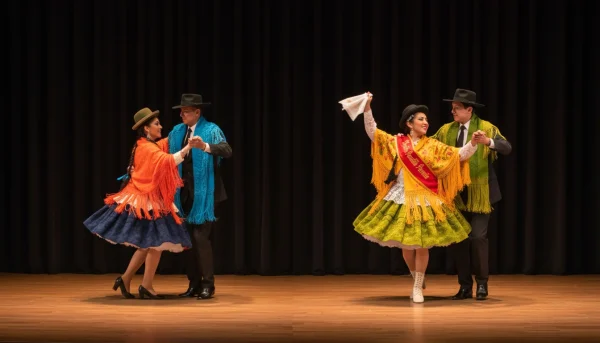
If the Marinera is a formal date, the Pandilla Puneña is the best street party you’ve ever been to. This is the definition of joy in the high Andes. Unlike other traditional dances in Peru that might require strict rehearsals, the Pandilla is all about community, spontaneity, and just letting go.
During Carnival season, the streets of Puno explode with life. Picture this: endless rows of dancers men and women holding hands snaking through the city, waving streamers, throwing flowers, and spraying water. It’s chaotic in the best way possible. And they aren’t just dancing; they’re singing cheeky, flirtatious, and often hilarious verses to each other as they move. It captures the playful soul of Peru music and dance, proving that dance in Peru isn’t always about serious rituals sometimes, it’s just about having a really, really good time with your neighbors.
Amazonian Dances The Anaconda Dance
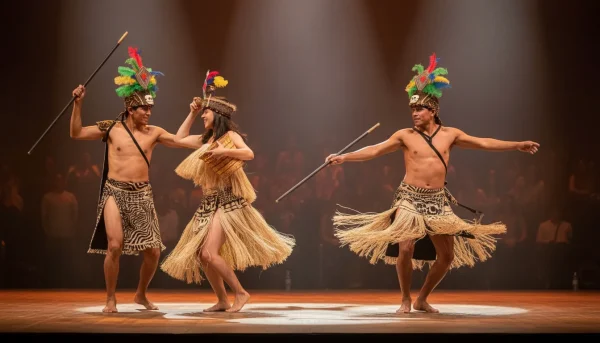
In the lush heart of the jungle, Amazonian dances are a deeply spiritual act used to thank nature. The Anaconda dance is a perfect example of this connection.
- The Representation: Dancers form long, undulating lines to mimic the movement of the massive serpent through the water, celebrating fertility and the cycle of nature.
- The Costumes: Made entirely from natural materials like plant fibers, feathers, and organic dyes.
The Evolution of Peruvian Dance Styles
The landscape of music and dance in Peru is constantly evolving. In recent decades, Peruvian cumbia (locally known as Chicha) has taken the nation by storm. By blending traditional Andean huayno melodies with tropical guitar sounds, cumbia has become the modern rhythm of the working class.
For travelers eager to connect with the culture, taking Peruvian dance classes in cities like Lima or Cusco is highly recommended. Whether you want to learn the steps of the coastal Marinera or feel the energy of Andean dancers, experiencing these rhythms firsthand provides a deeper understanding of Peru’s living heritage.
Global Pop Culture and Peruvian Music
The enchanting sounds of the Andes have even made their way into global pop culture. Many international audiences were first introduced to the hypnotic sounds of the pan flute through popular television shows.
A famous example is the episode featuring characters observing a Peruvian flute band performance which sparked a surge of online searches for traditional Andean music. While these pop culture moments are often humorous they highlight just how recognizable and universally appealing Peruvian music and dance have become around the world.
Where to Experience Peruvian Dance Classes
For those inspired by these rhythmic traditions taking Peruvian dance classes is an incredible way to connect with the culture. Many cultural centers in cities like Lima and Cusco offer workshops for travelers eager to learn the basic steps of the Marinera or the Festejo.
For those outside of South America the growing Peruvian diaspora means you can often find dedicated instructors teaching these passionate dances in major cities worldwide keeping the vibrant heritage of Peru dancing alive across the globe.
Frequently Asked Questions About Peru Dance
The most recognized styles include the elegant Marinera from the northern coast, the energetic Andean Huayno, the acrobatic Scissors Dance, and the rhythmic Afro Peruvian Festejo. Each region boasts distinct traditional dances that serve to honor the earth and preserve ancestral stories.
You can witness these incredible performances throughout the country.
- In Puno: During the massive Virgen de la Candelaria festival in February.
- In Cusco: During the Inti Raymi celebrations in June.
- In Lima: At traditional peñas and specialized cultural dance shows available year round.
You can easily find dance schools in the US that teach traditional Peruvian dances especially in major cities with strong Latin American communities like Miami Los Angeles and New York. If you prefer learning at home there are numerous online resources and apps that teach traditional Peruvian dances step by step. You can also find digital downloads of traditional Peruvian dance performances and connect with instructors specializing in Andean dance traditions who teach through virtual workshops.
Yes there are many specialized costume suppliers for traditional Peruvian dance attire available online offering authentic handwoven skirts ponchos and intricate masks directly from Andean artisans. To accompany your practice or cultural event numerous platforms and cultural companies sell music albums that feature traditional Peruvian dance music giving you access to the authentic sounds of the quena flute and the cajon to complete your immersive experience.
The Peruvian diaspora proudly celebrates its heritage globally meaning you can often attend upcoming Peruvian cultural festivals featuring traditional dance across the United States particularly around the Peruvian Independence Day in July. Additionally you can definitely hire traditional Peruvian dance performers for private events in the US bringing the vibrant energy of the Marinera or the Festejo directly to your local celebrations and educational workshops.
The instrumentation varies heavily by region.
The Andes: Relies on the quena (flute), zampoña (panpipes), and charango (a small Andean guitar).
The Coast: Heavily features the Spanish guitar and the Afro-Peruvian Cajón (wooden drum).
Yes. Many cultural centers in Lima and Cusco offer workshops tailored for travelers. Additionally, due to the large Peruvian diaspora, you can easily find dance schools teaching peruvian dance styles in major cities across the US and Europe.