Who Is the Virgin of Candelaria and Her Origins
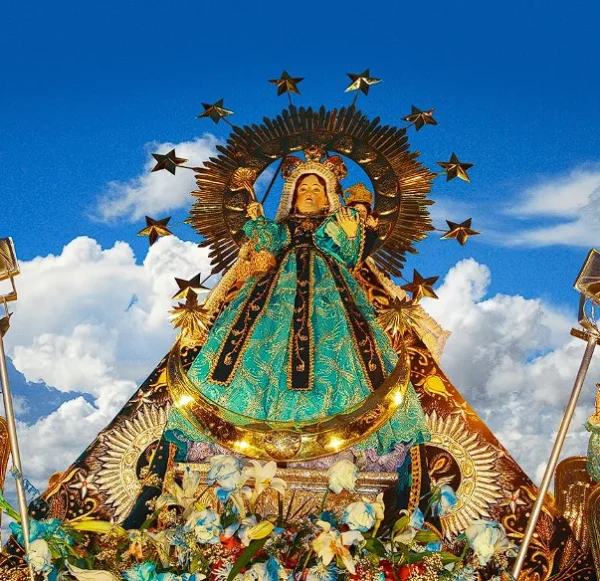
To fully grasp the festival's importance, we must answer: who is the Virgin of Candelaria? Theologically, she represents the Virgin Mary in the act of purifying herself 40 days after childbirth and presenting the infant Jesus at the temple. Her name comes from the candle ("candela") she holds, symbolizing Christ as the light that illuminates the world. However, in the Altiplano, the Virgin of La Candelaria is much more than a biblical reference; she is the Protectress of Puno and the patron saint of the miners, who historically prayed to her for safety in the depths of the earth.
The Virgin of Candelaria history in Puno is cemented by a specific historical event/legend from 1781. During the Great Rebellion of Túpac Amaru II, the city of Puno was besieged by the rebel forces of Túpac Catari. The Spanish and mestizo inhabitants, outnumbered and out of ammunition, took the image of the Virgin out in a procession. Legend states that the candles lighting the procession cast such a reflection on the weapons of the small defense force that the besieging army, believing a massive reinforcement of soldiers had arrived, retreated in confusion. Since that miracle, her status as the savior of Puno has been absolute.
Virgin of Candelaria History: From Tenerife to the Andes
The Virgin of Candelaria history is a transatlantic narrative. The devotion originated in Tenerife, Canary Islands (Spain), following an apparition to Guanche shepherds in the late 14th century. As the Spanish conquest moved to the Americas, so did their patron saints. The history of the Virgin arrived in the Andes with the Augustinian and Jesuit missionaries who used the image to evangelize the indigenous populations.
The image of the Virgin of La Candelaria was particularly effective in the Andes because of her distinct iconography. Unlike other European virgins, the Candelaria of Tenerife was often depicted with dark skin (The Black Madonna). This allowed the indigenous Aymara and Quechua people to identify with her physically and spiritually, facilitating a transition where they could project their own deities onto the Catholic icon without abandoning their ancestral faith.
Virgin of Candelaria or Mamacha Candelaria: Andean Syncretism
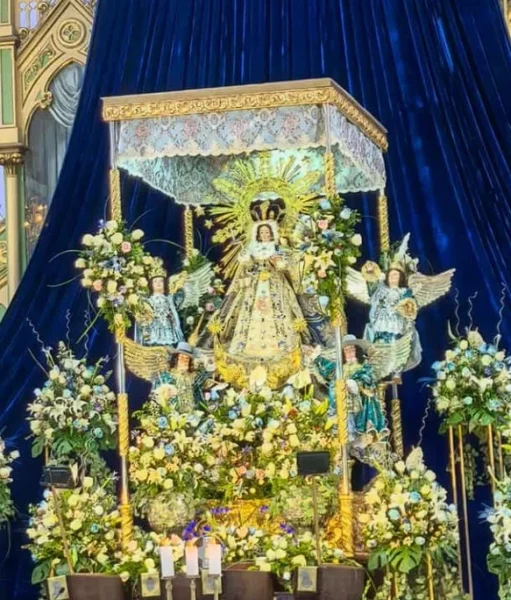
In the local linguistic context, she is known as Virgin of Candelaria or Mamacha Candelaria. The term "Mamacha" is a Quechua diminutive meaning "Little Mother" or "Beloved Mother," denoting intimacy rather than distant reverence. In the context of Virgin of Candelaria Peru, this title embodies religious syncretism the fusion of distinct religious traditions.
For the Andean man, the Virgin is often synonymous with Pachamama (Mother Earth). The festival takes place in February, the height of the rainy season and the most critical time for agriculture in the high Andes. Therefore, the veneration is not just for a saint in heaven, but a plea to the Earth for fertility, rain, and a successful harvest. The triangular shape of the Virgin’s elaborate robes is also said to mimic the shape of an Apu (sacred mountain), further cementing her connection to the Andean landscape.
Clarifying the Confusion with Virgin of Candelaria Santeria
A common point of confusion for international travelers arises regarding Virgin of Candelaria Santeria. It is crucial to distinguish that the festival in Puno is unrelated to the Afro Cuban religion known as Santeria (or Lukumí). In the Caribbean context, the Virgin of Candelaria is syncretized with Oyá, the Orisha of winds, lightning, and the cemetery gates.
While both involve religious syncretism, the Puno tradition mixes Catholicism with Incan/Aymara beliefs, whereas Santeria mixes Catholicism with West African Yoruba beliefs. The differences in worship are vast: Puno's celebration involves brass bands, Andean panpipes (sikus), and public folkloric parades at 3,800 meters above sea level. In contrast, the Santeria veneration involves drums (batá), specific trance rituals, and offerings typical of the tropical Caribbean context. They share a name, but they are spiritually and culturally distinct worlds.
Meaning of Virgin of Candelaria Images with Blue Dresses
When analyzing Virgin of Candelaria images, one notes that her vestments are changeable and incredibly opulent. However, Virgin of Candelaria images with blue dresses hold specific symbolism in Puno. In Catholic canon, blue represents purity, the heavens, and the queenship of Mary. However, in the local Puno cosmology, the blue mantle connects the Virgin directly to Lake Titicaca.
The Lake is the origin of life in Andean mythology (where Manco Cápac and Mama Ocllo emerged). By dressing the Virgin in the deep blue of the lake, devotees acknowledge her dominion over the waters that sustain the Altiplano. The Virgin has a wardrobe of over 100 embroidered mantles, gifted by "Alferados" (festival sponsors), featuring gold and silver threads, but the blue attire remains the most iconic representation of her connection to the sacred lake.
The Feast of the Virgin of Candelaria Celebrations
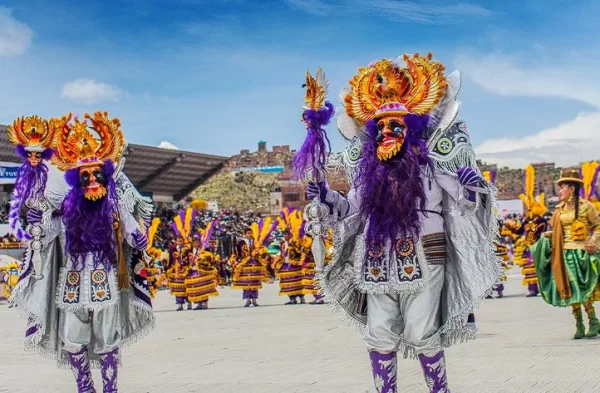
The Feast of the Virgin of Candelaria is a marathon event, arguably the longest religious festival in Peru. The Festival of the Virgin of Candelaria is technically divided into two main phases: the "Native Dances" (Autochthonous) and the "Suits of Lights" (Trajes de Luces).
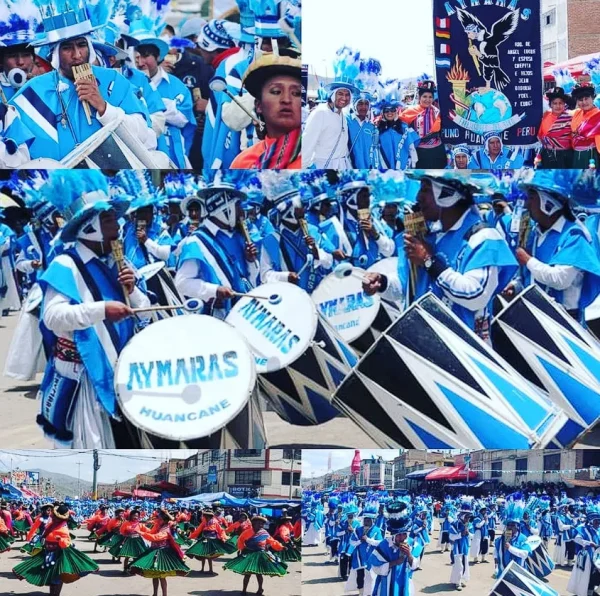
The participation is organized into "Conjuntos" (fraternities). The Feast of the Virgin of the Candelaria is not a chaotic street party but a highly organized competition. Groups spend the entire year fundraising and rehearsing. The festival acts as a social leveler; for the duration of the dance, a humble farmer may wear the same elaborate costume as a wealthy businessman, united by their devotion to the Mamita.
Schedule of the Festival of the Virgin of Candelaria
The schedule Candelaria festival varies slightly by calendar year, but the core liturgical and festive structure is fixed:
January 24 - January 31: Liturgical Masses (Novenas) at the Sanctuary.
- February 1: Víspera (Eve). The "Entrance of the Kapus," where communities from the countryside enter the city burning dried shrubs and firewood to "warm up" the Virgin.
- February 2: The Central Day (Día Central).
- First Weekend of February: Competition of Native/Autochthonous Dances at the Torres Belón Stadium.
- Second Weekend of February (The Octave): The Great Competition of Suits of Lights (Trajes de Luces) and the Grand Parade.
February 2nd: The Main Mass and Procession Day
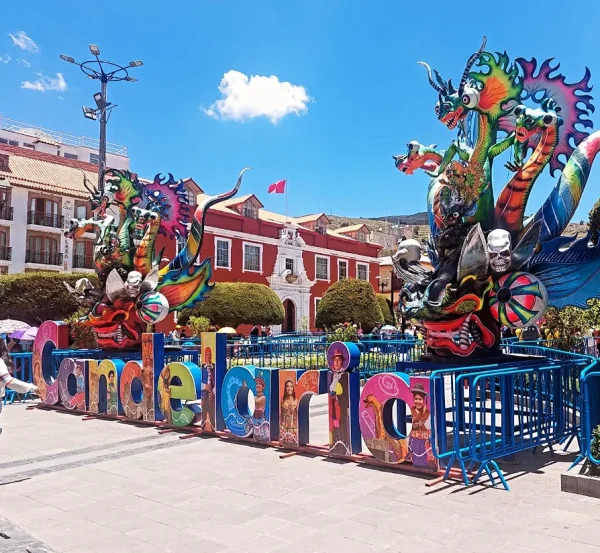
February 2nd is the liturgical heart of the Feast of the Virgin of the Candelaria. This is the central day, marked not by dancing, but by faith. It begins with a dawn mass and continues with the main religious mass at the Cathedral, usually officiated by the Bishop.
Following the mass, the official procession takes place. The image of the Virgin is carried through the streets on a massive silver litter. This is a solemn moment where the Feast of the Virgin of the Candelaria reveals its spiritual core. Devotees throw flower petals from balconies, and many weep as the image passes, asking for miracles. It is a day of introspection before the explosion of the Octave.
The Octave and the Veneration of the Virgin of Candelaria
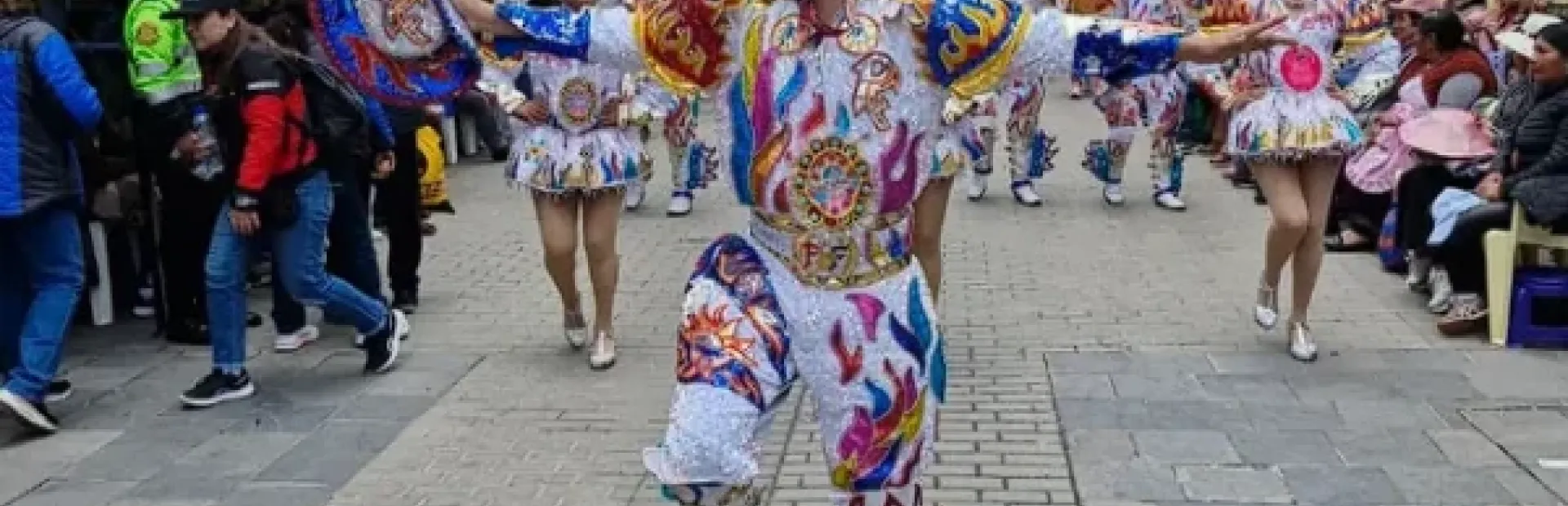
The Octava Candelaria (usually the Sunday following Feb 2nd) is when the famous spectacle occurs. This constitutes the veneration of the Virgin through dance. After competing in the stadium, tens of thousands of dancers in heavy, illuminated costumes take to the streets.
This street parade covers over 3 kilometers and can last for more than 18 hours straight. This is the "Parada y Veneración." The objective is not just to show off the costumes but to reach the Sanctuary. Upon arriving at the church, dancers remove their masks and kneel in veneration of the Virgin, often exhausted, to receive her blessing. This endurance is considered a sacrifice and penance.
Gastronomy: Feast of the Virgin of Candelaria Food
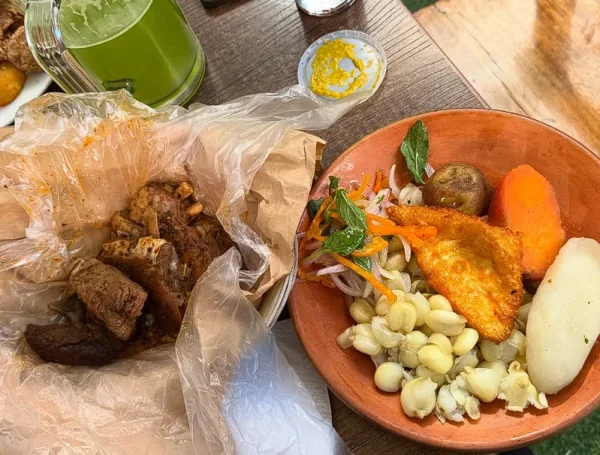
Dancing at 12,500 feet (3,800 meters) requires serious fuel. The Feast of the Virgin of Candelaria food scene is not about delicate appetizers; it is about survival, warmth, and energy. The typical food in Puno is a direct reflection of the Altiplano climate hearty, nutrient dense, and served piping hot to combat the biting cold of the rainy season. For travelers, diving into these culinary traditions is the best way to connect with the locals who spend their days celebrating in the streets.
Traditional Dishes Consumed During the Feast
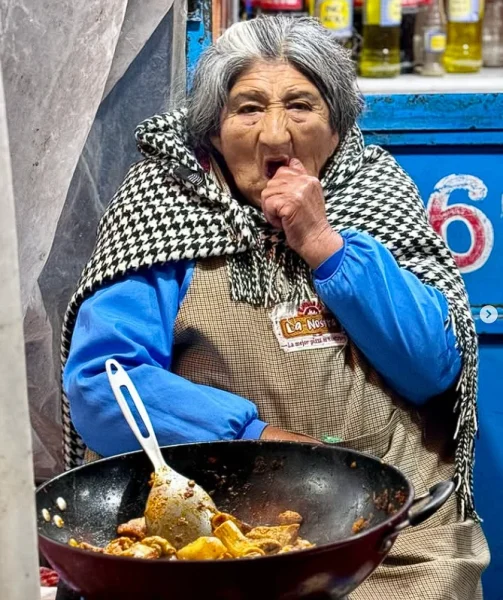
Chairo Soup (The Andean Warmer): You cannot visit Puno without trying this. Chairo is more than a soup; it’s a history lesson in a bowl. It relies on chuño (freeze dried black potatoes), a preservation technique developed by the Incas. Combined with beef, lamb, chalona (dried salty meat), sweet potato, and Andean mint (muña), this thick broth is the ultimate comfort food after hours of standing in the cold watching the parade.
Thimpu (The Festive Feast): Reserved for special occasions, Thimpu is a celebration on a plate. It consists of tender boiled lamb or mutton served atop a mound of potatoes, chuño, and chickpeas. What makes it unique is that the rich, golden broth is served in a separate bowl, while the meat and veggies are topped with a spicy chili and onion sauce. It is heavy, flavorful, and incredibly satisfying.
Fricasé (The "Levanta Muertos"): Literally translating to "wake the dead," this spicy pork stew is the go to remedy for a hangover or exhaustion. Made with yellow chili peppers (ají amarillo), hominy corn (mote), and chunks of pork, it is traditionally eaten in the early hours of the morning to recharge after a long night of dancing.
Street Snacks and Lake Delicacies
Trucha Frita (Fried Trout): Puno is the capital of Lake Titicaca, and the trout here is legendary. During the festival, street vendors and markets serve Trucha Frita fresh trout dredged in seasoned flour and fried until golden and crispy. It’s typically served with rice, french fries, and salsa criolla (onion salad). It is fresh, fast, and remarkably cheap.
Pesque de Quinua: This is a creamy, risotto like dish made from quinoa, milk, and fresh cheese. It is a vegetarian staple of the region that highlights Puno as the birthplace of quinoa domestication. It’s warm, cheesy, and provides a massive protein boost for the high altitude.
Api and Pastel: For breakfast or a late night snack, look for the ladies selling Api a hot, purple corn drink spiced with cinnamon and cloves. It is always paired with a Pastel, a hollow, deep fried pastry that you dip into the thick, sweet drink.
Beyond the Parade: Unique Cultural Experiences
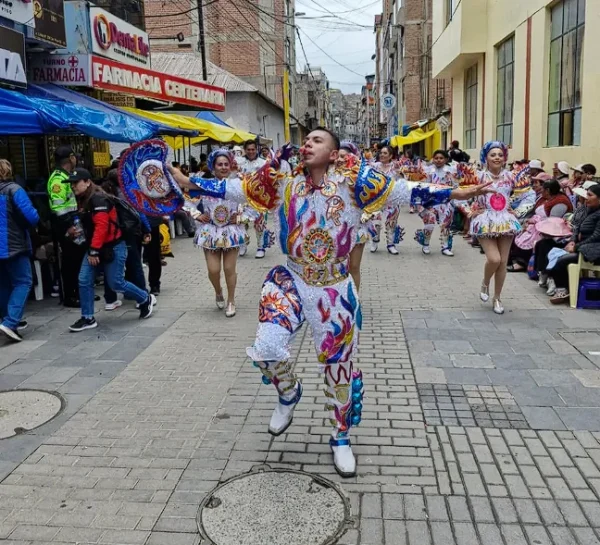
While the parades are the main attraction, the Virgin of Candelaria festival offers deeper cultural layers if you know where to look. To truly understand the magnitude of this event, you should step away from the main avenue and explore the craftsmanship that makes it possible.
Visit the Workshops of the Mask Makers and Embroiderers
A few days before the main parades, or during the quiet hours of the festival, take a trip to the Barrio Bellavista or the streets surrounding the port. This is where the magic is built. The "Suits of Lights" (Trajes de Luces) are not mass produced in factories; they are hand crafted by master artisans known as bordadores (embroiderers) and careteros (mask makers).
Visiting these workshops allows you to see the incredible artistry up close. You can watch artisans molding the terrifying, horned masks of the Diablos (devils) out of plaster and wire, or stitching heavy sequins and silver threads onto the velvet capes of the Caporales.
Why do this? It provides a quiet, intimate appreciation of the festival. Many artisans are proud to show their work to tourists and explain the symbolism behind the dragons, snakes, and spiders that adorn the costumes. It is a photographer's dream and offers a connection to the human effort behind the spectacle.
Traditional Dishes Consumed During the Feast
Chairo Soup: This is the quintessential Feast of the Virgin of Candelaria food. It is a thick, hearty soup made from chuño (freeze dried black potato), beef, lamb, chalona (dried salty meat), sweet potato, peas, carrots, and broad beans. It is historically the food of the campesino (farmer) designed to provide maximum energy for long days.
Thimpu: A celebratory dish consisting of boiled lamb or mutton served over a bed of potatoes, chuño, and chickpeas. It is distinctive because the broth is served separately from the solid ingredients. It is often topped with a spicy chili sauce mixed with onions.
Fricasé: A spicy pork stew made with yellow chili peppers and mote (hominy corn), traditionally eaten in the early morning hours to recover from a night of celebration.
Cultural Context: Feast of the Virgin of Candelaria Bolivia vs Peru
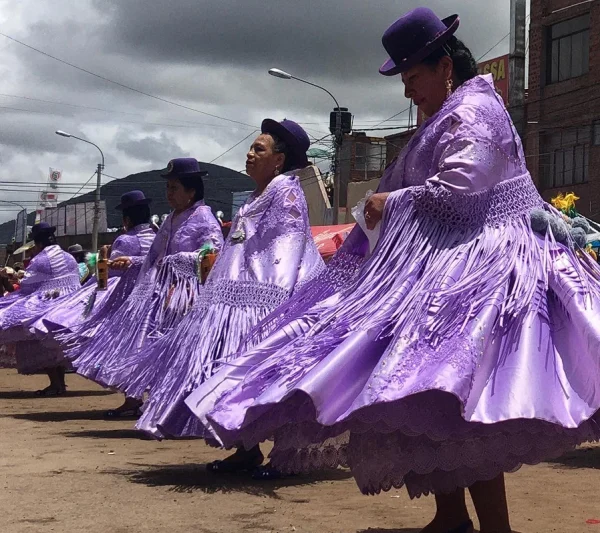
There is a well known cultural tension regarding the Feast of the Virgin of Candelaria Bolivia and the Peruvian celebration. The Aymara culture predates modern borders, meaning the Altiplano region shares music, textiles, and dances. The Feast of the Virgin of Candelaria in Bolivia is centered in Copacabana, a sanctuary on the Bolivian shores of Lake Titicaca, which is a major pilgrimage site.
Differences Between the Feast of the Virgin of Candelaria in Bolivia and Peru
While the roots are shared, the execution differs. The Feast of the Virgin of Candelaria in Bolivia (Copacabana) is strictly religious and pilgrim focused. However, the confusion often lies in comparing Puno to the Carnival of Oruro.
When analyzing Oruro Carnival vs Puno:
- Dates: Oruro is tied to the movable dates of Lent/Carnival. Puno is tied to the fixed date of Candlemas (Feb 2nd).
- Focus: Puno's festival puts a massive emphasis on Autochthonous dances (rural, pre colonial) in the first week, showcasing hundreds of distinct indigenous styles that are unique to the Peruvian side of the lake.
- Costumes: While both feature the Diablada and Morenada, the Feast of the Virgin of Candelaria Bolivia style in Oruro often focuses on different embroidery techniques and band styles compared to the specific guilds of Puno. Both are UNESCO masterpieces, representing different expressions of the same Andean heart.