Weather forces temporary closure of a famous trail in Peru

Submitted by admin on

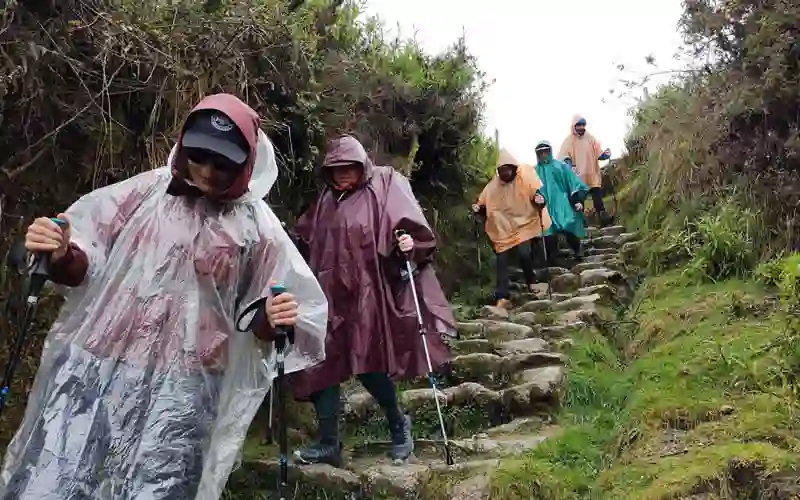
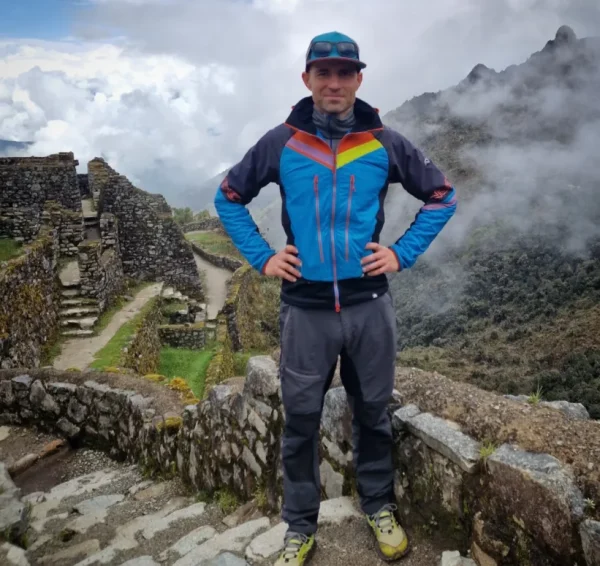
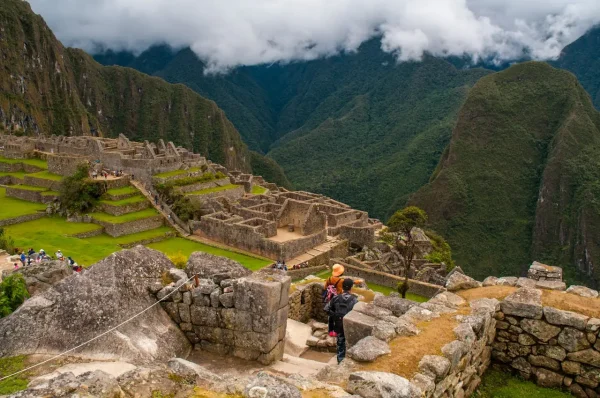
The Peruvian Ministry of Culture, through the Decentralized Directorate of Culture of Cusco (DDC), the National Service of Natural Protected Areas (Sernanp), and the Regional Government of Cusco, has announced the temporary closure of all routes within the Inca Trail Network in the Historic Sanctuary of Machu Picchu. This closure will be in effect from March 1 to March 15, 2025, due to the impact of intense rainfall in the Cusco region.

Image
Weather-forces

Why is the Inca trail closing?

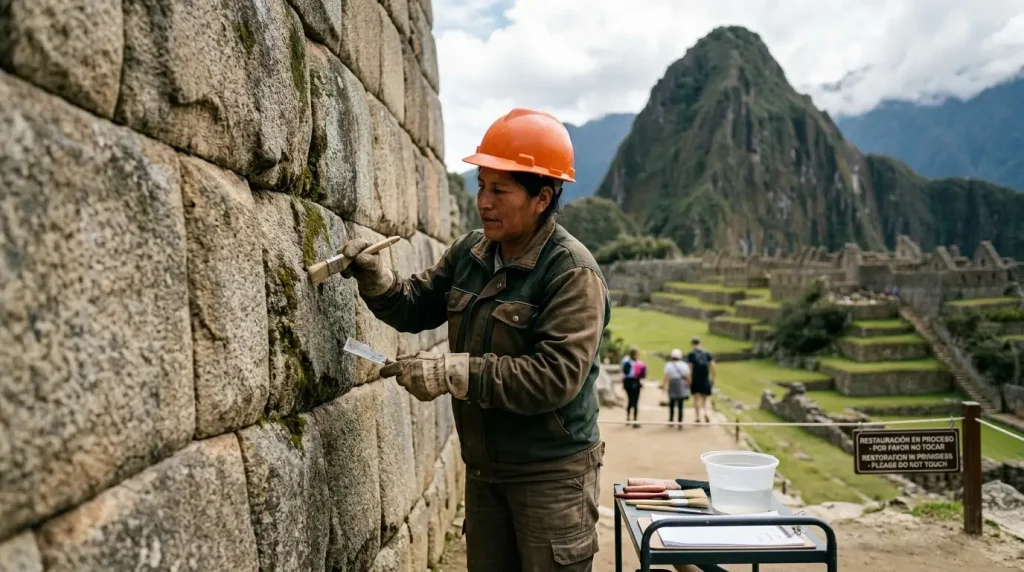
The heavy rains have caused landslides and instability along several sections of the trail, posing a serious risk to visitors. The closure aims to protect the physical integrity of hikers, guides, and park personnel while allowing authorities to conduct necessary safety evaluations and restoration work.

Essential maintenance: What work will be done?

During this month, a team of approximately 30 specialized workers will carry out various preservation and restoration tasks, including:

  • Vegetation control: Cutting overgrown plants and removing roots that may damage archaeological structures.
  • Cleaning and restoration: Maintaining walls, enclosures, terraces, and water channels.
  • Structural consolidation: Reinforcing pathways, staircases, and historical sites along the route.
  • Bridge and rail maintenance: Repairing or replacing modern wooden elements such as bridges, railings, and handrails.

Additionally, key archaeological sites along the trail, including Patallaqta, Sayacmarca, Phuyupatamarca, Wiñaywayna, and Intipunku, will receive special conservation efforts to ensure their preservation.

How long will the closure last?

The closure of the Inca Trail Network will last from March 1 to March 15, 2025. Authorities will assess the conditions before reopening to ensure the safety of visitors.

Can you still visit Machu Picchu?

Yes! Machu Picchu will remain open to visitors during February. Travelers can reach it via alternative routes, such as the Salkantay Trek, offering a challenging journey with breathtaking views of snow-capped mountains and lush landscapes. Another excellent alternative is the Lares Trek, which combines hiking with cultural immersion in Andean communities. For adventurers seeking a unique experience, the Choquequirao Trek is a demanding but rewarding option, leading to a lesser-known archaeological site before connecting to Machu Picchu.

Recommendations for visitors

Travelers and tour operators are advised to plan their visits in advance, stay updated through official sources, and follow all conservation measures. Protecting this UNESCO World Heritage Site is a shared responsibility, ensuring that future generations can continue to experience the wonder of Machu Picchu.

While the temporary closure may disrupt some travel plans, it ultimately serves a greater purpose: protecting this extraordinary heritage site for generations to come. Visitors are encouraged to explore alternative routes or adjust their itineraries accordingly. With careful planning, they can still experience the magic of Machu Picchu while respecting the conservation efforts that keep it accessible for future adventurers.

Show in Travel Guide (Home)
No

The capital of Peru

Submitted by admin on

When international travelers ask what is the capital of Peru, the answer reveals a city of profound complexity and contrast. Lima, the capital of Peru, is not merely a stopover on the way to Machu Picchu; it is a sprawling metropolis of over 10 million inhabitants that encapsulates the entire history of South America.

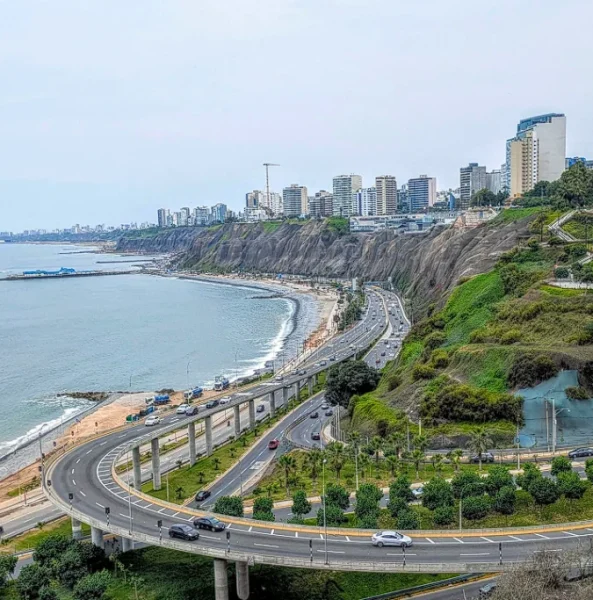
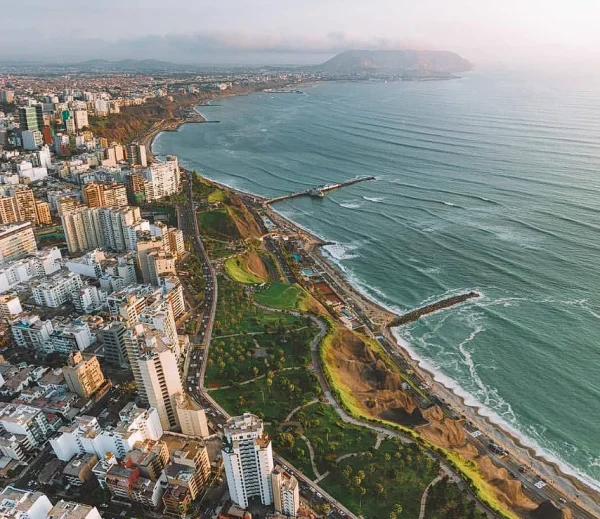
It is the only capital in the Americas located directly on the ocean's edge, perched on cliffs overlooking the Pacific, creating a dramatic intersection between urban density and nature.

As the political, financial, and cultural powerhouse of the nation, the Peru capital generates nearly 50% of the country's GDP and serves as the primary gateway for international tourism. Lima capital of Peru is a city of layers: beneath its modern skyscrapers lie ancient adobe pyramids (huacas), and within its colonial mansions, you find the remnants of the Spanish Empire.

From its status as the undisputed "Gastronomic Capital of the Americas" to its vibrant arts scene, Lima demands time to be understood, rewarding visitors with a deep dive into the modern Peruvian identity that blends indigenous, European, African, and Asian roots.

Image
Spectacular-view-of-Limas-Costa-Verde-showing-the-high-cliffs-of-land

Essential Facts About the Capital City of Peru and Its Location

Image
main-palace-of-Lima

To truly grasp the dynamics of the country, one must first analyze what is the capital city of Peru. Lima is a desert metropolis, ranking as the second largest desert capital in the world after Cairo, Egypt. Despite receiving almost zero rainfall (less than 9mm annually), it sustains a massive population through the waters of the Rímac, Chillón, and Lurín rivers which descend from the Andes. This scarcity of water vs. density of population defines the daily challenges and engineering marvels of the Peru capital city.

If you are orienting yourself and asking where is the capital of Peru, it is situated on the central coast of the country at sea level (roughly 154 meters altitude on average). Its geographic location creates a unique microclimate.

The cold Humboldt Current from Antarctica cools the ocean, preventing tropical heat but creating a persistent layer of low clouds known as "La Garúa." This mist protects the city from extreme heat but shrouds it in a moody, atmospheric grey for half the year, a feature that has deeply influenced Limeno literature and art.

Locating the Capital of Peru on the Map and Geographic Details

A detailed capital of Peru map reveals its strategic importance. Lima is the midpoint of the Pan American Highway in Peru, connecting the northern desert cities like Trujillo with the southern valleys of Ica and Arequipa.

The Peru capital map also highlights the constitutional province of Callao, which acts as the city's maritime lung. Callao handles the vast majority of Peru’s imports and exports, making the conurbation of Lima Callao the logistical hub of the entire nation.

On a map of Peru with capital markers, you will notice Lima sits to the west of the Andes mountains. These mountains act as a natural wall, trapping humidity and pollutants but also providing the water and hydroelectric power the city needs.

As the capital of Peru country, Lima’s coastal position allowed it to dominate trade during the colonial era, a dominance that continues today as it serves as the headquarters for multinational corporations and the Andean Community of Nations.

What Is the Capital of Peru Called in Spanish and Local Terminology

Image
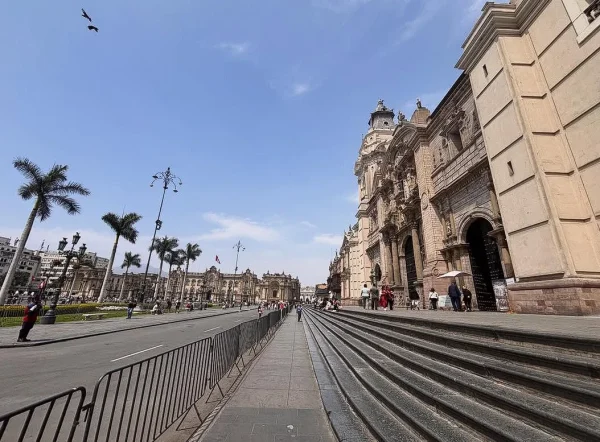
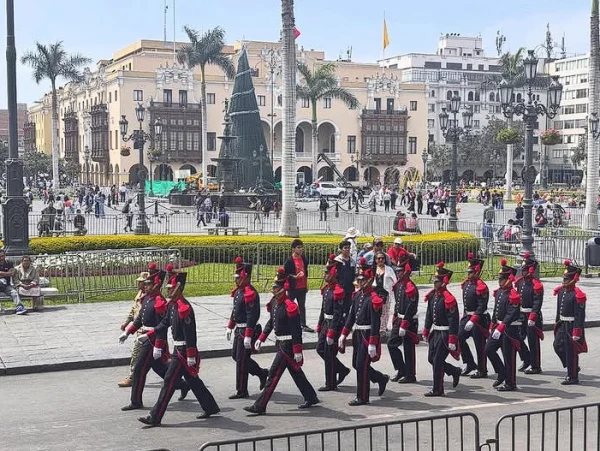
central square of the capital of Peru

For English speakers asking "what is the capital of Peru in Spanish?", the name is identical: Lima (pronounced Lee ma). However, historically, it was founded as "La Ciudad de los Reyes" (The City of Kings). While this title is still used in formal or poetic contexts, the local name "Lima" prevailed.

Linguists believe "Lima" is a corruption of the Quechua word Rimaq (Speaker/Talker), referring to the Rímac River's roaring waters during the rainy season. Thus, Lima is the "City of the Talker."

In local slang and media, the capital de Perú is often referred to as "El Pulpo" (The Octopus) because of its centralist grip on the nation, or affectionately as "Lima la Gris" (Lima the Grey) due to its winter skies. The term "Limeño" refers to a male resident, and "Limeña" to a female.

The capital of Peru in Spanish nomenclature also distinguishes between "Lima Metropolitana" (the city proper) and "Lima Provincias" (the rural areas surrounding the department), a distinction vital for understanding the region's governance.

History Behind Why Lima Is the Capital of Peru Instead of Cusco

Image
History Behind Why Lima Is the Capital of Peru Instead of Cusco

A common question is: Is Lima the capital of Peru by indigenous tradition? No. For centuries, Cusco (Qosqo) was the "Navel of the World" and the imperial capital of the Tawantinsuyu (Inca Empire). The history of Lima as the capital is entirely a colonial construct.

When Francisco Pizarro conquered Peru, he initially looked at Jauja in the central Andes as a capital. However, the Spanish realized that high altitudes, rugged terrain, and distance from the sea made logistical support from Spain impossible.

Lima the capital of Peru was chosen purely for geopolitical strategy. It had a natural harbor (Callao), a moderate climate, and friendly indigenous cooperation in the valley. While Cusco remained the symbolic heart of the Andean world, the capital of Lima Peru became the administrative brain of the Viceroyalty.

This decision shifted the axis of power in South America from the mountains to the coast, creating a duality that still defines Peruvian society today: the coast vs. the highlands.

The Foundation of the City of Kings by Francisco Pizarro in 1535

The official Peru capital name was established on January 18, 1535. Francisco Pizarro, the Spanish conquistador, traced the city's blueprint with his own sword in the Plaza Mayor. He named it "Ciudad de los Reyes" to honor the Three Wise Men (Magi), as the search for the capital site began on Epiphany (January 6th).

However, the indigenous usage of Limaq or Rimaq was so strong that the Spanish name eventually faded in daily use, leaving us with Lima Peru capital.

Pizarro designed the capital of Peru name city on a classic "Damero de Pizarro" (checkerboard grid), a standard urban planning model for Spanish colonies designed to optimize defense and order.

The Plaza de Armas was the nucleus, surrounded by the Church (Cathedral), the State (Governor's Palace), and the Local Government (Cabildo). This layout remains intact today in the Historic Center, a testament to the meticulous planning that went into creating the most important Spanish city in South America.

Understanding the Shift from the Inca Capital to the Spanish Capital

Image
Spectacular-view-of-Limas-Costa-Verde-showing-the-high-cliffs-of-land

When discussing the capitals of Peru, we are really discussing two different civilizations. The Inca capital vs Spanish capital comparison highlights a clash of worldviews. Cusco was designed in the shape of a Puma, integrated with sacred geography (Ceque lines), and built with stone to last eternity.

The capital of Peru is now Lima, which was built with adobe, quincha (mud and cane), and wood, designed for trade, bureaucracy, and connection to Europe.

This shift marginalized the Andes for centuries. Lima became the "Pearl of the Pacific," a city of aristocratic wealth, universities (San Marcos, the oldest in the Americas, founded in 1551), and vice regal courts. Meanwhile, Cusco became a secondary provincial city until its rediscovery as a tourism hub in the 20th century. Today, Peruvians recognize Cusco as the "Historical Capital" (Constitutionally recognized) and Lima as the "Political Capital."

Best Districts to Visit in the Capital City of Peru for Tourists

Image
Best Districts to Visit in the Capital City of Peru for Tourists

While the Peru capital and important cities like Arequipa and Trujillo offer distinct experiences, Lima is a universe of 43 micro cities (districts). Navigating the capital city in peru requires knowing where to go. The city is vast, but for tourists, the focus is on the "Modern South" (Miraflores, Barranco, San Isidro) and the "Historic Center" (Cercado de Lima).

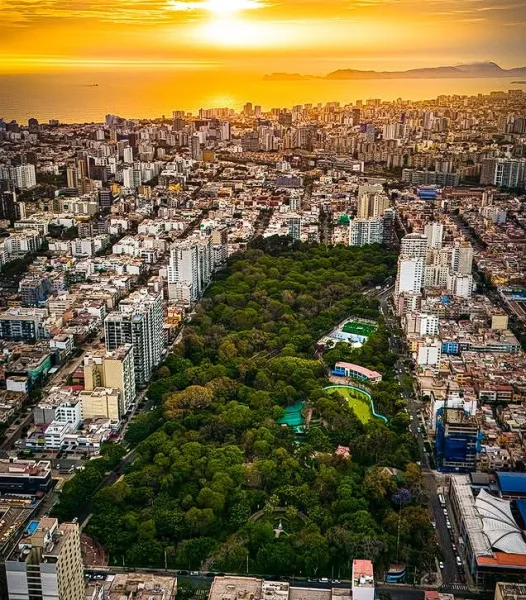
The districts of Lima vary wildly in safety and vibe. San Isidro is the financial heart with manicured olive groves. Miraflores is the cosmopolitan face with parks and malls. Barranco is the artistic bohemian quarter.

The Historic Center is the museum of the past. Meanwhile, districts like Callao are transforming with street art initiatives (Monumental Callao), offering new cultural frontiers for adventurous travelers.

Miraflores and Barranco as the Tourist Hubs of the Capital

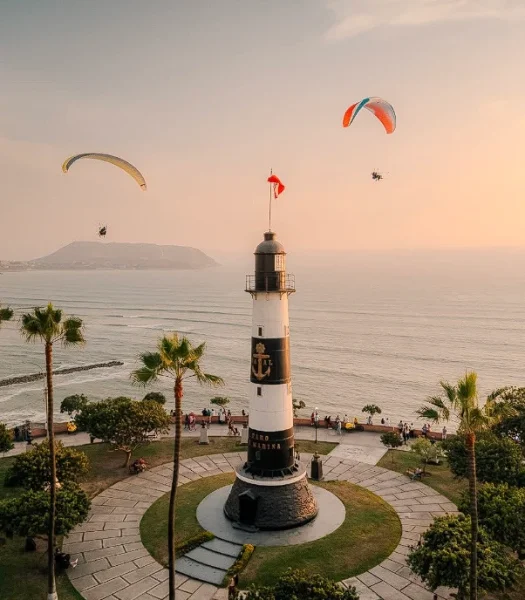
Modern Lima is best experienced in Miraflores. This district sits on cliffs 80 meters above the Pacific Ocean. The "Malecon" (boardwalk) connects parks filled with paragliders, joggers, and art installations (like the famous Parque del Amor).

It hosts the highest density of hotels in Miraflores, from global chains like Marriott to boutique options, making it the safest and most convenient base for exploring Lima capital Peru.

Adjacent to it is Barranco. If Miraflores is Miami, Barranco is hipster Brooklyn mixed with colonial charm. It was originally a beach resort for the 19th century aristocracy. Today, its colorful mansions house the city’s best art galleries (like MATE and MAC) and cocktail bars. Barranco represents the soulful side of the capital city of Peru, where poets and musicians gather, and where you can cross the wooden "Bridge of Sighs" (Puente de los Suspiros).

Historic Center of Lima and UNESCO World Heritage Sites

The Historic Center of Lima is non negotiable for history lovers. Declared a UNESCO site in 1991, it holds the highest concentration of colonial architecture in the Americas. Key sights include the Monastery of San Francisco (famous for its catacombs holding 25,000 skeletons) and the Basilica Cathedral of Lima, which houses the tomb of Francisco Pizarro.

This area is also the hub for museums in Lima. The Museo de la Inquisición (Inquisition Museum) and the Casa de la Gastronomía are here. The architecture here features the famous "Balcones de Lima" enclosed wooden balconies that allowed noblewomen to watch the street without being seen, a distinct architectural feature derived from Moorish Spain that is unique to Lima's colonial identity.

Lima as the Economic Engine and GDP Concentration of the Country

Image
panoramic-view-of-the-capital-of-Peru-Lima

Lima is the leviathan of the Peruvian economy. The economy of Lima generates approximately 45-50% of the national Gross Domestic Product (GDP). It is the industrial, financial, and service hub. Almost all major banks, mining conglomerates, and international firms operating in Peru are headquartered in San Isidro or Surco.

This centralization means that Peru GDP per capita metrics are heavily skewed by the capital’s performance.

While the national per capita income Peru hovers around averages that include rural poverty, Lima possesses a consumer class with purchasing power rivaling parts of Southern Europe. However, this wealth attracts internal migration, leading to the "Conos" (Northern, Southern, and Eastern cones) vast residential areas of varying development that house the workforce powering the city.

Analysis of Peru GDP Per Capita and Economic Growth in Lima

Analyzing Peru GDP per capita 2024, the nation is recovering from post pandemic shocks, with Lima leading the charge. The GDP per capita of Peru is roughly $7,500-$8,000 USD (nominal), but in Lima, this can be double that of rural regions. The capital benefits from port logistics (Callao), a booming construction sector, and a sophisticated culinary industry that exports Peruvian cuisine globally.

The per capita income of Peru in Lima supports a thriving retail sector (massive malls like Jockey Plaza) and private education/healthcare systems. However, the informal economy remains huge roughly 60-70% of workers in Lima operate informally, driving taxis, selling street food, or running small unregistered businesses, which adds a layer of economic vibrancy not fully captured in official GDP statistics.

Why the Capital Concentrates the Wealth and Per Capita Income in Peru

The concentration of GDP per capita in Peru in Lima is a result of 500 years of centralist policy. Infrastructure roads, internet, airports was built radially to connect the provinces to Lima, not to each other. This ensures that raw materials flow to the capital for export, and finished goods flow out from it. Consequently, per capita GDP Peru stats reflect this bottleneck.

The high PIB per capita Peru in the capital draws talent from across the nation. The best universities and hospitals are here. This "brain drain" from the provinces to Lima reinforces the city's dominance. While regional governments are gaining more autonomy, Lima remains the decision making center where the political and economic elites reside, making it the unavoidable engine of the country's development.

Cultural Guide and Things to Do in the Gastronomic Capital

Image
Peruvian-gastronomy-in-Lima

Lima is officially the Food Capital of Peru and holds the title of "Leading Culinary Destination in South America" (World Travel Awards) year after year. For many, gastronomy in Lima is the primary travel motivation. The city is a melting pot (crisol) of cultures: Andean, Amazonian, Spanish, African, Chinese (Cantonese), Italian, and Japanese. This fusion created a unique cuisine that is sophisticated yet soulful.

When looking for what to do in Lima, start with your palate. But don't stop there. Visit the "Huacas" (like Huaca Pucllana), ancient adobe pyramids sitting right in the middle of modern residential neighborhoods. Surf the break at Waikiki Beach in Miraflores. Visit the Magic Water Circuit (Circuito Mágico del Agua), the world's largest fountain complex in a public park.

Tasting the Best Cuisine in the Gastronomic Capital of the Americas

Image
food-from-the-capital-of-Peru-Lima

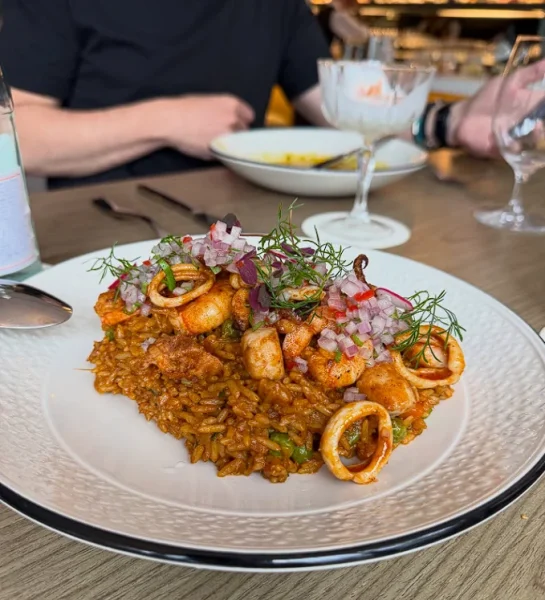
As the culinary capital, Lima is home to restaurants like Central (Virgilio Martínez) and Maido (Mitsuharu Tsumura), which consistently rank in the top 10 of "The World's 50 Best Restaurants." These best restaurants in Lima offer tasting menus that explore biodiversity, from 4,000 meter altitude tubers to Amazonian river fish.

However, real Peruvian food is also found in the "Huariques" (hidden spots). Try Ceviche (raw fish cured in lime) for lunch never dinner! Try Lomo Saltado (sti fried beef), a testament to Chinese influence. Taste Anticuchos (beef heart skewers), an Afro Peruvian delicacy, on a street corner.

Drink a Pisco Sour or the purple corn drink Chicha Morada. In Lima, eating is a ritual, a conversation starter, and a source of intense national pride.

Cultural Activities and Museums in Lima Capital Peru

Lima's history is best preserved in its institutions. The Larco Museum is the crown jewel of museums in Lima. Housed in an 18th century vice royal mansion, it displays 5,000 years of pre Columbian history. Its collection of Moche erotic pottery and gold/silver regalia is unmatched. Its garden restaurant is also legendary.

The MALI Museum (Museo de Arte de Lima) in the Parque de la Exposición covers 3,000 years of art, from ancient textiles to modern photography. For archaeology, the National Museum of Archaeology, Anthropology, and History in Pueblo Libre is the oldest state museum. These visits provide the context needed to understand the Incas and pre Incas before you head to the mountains.

Show in Travel Guide (Home)
No

Palcoyo vs Pallay Punchu

Submitted by admin on

Palcoyo vs Pallay Punchu: Which Rainbow Mountain Is Better to Visit?

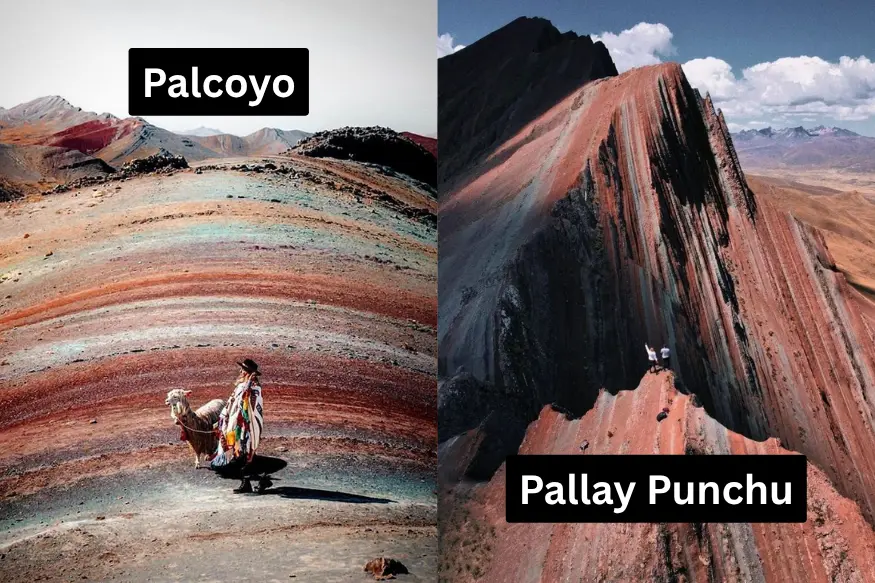
High in the Peruvian Andes, south of Cusco, lie two incredible natural wonders that rival the famous Vinicunca Rainbow Mountain: Palcoyo and Pallay Punchu. Though both feature the stunning multicolored strata that give these peaks their iconic look, each offers a completely different experience.

In this complete guide focused on the main keyword Palccoyo vs Pallay Punchu  you’ll discover everything you need to know before choosing which mountain to visit. We’ll compare location, altitude, accessibility, hiking difficulty, highlights, photography potential, and traveler experiences, so you can decide which one suits your travel style best.

Image
Palcoyo vs Pallay Punchu
Image
Palcoyo vs Pallay Punchu

What Are Palcoyo and Pallay Punchu?

Palccoyo Rainbow Mountain

Palccoyo is a breathtaking natural formation located in the district of Checacupe, in the southern highlands of Cusco, Peru. Rising to an altitude of about 4,900 meters (16,076 ft) above sea level, it features three distinct rainbow-colored peaks instead of just one, surrounded by spectacular landscapes.

What makes Palccoyo unique is not only the colorful mountains themselves, but also the “Stone Forest” — a group of tall rock spires shaped by erosion over millions of years — and the nearby Red Valley, whose crimson hills contrast beautifully with the multicolored slopes.

Unlike Vinicunca, which requires a steep 1.5-hour climb, Palccoyo’s trail is short and gentle, making it accessible to travelers of all ages and fitness levels.

Pallay Punchu Mountain

Pallay Punchu, often translated from Quechua as “the colorful poncho,” is another recently discovered rainbow mountain located in the district of Layo, province of Canas, in southern Cusco. Its sharp ridges and vivid mineral layers resemble the woven patterns of a traditional Andean poncho, which inspired its name.

This mountain sits slightly lower than Palccoyo, at around 4,700 meters (15,420 ft). What makes it truly distinctive is the dramatic jagged terrain and the view over Lake Langui, one of the most beautiful high-altitude lakes in Peru.

Still relatively unknown, Pallay Punchu offers a raw, off-the-beaten-path adventure far away from tourist crowds.

Location and How to Get There

Getting to Palccoyo

  • Location: Checacupe district, Canchis province, Cusco region.

  • Altitude: Approximately 4,900 m (16,076 ft).

  • Distance from Cusco: About 100 km (62 mi).

  • Travel time: Around 3 hours by car from Cusco to the trailhead.

The route to Palccoyo passes through small Andean towns like Combapata and Checacupe before climbing toward the colorful peaks. From the parking area, it’s just a short, scenic walk to the first viewpoint. The road is mostly paved, with the final section on dirt — but still in good condition.

Because Palccoyo is becoming increasingly popular, you’ll find day tours departing Cusco daily, or you can hire private transport if you prefer to travel independently.

Getting to Pallay Punchu

  • Location: Layo district, Canas province, Cusco region.

  • Altitude: Approximately 4,700 m (15,420 ft).

  • Distance from Cusco: About 130 km (80 mi).

  • Travel time: Roughly 4 to 4.5 hours from Cusco to the starting point.

The road to Pallay Punchu is longer and passes through rural areas with less tourist infrastructure. You’ll travel south along the highway to Sicuani, then continue toward Layo and Lake Langui before reaching the base of the mountain.

Because of its remoteness, organized tours are less frequent, and public transportation options are limited — but that’s precisely what makes Pallay Punchu so special: few tourists and pristine landscapes.

Hiking Difficulty and Trail Details

Palccoyo Hike

  • Total hiking time: 45 minutes to 1 hour to the viewpoint.

  • Difficulty: Easy to moderate.

  • Elevation gain: About 150 meters (492 ft).

  • Trail condition: Well-marked, wide, and not steep.

The Palccoyo hike starts at an altitude of around 4,800 m and follows a gentle slope to the main viewpoint. Along the way, you can stop at several observation points overlooking the colored peaks, alpaca herds, and the Red Valley.

Because the hike is short and gradual, Palccoyo is ideal for families, casual travelers, or anyone not fully acclimated to high altitude. However, it’s still important to take it slow and stay hydrated, as the air is thin at nearly 5,000 m.

Pallay Punchu Hike

  • Total hiking time: 1 to 1.5 hours (depending on fitness and weather).

  • Difficulty: Moderate.

  • Elevation gain: Around 250 meters (820 ft).

  • Trail condition: Dirt path, some steep sections, rugged terrain.

The Pallay Punchu trail begins near Lake Langui and climbs along a steep ridge toward the jagged rainbow mountain. The path is less developed than Palccoyo’s and includes rocky stretches, so good hiking shoes are essential.

Although it requires a bit more effort, the reward is immense: panoramic views of the colorful cliffs and the serene blue lake below. Because of the remoteness, you’ll often find yourself completely alone in the mountains — a rare luxury in today’s world.

Natural Highlights and Unique Features

Highlights of Palccoyo

  • Three rainbow mountains: Unlike Vinicunca, Palccoyo features multiple colorful ridges in close proximity.

  • The Stone Forest: Towering rock formations created by natural erosion, perfect for photography.

  • The Red Valley: A surreal landscape of crimson and ochre hills nearby.

  • Llamas and alpacas: You’ll often encounter herds grazing freely along the slopes.

  • Panoramic viewpoints: Wide-angle views of the Andes and snow-capped peaks in the distance.

Highlights of Pallay Punchu

  • Sharp rainbow ridges: The mountain’s distinctive blade-like shape makes it stand out among other rainbow mountains.

  • Lake Langui: A large turquoise lake visible from the summit, offering stunning contrast in your photos.

  • Cultural symbolism: “Pallay Punchu” means “decorated poncho,” linking the mountain to Andean weaving traditions.

  • Off-the-beaten-path adventure: Almost no crowds, giving a deep sense of peace and authenticity.

  • Unspoiled nature: Wild vicuñas, eagles, and other Andean wildlife can sometimes be spotted.

Palcoyo vs Pallay Punchu: Direct Comparison

FeaturePalccoyoPallay Punchu
Altitude4,900 m (16,076 ft)4,700 m (15,420 ft)
Distance from Cusco~100 km / 3 hours~130 km / 4–4.5 hours
DifficultyEasy to moderateModerate
Hiking time45–60 minutes60–90 minutes
Trail typeSmooth, accessibleRugged, steeper
CrowdsLightVery few or none
Extra attractionsStone Forest, Red ValleyLake Langui, jagged ridges
Ideal forFamilies, casual hikersAdventurous travelers
Best photo opsWide panoramic landscapesSharp rainbow peaks with lake backdrop

In short:

  • Choose Palccoyo if you want ease, comfort, and accessibility.

  • Choose Pallay Punchu if you seek isolation, adventure, and unique landscapes.

Palcoyo vs Pallay Punchu: Weather, Altitude, and the Best Time to Visit

Both Palccoyo and Pallay Punchu lie in the high Andes, meaning conditions can change quickly — from bright sunshine to hail in minutes.

  • Dry season (April – October): Best time to visit. Clear skies and vibrant colors.

  • Rainy season (November – March): Expect clouds, fog, and muddy trails, though the colors may appear richer after rainfall.

  • Temperature: Daytime highs 10–15 °C (50–59 °F), nighttime lows can drop below freezing.

Because of the high altitude, it’s essential to acclimatize in Cusco for 1–2 days before doing either hike. Drink coca tea, avoid alcohol, and walk slowly to reduce the risk of altitude sickness.

Cultural and Geological Significance

The Science Behind the Colors

The iconic rainbow hues come from layers of sedimentary rock rich in different minerals:

  • Red: iron oxide

  • Green: copper oxide

  • Yellow: sulfur compounds

  • White: quartz and sandstone

  • Pink/Purple: mixtures of hematite and magnesium

Over millions of years, tectonic movements and erosion exposed these strata to the surface, creating the mesmerizing striped patterns we see today.

Andean Culture and Traditions

Both Palccoyo and Pallay Punchu are located in Quechua-speaking communities that still maintain their ancestral way of life — herding llamas and alpacas, weaving textiles, and practicing traditional rituals to honor the Apus (mountain spirits).

When you visit, you’ll often see locals wearing colorful ponchos, which visually echo the rainbow mountains themselves — a beautiful reflection of the harmony between people and landscape.

Travel Logistics and Practical Tips for Palcoyo and Pallay Punchu

What to Bring

  • Warm layered clothing: Temperatures fluctuate quickly.

  • Water and snacks: Especially for Pallay Punchu, where shops are scarce.

  • Sun protection: Sunglasses, sunscreen, and hat.

  • Camera or drone: The landscapes are jaw-dropping.

  • Cash: Small bills for entrance fees or local souvenirs.

  • Trekking shoes: Essential for rocky sections.

Health and Safety Tips

  • Spend at least two nights in Cusco before the hike.

  • Walk slowly and rest often; oxygen levels are low.

  • Stay hydrated — drink 2–3 liters of water per day.

  • Consider bringing coca leaves or altitude medication.

  • Respect local communities and avoid littering.

Entrance Fees

Both mountains charge a small entrance fee (usually between 10–20 soles, less than $5 USD). This money supports the local communities that maintain the trails.

Tours vs Independent Travel

  • Palccoyo: Many daily tours from Cusco (around 10–12 hours total). Includes transport, guide, and lunch.

  • Pallay Punchu: Fewer organized tours; best arranged with a local operator or private driver.

Photography and Visual Experience

Palccoyo Photography Tips

  • Arrive early for softer morning light and fewer visitors.

  • Wide-angle lenses capture the full panorama of multiple colored mountains.

  • The Stone Forest offers unique textures for creative shots.

  • On clear days, you can even spot the Ausangate glacier in the distance.

Pallay Punchu Photography Tips

  • The jagged rainbow ridges and blue lake create perfect contrast.

  • The best lighting is around midday, when the sun illuminates the slopes.

  • Bring a polarizing filter to reduce glare from the lake surface.

  • Drones are permitted in most areas — always check with your guide first.

Both mountains offer some of the most photogenic landscapes in Peru, but Pallay Punchu has the edge for dramatic composition due to its ridge lines and lake views.

Environmental Awareness

As tourism grows, preserving these delicate ecosystems becomes crucial. When visiting either Palccoyo or Pallay Punchu:

  • Stay on marked trails to avoid damaging fragile soil.

  • Take all trash back to Cusco.

  • Avoid touching or collecting rocks.

  • Support local guides and communities.

  • Travel in small groups when possible.

By practicing responsible tourism, you help ensure that future generations can experience the same beauty.

Palcoyo vs Pallay Punchu Which One Should You Choose?

Choose Palccoyo if:

  • You want an easier, family-friendly hike.

  • You prefer comfort and better road access.

  • You’re short on time but still want to see rainbow mountains.

  • You enjoy panoramic landscapes and geological formations.

Choose Pallay Punchu if:

  • You crave adventure and solitude.

  • You want to escape mass tourism completely.

  • You’re comfortable with longer drives and steeper trails.

  • You’re a photographer or nature lover seeking unique perspectives.

Ultimately, both destinations are spectacular. The decision depends on your fitness level, travel style, and what kind of Andean experience you’re after.

Palccoyo vs Pallay Punchu

When comparing Palccoyo vs Pallay Punchu, there’s no absolute winner only the mountain that best fits your travel personality.

  • Palccoyo offers accessibility, comfort, and stunning yet gentle landscapes.

  • Pallay Punchu offers raw beauty, solitude, and the thrill of discovery.

Both are far less crowded than Vinicunca and deliver unforgettable views of the Peruvian Andes’ geological artistry.

Whichever you choose, visiting these colorful mountains will connect you deeply with the energy of the Andes a place where the Earth itself seems to paint with light.

Show in Travel Guide (Home)
No

Huchuy Picchu Mountain

Submitted by admin on

Huchuy Picchu peak showed up as this recent draw in Machu Picchu Inca City. Right beside that famous Huayna Picchu hill. Tops out at roughly 2,497 meters, or 8,192 feet. Hike lasts about an hour. Up there, ruins views slam into you.

What is Huchuy Picchu Mountain?

Smallest hill inside Machu Picchu ruins, Cusco area, Peru. Quechua translates to little mountain.

Incans cut stone stairs up Huchuy Picchu, much like on Huayna Picchu. These days a hike, say an hour, fresh thrill for Machu Picchu stops. Summit gives full sweeps of everything. Gets intense thinking on Incan builders.

Buy "Machupicchu + Huchuy Picchu" ticket for Inca City plus this peak.

Location and Access

You enter through the same door as Huayna Picchu, in the Sacred Rock area. From there, a detour after about 1 km (give or take) branches off toward Huchuy Picchu. The main trail continues on to the taller peak.

The Hike

  • Distance: about 1 km, mostly uphill
  • Duration: around 1 hr-ish
  • Trail: dozens of uneven Inca-built steps

It’s easy enough for most travelers. Just stone, sweat and… wow. Watch your footing—some steps tilt sharply.

Panoramic Views

At the top you catch scattered ruins: the Temple of the Sun, the Three Windows, even bits of the Main Plaza far below. I’m not sure if the morning fog ever hides the Sacred Rock, but when it clears, the sight stops you cold.

Flora and Fauna

Here grows cedar, queñual, molle, ferns—and orchids, over 200 species, approximately. Butterflies flutter everywhere. If you’re lucky, you’ll glimpse the cock of the rocks. Llamas wander in the City; bears and Andean deer stay hidden below.

Tickets and Timing

You must buy the “Machu Picchu + Huchuy Picchu” ticket.

Foreign visitors

  • Adult: 152 S/.
  • Student: 77 S/.
  • Child (3–17 yrs): 70 S/.

Peruvians, Colombians, Ecuadorians, Bolivians

  • Adult: 64 S/.
  • Student: 32 S/.
  • Child (3–17 yrs): 32 S/.

Choose one entry slot for both the City and Huchuy Picchu hike:

  • 6 am–7 am
  • 7 am–8 am
  • 8 am–9 am
  • 9 am–10 am
  • 10 am–11 am
  • 11 am–12 pm
  • 12 pm–1 pm
  • 1 pm–2 pm
  • 2 pm–3 pm

No re-entry once you exit. Circuit 4 awaits afterward—Temple of the Condor, Water Mirrors, more.

Practical Tips

  • Buy tickets online a few weeks ahead
  • Travel light: steep stairs demand balance.
  • Early morning is quieter; later it gets crowded—maybe too busy at 8 am?

Enjoy the hike

Plants animals

Andean typicals cover it: molles, ferns, queñuas, cedars, orchids stand out. Machu Picchu holds over 200 orchid sorts, vivid.

Trail shows butterflies birds. Cock-of-the-rocks pops rare, national bird Peru. Mammals: Andean deer, spectacled bears, llamas down in Inca City. Llamas chill there easy.

Huchuy Picchu

Cost to visit?

"Machu Picchu with Huchuy Picchu" prices around:

Ticket Machu Picchu with Huchuy Picchu

  • Foreign: Adults approx 160 S/., Students 80 S/., Kids (3-17) 70 S/.
  • Peru Colombia Ecuador Bolivia: Adults 64 S/., Students 32 S/., Kids 32 S/.

*Those spots. Prices bumped 2025, confirm.

Times to go

Pick slot on buy.

  • Slot 1: Machupicchu 6-6:30 am. Huchuy Picchu til 8 am.
  • Slot 2: Machupicchu 8-8:30 am. Huchuy til 10 am.

Others later, like 11-11:30 am, Huchuy til noon.

Varies by circuit. Open June-Oct mostly? Wonder if rain closes it.

Extra bits

Machu Picchu offers more thrills. Huayna Picchu tops list. Peak views surround Inca City total. Hike pushes hard, pays off huge. Ticket needs 3-4 months early, spots fly.

"Machu Picchu with Huchuy Picchu" no come back in. Post-hike, circuit 3 or 4: Temple of Condor opens, Sun Temple follows, 3 Windows Temple, Water Mirrors, Sacred Rock ends. Or shuffle, Sun first maybe.

Show in Travel Guide (Home)
No

Why Was Machu Picchu Abandoned Historical Facts and Modern Crisis

Submitted by admin on

Historically, the primary reason why was machu picchu abandoned is that the Spanish invasion and a devastating Inca civil war in the 1530s completely destroyed its vital supply lines from Cusco. Without food, military protection, or elite funding, the remaining workers were forced to flee into the deep jungle to survive, leaving the royal estate to the wild cloud forest.

In the present day, the reason why machu picchu was abandoned during recent news events is entirely different. Authorities are frequently forced to evacuate and lock down the site due to severe structural sinking caused by mass tourism erosion, as well as violent local protests that physically blockade the only access railway.

Image
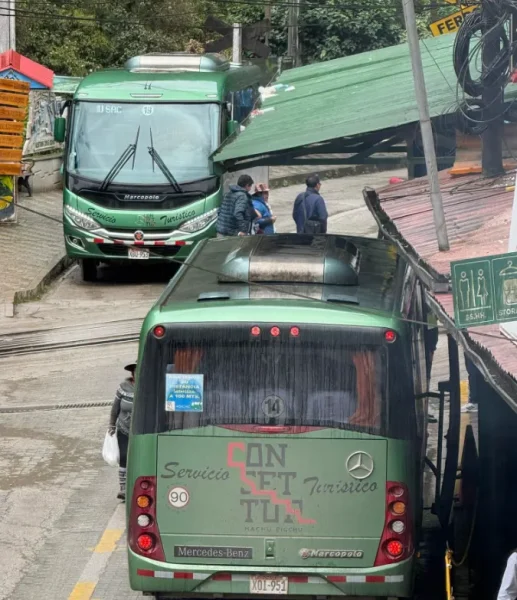
Local Strikes and the Concetur Bus Contract Disputes

Historical Theories On Why Machu Picchu Was Abandoned

Archaeologists have spent over a century analyzing soil samples artifacts and royal chronicles to solve this mountain mystery. The leading theories on why machu picchu was abandoned completely rule out alien invasions or sudden mass suicides. Instead the most scientifically backed reason for machu picchu why it was abandoned points to a brutal economic and political collapse. The mountaintop city was not self sustaining and relied heavily on constant imports from the capital which abruptly stopped arriving.

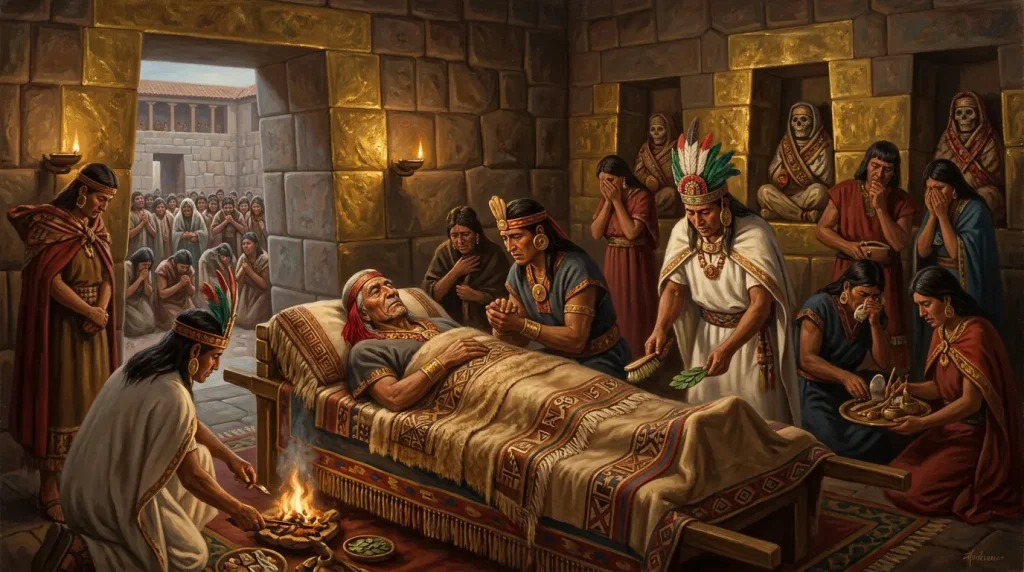
The Death of Pachacutec and the Decline of the Royal Estate

Image
Death-of-Inca-Pachacuteq

The magnificent citadel served as a private luxury vacation resort for Emperor Pachacutec. When people investigate why did the incas abandon machu picchu they must look closely at royal inheritance laws. Upon an emperors passing his property did not go to the next ruler. The new king had to build his own lavish palace elsewhere using new resources. Over the decades the maintenance funds for Pachacutecs estate simply dried up. This helps explain why did the inca abandon machu picchu gradually as fewer and fewer servants stayed behind to care for an aging empty retreat.

The Manco Inca Rebellion and the Siege of Cusco

Many history lovers want to know the exact timeline of when and why was machu picchu abandoned during the conquest. Around 1536 the rebel leader Manco Inca gathered every available man to fight the Spanish conquerors in Cusco. If you ask when was machu picchu abandoned by the inca why the answer points directly to this bloody uprising. The farmers and builders left the mountain terraces to join the rebellion or fled to the secret jungle city of Vilcabamba to hide from the European cavalry.

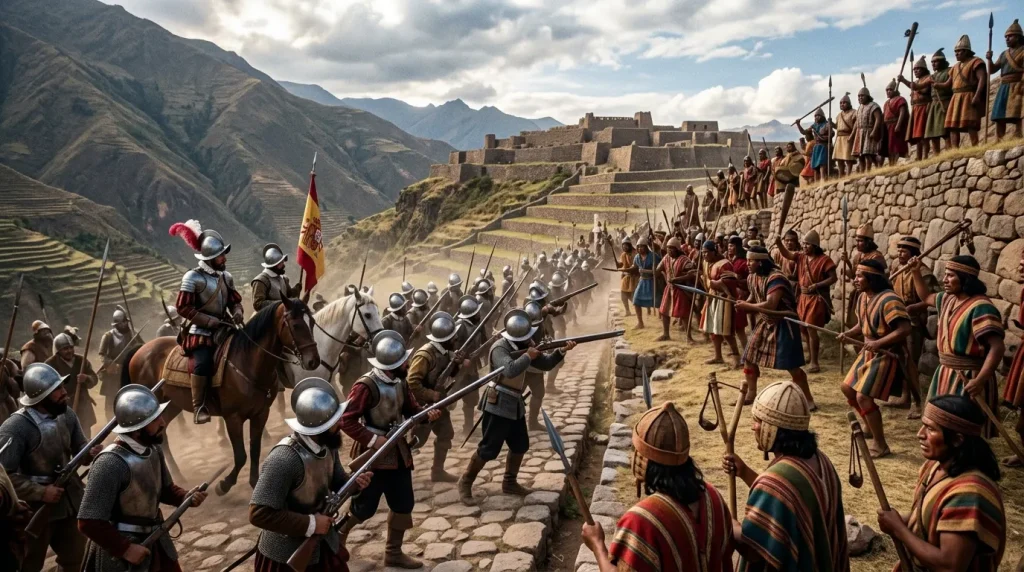
The Inca Civil War and the Spanish Invasion Impact

Image
The-Spanish-Conquest-of-the-Incas

Before the Spanish galleons even arrived the empire was already bleeding from the inside. Two royal brothers Huascar and Atahualpa waged a devastating civil war for the throne. Understanding why was the city of machu picchu abandoned requires looking at this internal destruction which wiped out the agricultural workforce.

By the time Francisco Pizarro marched into the Andes the supply chains were completely broken. Why did they abandon machu picchu forever because the surviving elites retreated into the thick cloud forest leaving the magnificent stone temples to be swallowed by wild vegetation.

Machu Picchu Rediscovery and Ongoing Restoration Efforts

For nearly four hundred years the citadel slept silently under a massive canopy of vines orchids and thick moss. The primary reason why was machu picchu abandoned and forgotten by the outside world is its brilliant camouflage. The fleeing Incas deliberately destroyed the connecting mountain trails to ensure the Spanish conquistadors would never find their sacred temples.

Hiram Bingham Expeditions and Clearing the Overgrown Jungle

When American explorer Hiram Bingham arrived in 1911 guided by local indigenous farmers he found a jungle wasteland. His excavation team discovered compelling evidence revealing why did the incas abandon machu picchu in such an absolute panic. They uncovered half carved granite boulders left sitting in the quarries and unfinished temple walls proving the builders dropped their heavy tools and ran. Clearing the site took decades of brutal manual labor to reveal the stunning urban planning hidden underneath.

Modern Architectural Preservation and Stone Consolidation Work

Image
Restoration-and-Maintenance-of-Machu-Picchu

Today preserving the ruins requires a massive team of full time engineers and geologists. If you ever wonder why does the abandoned town of machu picchu draw admiration from modern architects it is because the Incas built the city directly on top of two active earthquake fault lines. They engineered a brilliant underground drainage system that prevented landslides for centuries. Modern preservationists work daily to consolidate these mortarless retaining walls so they do not collapse into the Urubamba river below.

Physical Deterioration and Structural Risks to the Inca Citadel

The cruel irony of the historic sanctuary is that modern global tourism now threatens to destroy what the wild jungle protected for hundreds of years. When researchers study why did machu picchu get abandoned originally they point to ancient warfare but the modern threat is purely physical destruction. The incredible weight of thousands of daily visitors is pushing the fragile agricultural terraces to their absolute breaking point.

Mass Tourism Soil Erosion and the Annual Sinking Process

Geologists have uncovered a terrifying modern reality. If you ask why is machu picchu abandoned by tourists during certain maintenance months the answer is that the ground is literally sinking. Over one million pairs of hiking boots pound the soft soil every year creating severe micro vibrations. This heavy foot traffic causes massive soil erosion leading travelers to search machu picchu why abandoned when they find out their favorite temples are permanently cordoned off with ropes to prevent the granite floors from caving in.

UNESCO Conservation Warnings and Site Capacity Restrictions

The United Nations has repeatedly threatened to place the site on the List of World Heritage in Danger. Understanding why was the machu picchu abandoned to the jungle originally motivates authorities to prevent a modern collapse. To halt the physical decay the Peruvian government implemented strict ticketing circuits and heavy daily capacity limits.

Modern Conservation RiskPhysical Impact on the RuinsOfficial Government Solution
Heavy Foot TrafficSinking floors and dangerous micro fractures in the stone templesImplementation of five strict one way walking circuits
Excessive RainfallMudslides threatening to wash away the steep agricultural terracesClosing the Inca Trail entirely every February for heavy maintenance
Harmful VibrationsWeakening and shifting of the mortarless stone wallsBanning high heels camera tripods and heavy backpacks inside the ruins

Modern Social Conflicts and Temporary Closures in Aguas Calientes

Image
Modern Social Conflicts and Temporary Closures in Aguas Calientes

Beyond the structural decay the region suffers from intense political and social instability. Searching online for why machu picchu abandoned today often brings up breaking news reports of international tourists stranded in the town of Aguas Calientes. Severe local protests frequently force the entire archaeological park to shut its gates completely protecting visitors from potential violence.

Local Strikes and the Concetur Bus Contract Disputes

The only way to reach the entrance gates from the valley below without hiking is by taking a specific bus fleet operated by a local monopoly called Consettur. Violent local strikes frequently erupt over who controls this highly lucrative transportation route. During these protests the mountain roads are physically blocked with large rocks and burning tires. This explains exactly why was machu picchu abandoned by tour operators for days at a time while government officials negotiate with angry local transportation unions.

Image
Local Strikes and the Concetur Bus Contract Disputes

Ticketing Management Issues and Railway Blockades

In early 2024 the Peruvian Ministry of Culture attempted to privatize the electronic ticketing system to better control overcrowding. The local communities revolted aggressively arguing that foreign tech companies were stealing their indigenous heritage profits. The townspeople marched directly to the train tracks and blocked the only railway connecting Cusco to the ruins. For several days the trains stopped running providing a very real modern example of why was machu picchu abandoned as tourists had to evacuate the sacred valley by foot leaving the legendary stone city completely empty once again.

Show in Travel Guide (Home)
No

When to Book a Ticket to Machu Picchu

Submitted by admin on

Deciding exactly when to book Machu Picchu is the most critical step in planning your Peru vacation. As local experts, we see travelers miss out on the citadel every day because they waited too long.

With strict daily limits imposed by the Ministry of Culture, showing up without a reservation is no longer an option. Here is exactly how far in advance you need to secure your spot.

Image
How to organize a trip to Machu Picchu at the last minute?

General Entry Ticket Availability

General access to the ruins fluctuates heavily based on the season and the specific circuit you wish to explore.

  • Daily Capacity: The government issues a maximum of 4,500 tickets per day. During the peak dry season (May to October), these sell out months in advance.
  • Booking Strategy: Define your travel dates early. High-demand circuits, especially those including the Huayna Picchu mountain hike, must be booked 4 to 6 months before your trip.

Inca Trail Permit Limits

Hiking the legendary Inca Trail follows a completely different system. Permits are strictly capped, and the daily quota includes all essential support staff.

  • Classic 4 or 5 Day Trail: Limited to 500 total spots daily. Since guides, cooks, and porters take up about 60 percent of this quota, only 200 permits are actually available for trekkers. You must book this 6 months ahead.
  • Short 1 or 2 Day Trail: Capped at 250 daily spots. Because this route requires less support staff, roughly 200 to 230 permits remain available for hikers.

The Reality of Last Minute Tickets in Aguas Calientes

Traveling without a pre booked ticket leaves you with only one extremely risky option upon arrival.

  • The Daily Quota: The government releases exactly 1,000 tickets in Aguas Calientes (Machu Picchu town) for next-day entry. These are sold in person on a strictly first-come, first-served basis.
  • The Risk: We strongly advise against this method. You will likely wait in line for hours and risk being stranded in town for extra days—paying more for hotels and meals—with no guarantee of actually entering the ruins.
Image
How to organize a trip to Machu Picchu at the last minute?

Why You Must Book in Advance

To secure your preferred circuit and time slot, planning ahead is non-negotiable. Ticket availability is directly tied to the time of year you choose to travel.

The official government sales for the upcoming year typically open around late December, and peak season dates vanish almost immediately upon release.

Booking During the Andean Dry Season

The dry season runs from May through October. These are the most popular months to visit due to the clear skies, solid weather, and excellent photography conditions. However, this ideal weather brings massive crowds, fully booked hotels, and intense demand for entry tickets.

  • The Busiest Months: June, July, and August experience the absolute highest tourist volume of the year.
  • When to Book: You must purchase your tickets at least 4 to 6 months in advance. Securing a last-minute ticket during these months is virtually impossible.

Booking During the Andean Wet Season

The highland summer spans from November to April and brings the rainy season, with January, February, and March experiencing the heaviest downpours. If you do not mind occasional rain, this is an excellent time to visit to enjoy lush landscapes, fewer crowds, and better travel deals.

  • When to Book: While demand is significantly lower, you should still book your tickets at least 2 to 4 weeks in advance to guarantee access to the best circuits.
  • Inca Trail Closure: Please note that the entire Inca Trail network is strictly closed every February for government maintenance and conservation.

Advantages of Booking With a Tour Group

Traveling with a professional tour operator eliminates the stress of navigating Peru's complex ticketing system. Expert agencies monitor availability calendars daily and handle all the logistics from transport to guided tours.

Furthermore, if you plan to hike the Inca Trail, government regulations strictly dictate that you cannot do it independently; you must book through an officially licensed agency based in Cusco.

Image
machu-picchu-tours-reviews tour

Benefits of Traveling With a Tour Group

If you want a hassle free experience, booking with a licensed operator is the best decision. We handle the complex logistics so you can focus entirely on enjoying your trip.

  • Guaranteed Tickets: We manage the complex government reservation system and secure your exact entry circuits.
  • Seamless Logistics: All transportation, from your Cusco hotel to the gates of Machu Picchu, is fully coordinated.
  • Expert Local Guides: You will be led by certified professionals fluent in English, Spanish, and Quechua who provide deep historical context.
  • Complete Trekking Gear: For multi day routes like the Inca Trail, we supply high-quality tents, sleeping pads, and full dining equipment.

The Risks of Last Minute Ticket Purchases

Waiting until you arrive in Peru drastically reduces your chances of securing a decent ticket. During the peak dry season, tickets disappear instantly online.

If you see a few spots left and hesitate for half an hour, they will likely be gone. This is exactly why the Machu Picchu Tours team strongly pushes for early booking.

Purchasing Tickets in Aguas Calientes

If you arrive without an advance booking, your only option is the physical ticket office in Aguas Calientes. The government sells exactly 1,000 tickets daily for the following day, usually between 3:00 PM and 10:00 PM.

  • Unexpected Delays: The main disadvantage is that you may be forced to stay in town for up to three extra days just waiting for an available spot.
  • Increased Costs: These forced delays mean spending significantly more money on extra hotel nights, meals, and unplanned expenses.
  • Strict Entry Times: If you do manage to get a ticket, your entry time is strictly enforced. If you are late, you will be denied access.
  • Guide Availability: You are required to have a guide to enter the citadel. Finding a high quality, certified guide at the last minute is tough and often more expensive.
Show in Travel Guide (Home)
No

Tourism in Machu Picchu

Submitted by admin on

Machu Picchu is seriously one of those places that just hits different. Not many spots in the world mix mind-blowing nature with such cool history. When you see those stone buildings and endless farming steps (terraces) against the super green mountains, it's just wow. Doesn't matter if it's morning, afternoon, raining, or sunny, crowded or not – the view is always incredible. People often gasp "¡Qué chévere!" (How cool!) the first time they see it.

Image
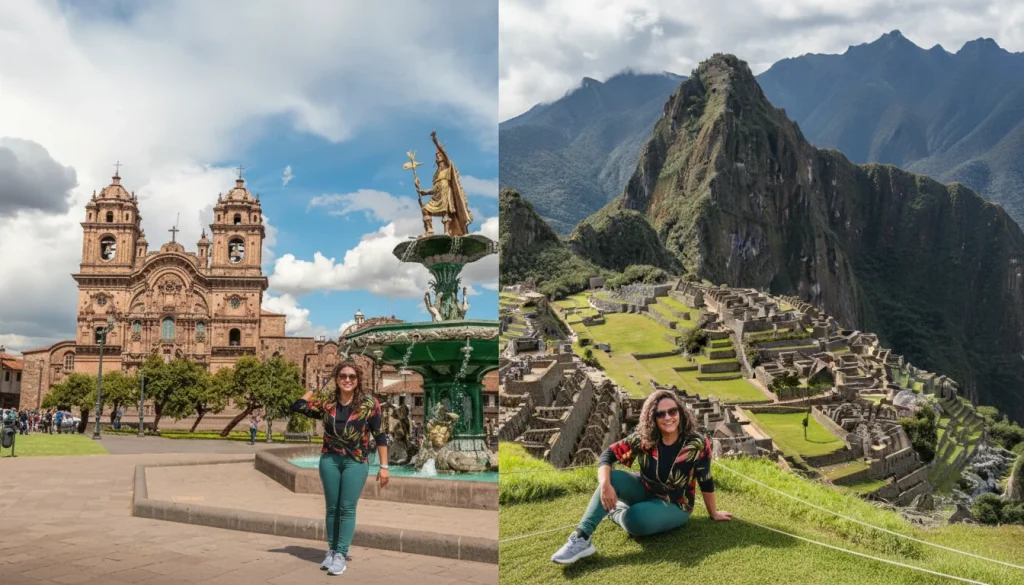
Tourist in Cusco’s main square and at Machu Picchu

Weather  onMachu Picchu

Machu Picchu has two seasons: rainy season and a dry season

  • Dry Season: April to October (Winter down here)
  • Rainy Season: November to March (Summer down here)

But honestly? It can rain anytime. Locals might tell you, "You gotta pack for everything, causa!" (Causa is like saying 'mate' or 'buddy'). So even in the "dry" season, maybe stick a light rain jacket in your bag.

Best Time to Go

Most folks swarm Machu Picchu in June, July, and August. This lines up with the dry season, so you have the best shot at sunny days. Because it's peak time, expect big crowds – locals would say "está full" (it's packed). If you come then, you absolutely have to book your entry tickets, train tickets, and hotels way, way ahead of time.

Story of Machu Picchu

Experts think the Inca started building Machu Picchu around 1450 AD, when their empire was at its peak. Most reckon it was a royal retreat for the big Inca king, Pachacutec. Others guess it might have been a super important religious or political center. Truth is, nobody's 100% sure why they built it way up here, which adds to the mystery.

How to get Machu Picchu

To Machu Picchu there are no roads connecting Cusco or the Sacred Valley directly to Aguas Calientes; have two options take a train or hike your way there.

By Train

This is what most people do because it's faster and more comfortable. PeruRail is the main company, offering different service levels – like the Vistadome (popular), Expedition (bit more basic), and the super fancy Hiram Bingham train. They run several times a day.

You can board the train from:

  • Poroy Station (About a 20-min taxi ride from plaza)
  • Ollantaytambo Station in the Sacred Valley

The train ride itself is scenic.

  • From Cusco (Poroy) to Aguas Calientes tour last about 4 hours
  • From Ollantaytambo to Aguas Calientes tour last about 2 hours

Bus Up to the Ruins

From Aguas Calientes town is about a 20-minute bus ride up a steep winding road (lots of switchbacks!) to the main entrance of Machu Picchu.

You need a separate ticket for this bus. Sometimes it's included in tour packages, otherwise, you can buy them in Cusco beforehand or right in Aguas Calientes near the bus stop.

Buses start running at 5:30 am, getting the first people up there just before the gates open at 6:00 am. Be warned: the lines for the bus can get really long, especially between 5:30 am - 6:15 am (for sunrise seekers) and again between 9:00 am - 10:00 am when the trains from Cusco/Ollantaytambo arrive.

Popular Treks:

  • Classic Inca Trail (4 days): The most famous trek in South America. You hike on original Inca paths, see other cool ruins, and enter Machu Picchu through the Sun Gate. You MUST book permits months (sometimes 6+ months) in advance as they sell out fast.
  • Short Inca Trail (2 days): A quicker version if you're short on time or want something less intense. Still needs a permit, book ahead!
  • Salkantay Trek (usually 5 days): Great alternative if Inca Trail permits are gone. Focuses more on stunning mountain scenery, passing the massive Salkantay peak. Doesn't usually require the same type of permit, but book with a tour company well in advance.
  • Lares Trek (usually 4 days): Another good alternative, focusing more on cultural experiences. You walk through remote Andean villages, see beautiful landscapes, and then visit Machu Picchu on the last day. Also doesn't typically require a permit like the Inca Trail, book through a tour operator.

Machu Picchu Rules & Tickets

To visit Machu Picchu they limit the number of visitors per day and tickets often sell out, especially during the peak season (June to August mont).

There are different ticket types:

  • General Entry: Just gets you into the main citadel area.
  • Entry + Huayna Picchu hike: Includes general entry plus the permit to climb Huayna Picchu mountain (that iconic peak behind the ruins). Only 400 spots per day, sells out super fast.
  • Entry + Machu Picchu Mountain hike: Includes general entry plus the permit to climb the other mountain facing the ruins. Also limited spots (400/day), sells out quickly.

Book these tickets online through the official government website or a reputable tour agency months in advance if possible.

You cannot buy tickets at the main entrance gate of Machu Picchu. If you waited till the last minute, your only hope is the official ticket office (Ministry of Culture) on the main square in Aguas Calientes, but don't count on availability.

Your ticket will have a specific entry time (e.g., 8:00 am). You have a one-hour window starting from that time to enter (so, 8:00 am to 9:00 am for an 8:00 am ticket). Get to the bus stop in Aguas Calientes at least an hour before your entry time to be safe.

Once inside, your time is limited:

  • General ticket: Max 4 hours inside.
  • Ticket with Huayna Picchu: Max 6 hours total (for ruins + hike).
  • Ticket with Machu Picchu Mountain: Max 7 hours total (it's a longer hike).

There are also set walking circuits (routes) you have to follow inside to help manage the flow of people and protect the site. Maps usually show these routes (often color-coded).

Ask at the entrance if they can stamp your passport with a cool Machu Picchu stamp.

Packing list for Machu Picchu

  • Passport & Ticket: Absolutely essential.
  • Small Backpack: Large bags/luggage aren't allowed into Machu Picchu.
  • Water: Bring a reusable bottle
  • Layers of Clothing:
  • Sun Protection: Bring sunglasses   with high SPF sunscreen and a hat.
  • Rain Gear: Especially Nov-March but good anytime.
  • Comfortable Shoes
  • Camera
  • Hiking Poles: Allowed ONLY if they have rubber tips on the bottom
  • Cash (Soles): For the bathroom

What to Leave Behind

Don't bring these things inside the ruins:

  • Camera tripods, selfie sticks, or drones (big no-no!).
  • Large backpacks or luggage (over 40x35x20 cm). There are storage lockers near the entrance if needed (for a fee).
  • Alcohol.
  • Food (snacks are generally okay, but not full meals/picnics).
  • Baby strollers (not practical with all the stairs; use a baby carrier backpack instead).
  • Hiking poles with sharp metal tips.

Staying Safe

Machu Picchu pueblo is generally safe and crime inside Machu Picchu itself is almost unheard of. However be aware of your surroundings. Pickpocketing can happen, especially in busy areas like the train station or bus lines.

Money Matters

The prices in Aguas Calientes to be higher than elsewhere in Peru (for food, water, souvenirs, etc.). It's a tourist town, and everything has to be shipped in by train. Budget accordingly.

There are NO ATMs up at the Machu Picchu ruins. Get cash in Aguas Calientes or before you arrive.

Language

In Aguas Calientes you'll find plenty of people who speak English, especially those working in tourism. Guides offer tours in many languages. However, knowing a few basic Spanish phrases is always appreciated!

  • Hola (Hello)
  • Gracias (Thank you)
  • Por favor (Please)
  • ¿Cuánto cuesta? (How much does it cost?)
  • Baño (Bathroom)

What to See Inside

Machu Picchu is huge! Over 170 buildings, 600+ terraces, thousands of steps... Here are some highlights:

  • Sun Gate (Inti Punku): The original main entrance for those arriving via the Inca Trail.
  • Huayna Picchu: That dramatic pointy peak you see in most photos behind the main ruins (summit approx. 8,920 ft / 2,720 m).
  • Machu Picchu Mountain: The other, larger mountain that rises opposite Huayna Picchu (summit approx. 10,100 ft / 3,080 m).
  • Temple of the Sun: The only round building in Machu Picchu.
  • Intihuatana Stone: A large, carved ritual stone perched high up. Its name means "hitching post of the sun" in Quechua.
  • Sacred Rock: A massive, flat stone carved to mimic the shape of the mountain behind it (Yanantin).

Where to Stay in Machu Picchu

There's only one hotel right next to the Machu Picchu entrance; the Belmond Sanctuary Lodge. It's super convenient but also very expensive.

Almost everyone else stays down in Aguas Calientes town, you'll find a wide range of accommodation, from budget hostels (hostel and lodges) and guesthouses to mid-range and more upscale hotels. Staying overnight in Aguas Calientes is highly recommended. It allows you to visit Machu Picchu early before the main crowds arrive from Cusco, or even visit on two consecutive days (if you buy tickets for both days), making the whole experience less rushed and more enjoyable.

Where to Eat

Options for eating right at the Machu Picchu entrance are limited and pricey:

  • Machu Picchu Snack Bar: Just outside the gate for drinks, sandwiches, etc.
  • Belmond Sanctuary Lodge Buffet: Offers a buffet lunch, also outside the main gate (expensive).
  • Bring Your Own: You can take a pre-made box lunch (often provided by hotels if arranged) or snacks.

Down in Aguas Calientes, you have way more restaurant choices, ranging from cheap local eats (menús) to pizzerias and nicer restaurants serving Peruvian and international food. It's a good place to try classics like Lomo Saltado

FAQs About Machu Picchu

Where is Machu Picchu?

Southern Peru, high in the Andes where they meet the Amazon jungle, northwest of Cusco.

Best time to go?

Depends! June-Aug = dry, sunny, but crowded (book way ahead). Dec-Feb = rainy, fewer crowds. Shoulder seasons (Apr-May, Sep-Oct) can be a good mix.

How is the altitude in Machu Picchu?

  • The main ruins Machu Picchuare at 7,970 ft (2,430 masl).
  • Huayna Picchu summit is 8,920 ft (2,720 masl)
  • Machu Picchu Mountain summit is 10,100 ft (3,080 masl).

Can I get altitude sickness?

Yes it's possible, take it easy your first day, drink lots of water, avoid heavy meals/alcohol. Many people feel fine or just have mild symptoms (headache, shortness of breath).

How much time do I need?

You can do it as a long day trip from Cusco/Ollantaytambo (maybe 4 hours inside). But staying overnight in Aguas Calientes is better. It lets you visit more relaxed, maybe do a hike, or go early/late to avoid peak crowds. Two days is great, especially in rainy season just in case one day has bad weather.

Do I need a guide?

Officially, rules sometimes say yes, but in practice, you can often enter and walk around on your own. However, having a guide makes the visit WAY better! They explain the history, point out details you'd miss, and bring the place to life. Highly recommended, even for just a couple of hours. You can hire official guides near the entrance.

When was it 'discovered'?

While locals always knew, American Hiram Bingham brought it to international attention in 1911.

How many tourists visit?

Before 2020, it was over 1.5 million per year. Now, daily entry is capped (around 4,000-5,000 depending on current rules, including hike permits) to protect the site. Book tickets early!

Where are the bathrooms?

ONLY outside the main entrance gate. Costs about 2 Soles to use (usually includes toilet paper). There are NO bathrooms inside the ruins, so go before you enter!

Can I stay overnight AT Machu Picchu?

Only at the very expensive Belmond Sanctuary Lodge right by the gate. Everyone else stays down in Aguas Calientes town.

What else is there to do in Aguas Calientes?

Besides being the base for Machu Picchu, you can: soak in the town's hot springs (aguas calientes means hot waters), visit the Manuel Chávez Ballón museum (about Machu Picchu history), shop at the artisan market near the train station, or just relax with a Pisco Sour and soak in the atmosphere. There are also some short walks nearby, like to the Mandor waterfalls.

Show in Travel Guide (Home)
No

The Water Mirrors of Machu Picchu The Authentic Sky Mirror Peru

Submitted by admin on

When travelers search for a massive reflective landscape in South America, they typically look toward the salt flats of Bolivia. However, the Peruvian Andes hide their own astonishing optical illusions, blending breathtaking natural geography with ancient Inca engineering.

Hidden deep inside the most famous archaeological citadel in the world lies a highly sophisticated astronomical tool designed to pull the heavens down to earth. Beyond these ancient ruins, the high-altitude geography of the country offers perfectly still, glassy lakes. Let's explore the history, exact locations, and science behind the most incredible reflective waters the Andean region has to offer.

Top Reflective "Sky Mirror" Locations in Peru
Location NameType of MirrorAltitudeBest Time to Visit
Machu Picchu MirrorsArchaeological / Astronomical2,430 metersYear-round (Dry Season for night skies)
Laguna 69Natural Glacier Lake4,600 metersMay to September (Early morning)
Maras Salt PondsFragmented Pools3,380 metersDecember to March (Rainy Season)
Salinas y Aguada BlancaShallow Salt Flat4,300 metersJanuary to April (Flooded Season)
Image
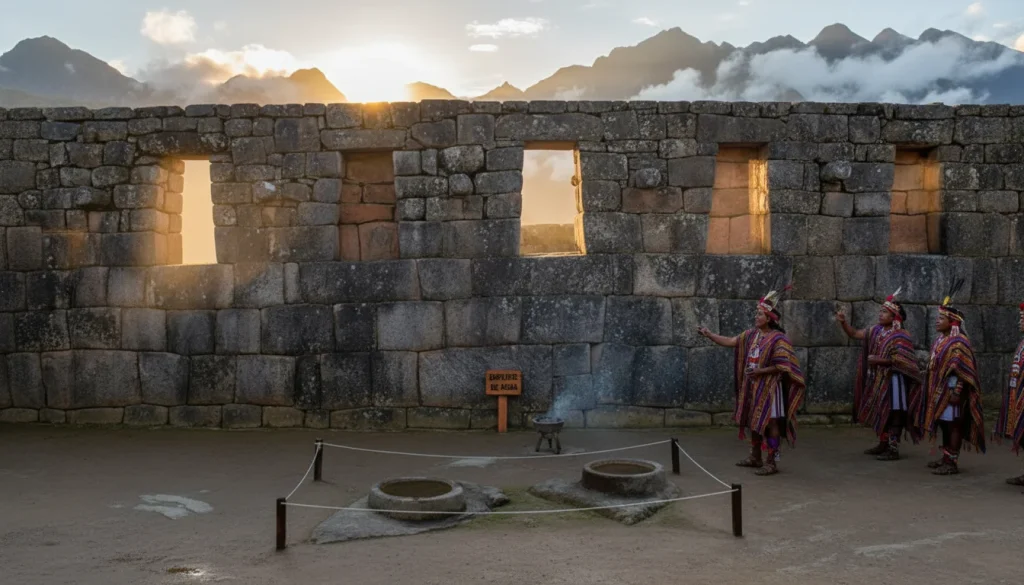
The-Inca-Solstice-at-the-Mirrors-of-Machu-Picchu

The Water Mirrors of Machu Picchu as an Ancient Astronomical Observatory

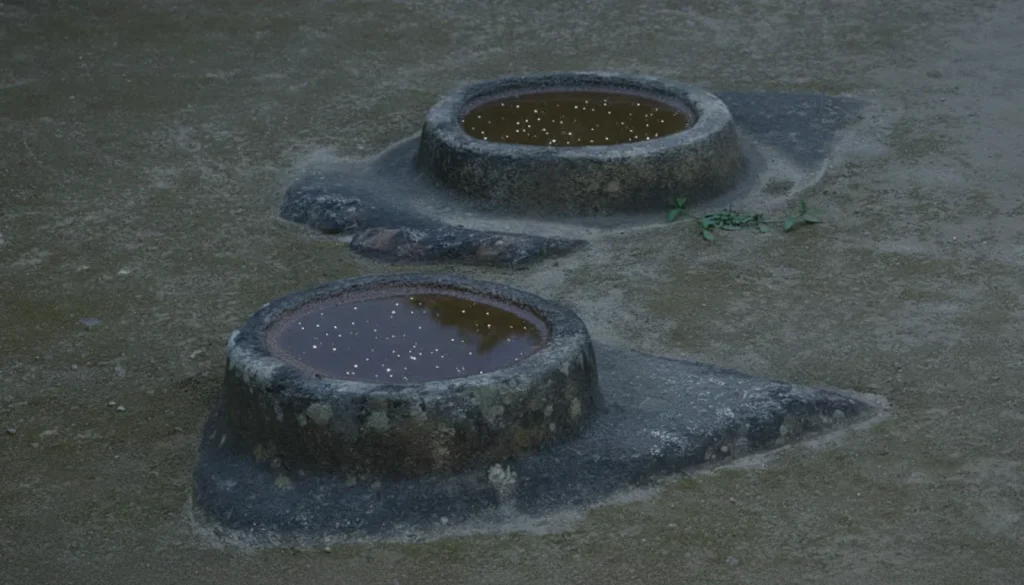
Deep within the urban sector of the Inca citadel, adjacent to the Temple of the Sun, lies a roofless room that puzzles many first-time visitors. The floor features two perfectly circular depressions carved directly into the solid granite bedrock. Far from being simple puddles, The Water Mirrors of Machu Picchu were highly advanced archaeoastronomical instruments.

Image
The Water Mirrors of Machu Picchu

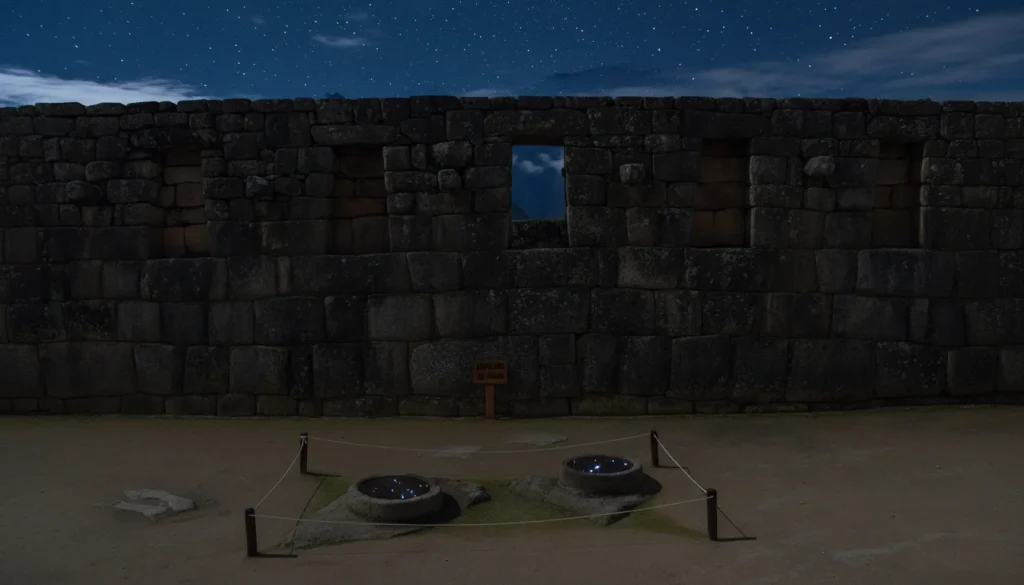
The Incas were master astronomers whose entire agricultural survival depended on tracking the stars without modern lenses or telescopes. By filling these carved stones with fresh water, the high priests created a brilliant sky mirror peru enclosed within massive stone walls, allowing them to study the cosmos with absolute precision and no wind disturbance.

How the Water Mirrors Sky Reflected the Stars and the Milky Way

For the Inca civilization, the Milky Way (known as "Mayu" or the celestial river) was the focal point of their religious cosmology. Studying its dark constellations required long, grueling hours of observation. By utilizing the Water Mirrors sky reflection, astronomers could comfortably look down at the still water instead of straining their necks upward in the freezing Andean night.

This optical method allowed them to trace the exact trajectory of specific constellations (like the Southern Cross, or "Chakana") passing directly overhead, making this room the most historically significant sky mirror peru in the entire Tahuantinsuyu empire.

Image
How-the-water-reflected-the-sky-in-the-pools-of-Machu-Picchu

Understanding the Circular Mortars and the Night Sky Reflection

Because of their shape, early 20th-century explorers initially labeled this room the "Room of the Mortars," assuming the stones were used to grind corn or prepare natural dyes. However, modern archaeological evidence strongly disproves this theory for several reasons:

  • Lack of wear and tear: True grinding mortars show heavy friction marks. These circles are perfectly smooth and polished.
  • Strategic location: The room is completely closed off from crosswinds, ensuring the water surface remains flat as glass.
  • Open roof design: The Water Mirrors of Machu Picchu sit in a room that was intentionally left unroofed, allowing a clear 180-degree view of the zenith.

The Connection Between the Sacred Reflections and the Incan Solstice

Image
The-Inca-Solstice-at-the-Mirrors-of-Machu-Picchu

The Inca agricultural calendar depended entirely on predicting the changing seasons. The alignment of the room's walls and the exact placement of the mirrors were constructed to capture the light of specific celestial bodies during crucial times of the year.

During the winter solstice in June (Inti Raymi), the alignment allowed the Pleiades star cluster (known as "Qollqa") to reflect perfectly in the water. Observing this precise Water Mirrors sky phenomenon told the priests exactly when the dry season would end and when to begin preparing the terraced fields for the upcoming harvest.

Exploring Other Natural Sky Mirror Peru Locations Across the Andes

While Machu Picchu offers an incredible man-made reflective tool, the Peruvian landscape itself is full of breathtaking natural mirrors. If you are a landscape photographer or nature lover chasing the ultimate sky mirror peru experience, you must venture beyond the ruins and into the high-altitude glacier valleys and volcanic plateaus.

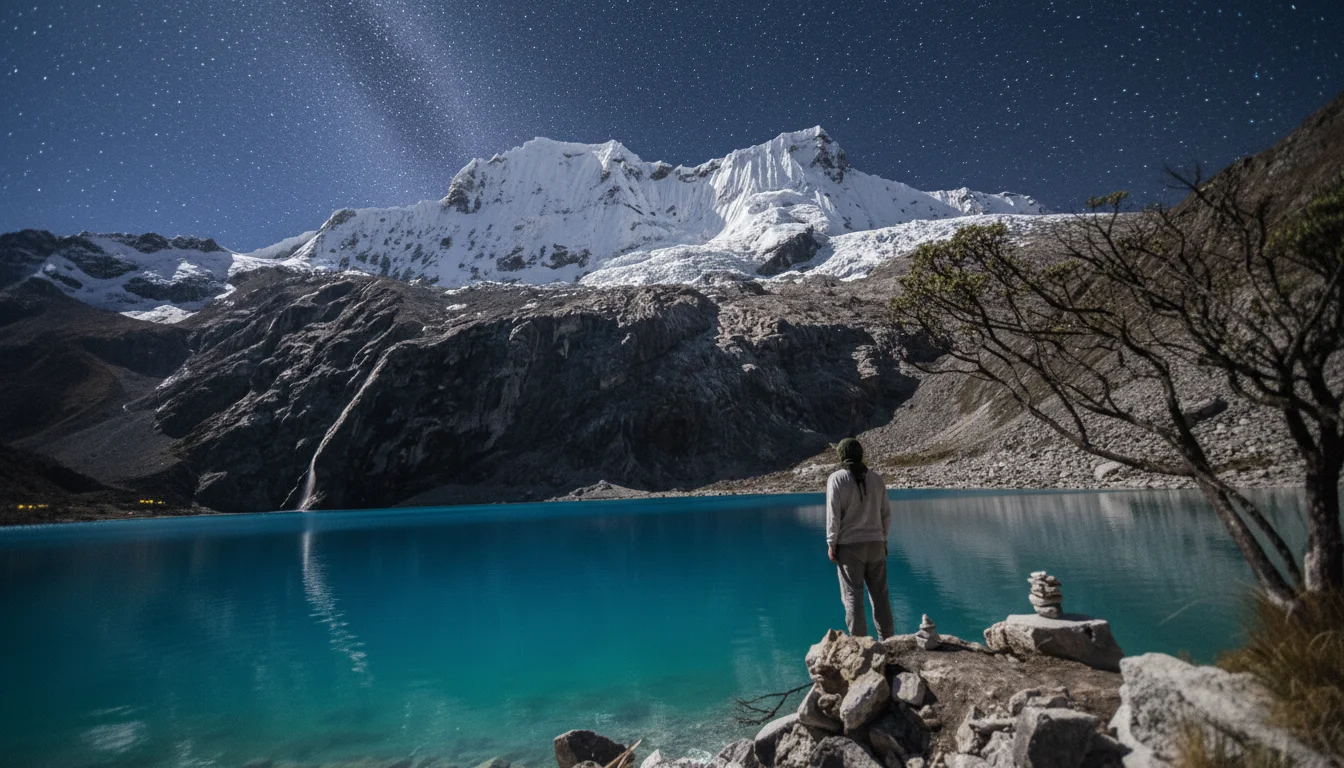
Laguna 69 A Crystalline Mirror Under the Peruvian Sky

Image
Laguan-69-in-Peru-reflecting-the-stars

Located in the heart of the Huascaran National Park (Ancash region), Laguna 69 is widely considered one of the most beautiful bodies of water on the planet. When the fierce mountain winds settle during the early morning hours, the bright, mineral-rich turquoise water transforms into Laguna 69 a crystalline mirror under the Peruvian sky.

Because of the extreme clarity of the glacier meltwater and the lack of aquatic vegetation, the reflection is completely undistorted. Trekking to this remote location rewards hikers with what is arguably the most famous and photogenic natural sky mirror peru in the entire Cordillera Blanca.

The Glacial Waters That Reflect the Cordillera Blanca Mountain Peaks

Sitting at a breathless altitude of 4,600 meters (15,091 feet), the lake is surrounded by massive, vertical ice walls. The calm glacial waters flawlessly reflect the imposing, 6,112-meter snow-capped peak of Mount Chacraraju. This creates a mesmerizing, symmetrical sky mirror peru landscape where the dividing line between the real mountain and its icy reflection completely disappears.

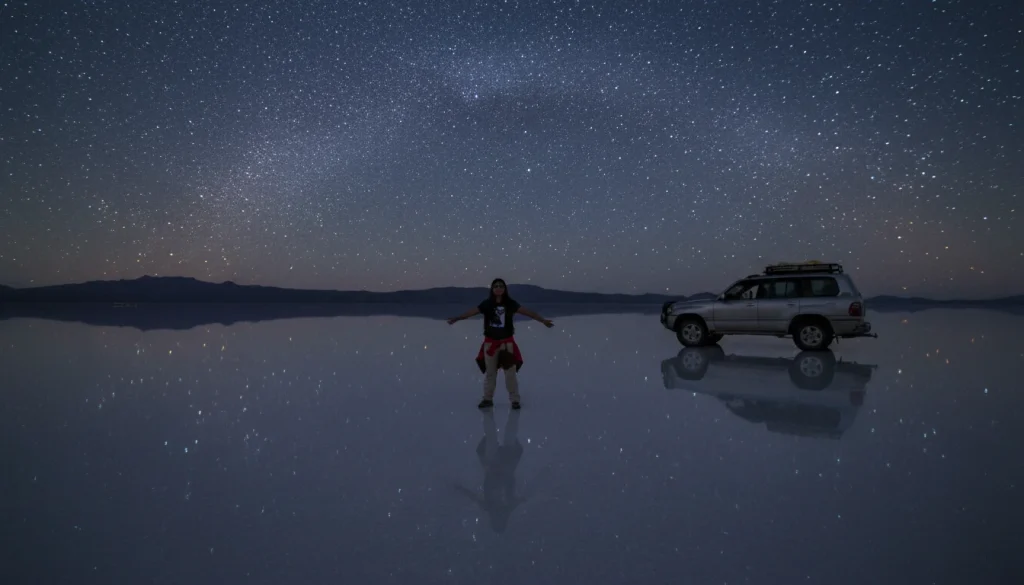
Salinas and Aguada Blanca National Reserve Ponds in Arequipa

Located at 4,300 meters above sea level, situated right behind the towering Misti, Chachani, and Pichu Pichu volcanoes, this high-altitude protected reserve holds shallow salt lakes (Laguna de Salinas) that flood extensively during the wet season.

Image
The-Arequipa-Salt-Flat-at-night-reflecting-the-stars

Because the water here is incredibly shallow and sits on a flat, expansive high-Andean plateau (altiplano), it creates a vast, uninterrupted sky mirror peru. It is common to see herds of wild vicuñas and rare James's flamingos walking across the flooded plains, appearing in photographs as if they are literally walking on the clouds reflected perfectly beneath their feet.

Show in Travel Guide (Home)
No

How to Get Machu Picchu Tickets When They Are Sold Out for Your Dates

Submitted by admin on

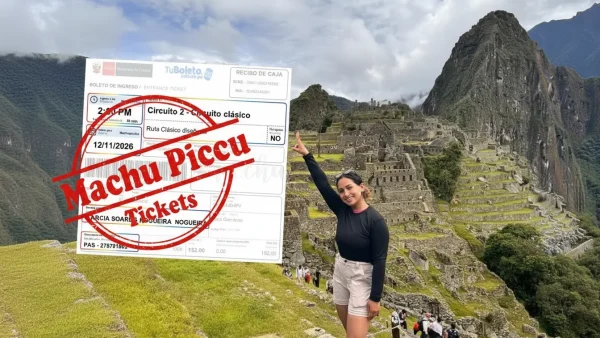
So, you’ve booked your flights to Peru, planned your dream vacation, and logged onto the official website only to see the one thing you didn't want to see: gray zeros everywhere. Machu Picchu tickets sold out. It’s a heart sinking feeling, but don’t panic just yet. While it looks like there’s no way in, that “sold out” sign on the website isn't the final word. The reality is that the Peruvian system has several backdoors and alternative methods for getting people into the citadel, even during the absolute peak of the 2026 season.

This guide moves beyond generic advice and provides a strategic, step by step breakdown of how to get Machu Picchu tickets when they are sold out for your 2026 dates, ranging from queuing in person to utilizing trekking loopholes.

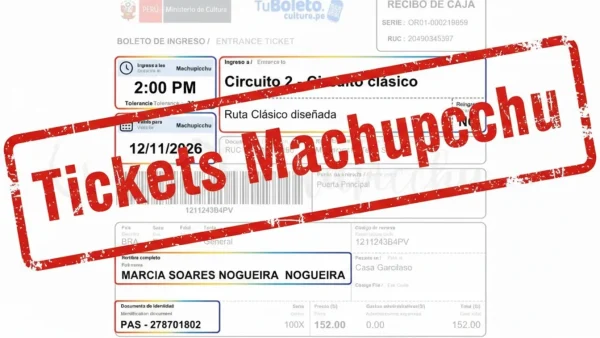
Image
Alternative-Circuit-3-or-Huchuy-Picchu-Hike-Tickets

Securing One of the 1000 Daily Tickets in Aguas Calientes by Queuing in Person

Image
Tickets-machupicchu

This is your best bet if you are traveling on a budget and didn't book months in advance. The government holds back about 1,000 tickets for Machu Picchu every single day to sell exclusively in person in Aguas Calientes (the town at the base of the mountain). The catch? You can’t buy them online or over the phone. You have to physically show up, stand in line, and secure your spot for the next day. It’s not the most relaxing way to spend a vacation day, but it works.

These tickets are designed to democratize access and prevent agencies from buying everything online. However, buying Machu Picchu tickets in Aguas Calientes is not as simple as walking up to a window. It is a competitive, two step process that requires you to be in the town the day before you want to visit.

The Strategy for Success:

  • Do not attempt this if you are on a tight day trip schedule from Cusco.
  • Do plan to spend at least one night in Aguas Calientes.
  • Do bring your physical passport; copies or photos on your phone will be rejected.

Location of the Ministry of Culture Office in Machu Picchu Pueblo for Last Minute Sales

Don't get confused by the hustle and bustle of the town. You are not going to the train station or the bus ticket office. The only place that sells these tickets is the Ministry of Culture Aguas Calientes location, which is inside the Machu Picchu Cultural Center. Finding it is easy if you know where to look, but plenty of tourists waste time standing in the wrong lines.

How to find it:

  • Go to the main square (Plaza Manco Capac).
  • With your back to the church, walk towards the street that leads up to the Hot Springs (Av. Pachacutec).
  • The Cultural Center is located just off the plaza. Look for the sign that says "Dirección Desconcentrada de Cultura Cusco."
  • You will likely see a line forming on the sidewalk—this is the right place.

Best Time to Queue and Registration Process for Next Day Entry

Getting these last minute Machu Picchu tickets has become a bit more organized recently. Instead of standing in the sun for 10 hours, there is now a registration system. You show up early to get a number, go have lunch, and come back to pay. However, in high season (July/August), the competition is fierce, and the wait time for Machu Picchu tickets starts before the sun comes up.

  • The Early Queue (5:30 AM - 6:00 AM): Arrive at the Cultural Center. You are not buying the ticket yet; you are queuing to register
  • Registration (7:00 AM - 1:00 PM): Authorities will take your passport details and give you a numbered ticket. This number guarantees your place in line for purchasing later.
  • The Gap: Once registered, you can leave for lunch or rest, but do not lose your number.
  • The Purchase (3:00 PM - 5:00 PM): Return to the office. They will call numbers in order. This is when you pay (credit card or cash) and select your circuit and time for the next day.
  • Note on Availability: The wait time for Machu Picchu tickets is long, and the availability varies.
  • The first people in line usually snag "Circuit 2" (The Classic View). Those who arrive later may be left with "Circuit 3" or "Circuit 4" (Lower parts).

Booking the Short Inca Trail 2 Days Permit as a Guaranteed Entry Loophole

Image
Booking-the-Short-Inca-Trail-2-Days-Permit

If the idea of wasting a day standing in line sounds terrible to you, there is a "pay to play" loophole: the 2 Day Inca Trail to Machu Picchu. When general Machu Picchu entrance tickets sold out online, permits for this specific trek are usually still sitting there waiting to be booked. This is because the Short Inca Trail has its own separate quota of 250 permits per day, totally independent of the general visitor cap.

Why the Short Inca Trail Permit Guarantees Machu Picchu Entry

  • When you are wondering machu picchu tickets sold out what to do, check the Short Inca Trail immediately. The permit is your entry ticket. Here is why this works:
  • Separate Inventory: The 250 daily permits for the trail are not connected to the 4,500+ general entry tickets.
  • Exclusive Entry: You enter through the Sun Gate (Inti Punku), a view that regular ticket holders cannot access.
  • Circuit 3 Guaranteed: The permit includes a guided tour of the citadel (usually Circuit 3) upon arrival or the next morning.
  • Inca Trail permit availability lasts longer because it requires physical effort (12km hike) and costs more, filtering out the mass market.

Cost Difference Between General Entry and the 2 Day Trek Package

Let’s be real about the price tag. A standard ticket is about $45 USD. The Short Inca Trail package will run you anywhere from $450 to $600 USD. It’s a steep jump, but you have to understand that this isn't just an entrance fee; it’s a full service experience that solves your problem instantly.

Here is what you are actually paying for:

  • Special Train Tickets: The trek starts at Kilometer 104, which requires a specific, more expensive train service than the standard tourist train.
  • A Private Guide: You are legally required to have a licensed guide with you on the trail.
  • All Logistics: The agency handles your hotel, your meals, the bus tickets up and down, and the complex permit paperwork.
  • Certainty: You are paying to remove the stress of "maybe" getting in.

Finding Availability for Alternative Circuit 3 or Huchuy Picchu Hike Tickets

Image
Alternative-Circuit-3-or-Huchuy-Picchu-Hike-Tickets

Most people log onto the website, click "Circuit 2" (the one with the classic photo), see it's sold out, and give up. That’s a mistake. If Machu Picchu tickets sold out for my dates on the main circuit, you need to dig deeper. There are other ticket types hidden in the menus, like Machu Picchu Circuit 3 tickets or tickets linked to smaller hikes, which often have availability because people don't know what they are.

Is Circuit 3 Royalty Route Worth It If Circuit 2 Is Sold Out

If Machu Picchu Circuit 2 sold out, do not despair. Machu Picchu Circuit 3 (often called the Royalty or Temple circuit) is an incredible experience.
What you get with Circuit 3:

  • The Stone Structures: You walk through the actual city where the Incas lived.
  • Key Sites: Includes the Temple of the Sun, the House of the Inka, and the Sacred Rock.
  • Accessibility: It involves fewer stairs and is less physically demanding.
    What you miss: You miss the high elevation platform for the classic "postcard" photo. However, being inside the ruins is far better than not going at all.

Look for Hidden Tickets like Huchuy Picchu and Inca Bridge Hikes

The Ministry of Culture bundles some entry tickets with hikes to spread people out. Sometimes the "General Entry" is zero, but a Huchuy Picchu ticket shows 50 spots left. Huchuy Picchu is a tiny peak next to the big Huayna Picchu. The hike is barely 20 minutes, but buying that ticket gets you through the front door and into the citadel.

Strategies for finding hidden inventory:

  • Check the "Routes" Menu: Don't just look at the first option. Scroll down to see the hike combinations.
  • Inca Bridge: This ticket lets you walk to an ancient drawbridge on a cliff. It usually allows entry to the upper circuits, making it a fantastic "backdoor" to the classic view.
  • Be Flexible: If you see Machu Picchu hike availability for any hike, grab it. The hike is optional; the entry to the ruins is the prize.

Joining a Multi Day Tour with Pre Purchased Allocations from Agencies

Image
group-tour-to-Machu-Picchu

If you are tired of refreshing the website, let a professional handle it. Searching for Machu Picchu tickets sold out tour packages is a smart move because tour agencies buy permits in bulk for their group departures months ahead of time. Even if you, as an individual, can't buy a ticket, an agency might have a spot left on a trek leaving next Monday.

How Travel Agencies Secure Blocked Tickets for Group Departures

  • Agencies do not illegally "hoard" general tickets, but they do secure permits for group departures.
  • Salkantay Trek (4 or 5 Days): Includes Machu Picchu entry on the last day.
  • Lares Trek (4 Days): Includes entry.
  • Jungle Trek (4 Days): Includes entry.
  • If an agency has a confirmed group of 8 people but a capacity of 12, they have 4 "open" spots that include Machu Picchu entry tickets. If you join that group, you get the ticket. This is the most reliable way to secure entry when Machu Picchu entry tickets sold out everywhere else.
Show in Travel Guide (Home)
No

Machu Picchu circuits

Submitted by admin on

Machu Picchu circuits are the official and organized way to explore this world wonder. It’s not just about wandering through ancient ruins depending on the circuit you choose, your views, access points, and entire experience can be completely different. And if this is your first time planning such a dream visit, we get it: with so many schedules, routes, seasons, and recommendations, it can feel overwhelming. That’s exactly why we’ve created this post.

Here, we’ll clearly and simply explain why these circuits exist, the difference between them, how to choose the best one for you, what clothes to bring depending on the season, how long it takes to get from Aguas Calientes to Machu Picchu, when to buy your ticket, and everything else you need to know for a complete, informed, and stress-free experience.

Whether you're traveling solo or through an agency, this guide will help you make better decisions. So that when you finally stand in front of Machu Picchu, you can simply take it all in logistics-free. Let’s dive into everything you need to know to choose your ideal circuit.

Image
Which-Machu-Picchu-Circuit-Is-Best
Image
Machu-Picchu-Circuits

Why Are There Different Machu Picchu Circuits?

Since 2019, Peru’s Ministry of Culture implemented a circuit system to help regulate access to Machu Picchu. The reason? To protect the archaeological site from the increasing number of visitors and, at the same time, offer a more organized and enjoyable experience.

Each circuit has specific routes, set schedules, and different levels of physical demand. Some are designed for in-depth explorers, while others are shorter yet impactful. Some even include adventure hikes or scenic mountain climbs.

As of June 1, 2026, the Ministry reorganized these paths into three main circuits, combining 10 routes in total, to maintain a safe and sustainable visitor experience.

Your Guide to Machu Picchu Circuits

Currently, there are three official Machu Picchu circuits, effective from June 2026 under the latest Ministry regulations. These circuits group 10 different routes, each offering a unique way to explore the Inca citadel. Some provide panoramic views from above, others focus on temples and iconic structures, while several include access to mountains like Huayna Picchu or exclusive hikes such as Inti Punku or the Great Cavern. The right circuit for you depends on your travel style, physical condition, and time of year.

Si quieres revisar el detalle completo y actualizado de todas las rutas, puedes consultar la página oficial del Ministerio de Cultura del Perú:
Consulta los circuitos oficiales de Machu Picchu aquí

Circuit 1 – Panoramic (4 routes)

Not everyone comes to Machu Picchu for the ruins alone. Some of us are here for the views the kind that stop you in your tracks and make you forget to check your phone. If you’re more into slow walks, wide landscapes, and breathing in the energy of the Andes without diving into every stone carving, this is your circuit.

Route 1-A: Machu Picchu Mountain
Let’s be honest this one’s a challenge. You’ll be climbing more than 1,600 stone steps, and they don’t go easy on you. It’s steep, it’s long, and your legs might complain halfway up. But the moment you reach the top, everything changes. The wind feels cooler. The silence is deeper. And there it is the entire valley laid out below you, with the Urubamba River twisting like a silver thread and the citadel resting quietly in the distance.

This isn’t just a hike; it’s a personal triumph. One of those memories that replay in your head long after the trip’s over. If you’re up for it, this path offers more than views. It offers perspective.
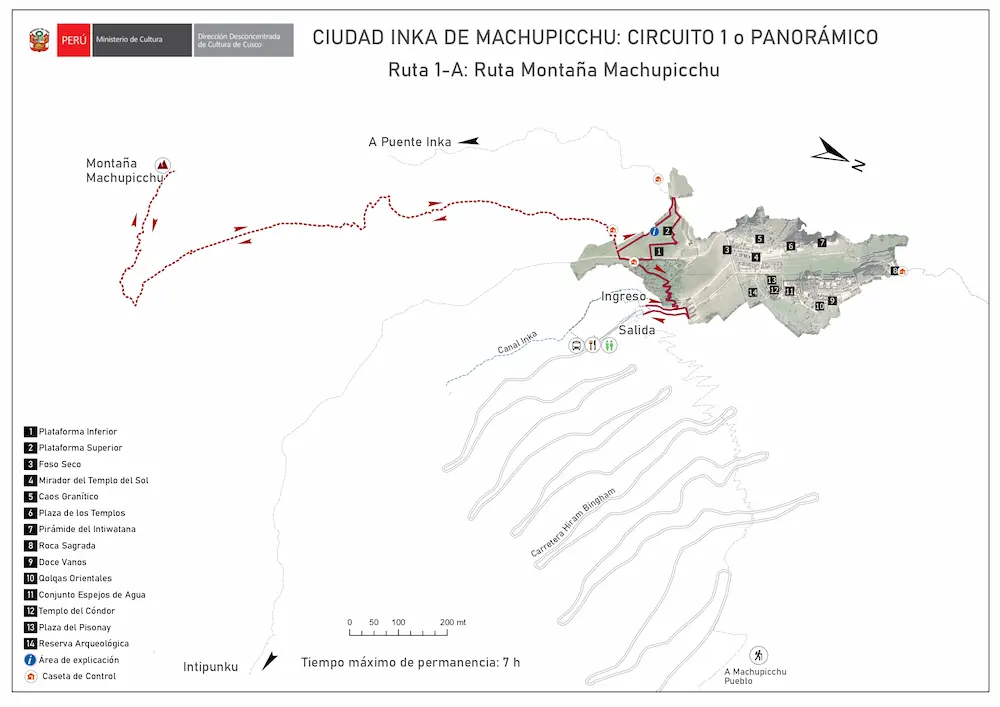
Image
Route-1-A-Machu-Picchu-Mountain

Route 1-B: Upper Terrace
If you're looking for a calmer way to experience the beauty of Machu Picchu without pushing your limits, the Upper Terrace is a lovely option. This short and gentle walk takes you across elevated terraces that offer some of the best open views of the site perfect for soaking in the landscape without rushing.

It’s a favorite among families, older travelers, or anyone who simply wants to pause, breathe, and admire. You won’t need hiking gear or a high fitness level just a good pair of shoes and curiosity. The perspective from here is wide and peaceful. You can see the full outline of the citadel, the surrounding mountains, and if you’re lucky, a few llamas grazing nearby.

This spot is also ideal for those who love photography or quiet moments. Whether you’re visiting with kids, with parents, or on your own, this route invites you to slow down and just enjoy being there which, in a place like Machu Picchu, is more than enough.
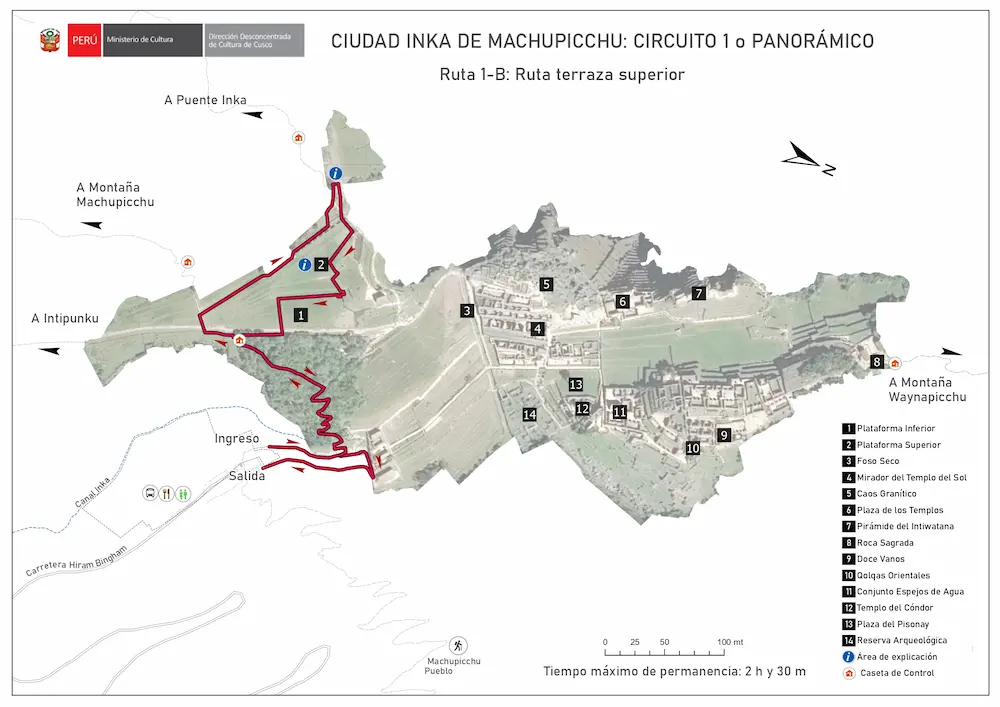
Image
Route-1-B-Upper-Terrace

Route 1-C: Inti Punku (Sun Gate)
For many travelers, reaching Inti Punku the Sun Gate feels less like checking off a route and more like arriving at something sacred. This trail is only open during the high season, when the weather is kind enough to let the mountains show off a little.

The hike itself takes about two hours round trip and is considered moderate manageable, but you’ll feel it. What makes it worth every step is what awaits at the end: a wide stone gateway that once served as the main entrance to Machu Picchu for those coming via the Inca Trail. But what truly makes it unforgettable is the light. If you time it right and arrive early, you’ll see the first rays of sun pouring over the peaks, slowly revealing the citadel below. It’s quiet. It’s golden. It feels like something out of another time.

This route is perfect for those who want more than just a view they want a moment. And Inti Punku gives you that, in the most unforgettable way.
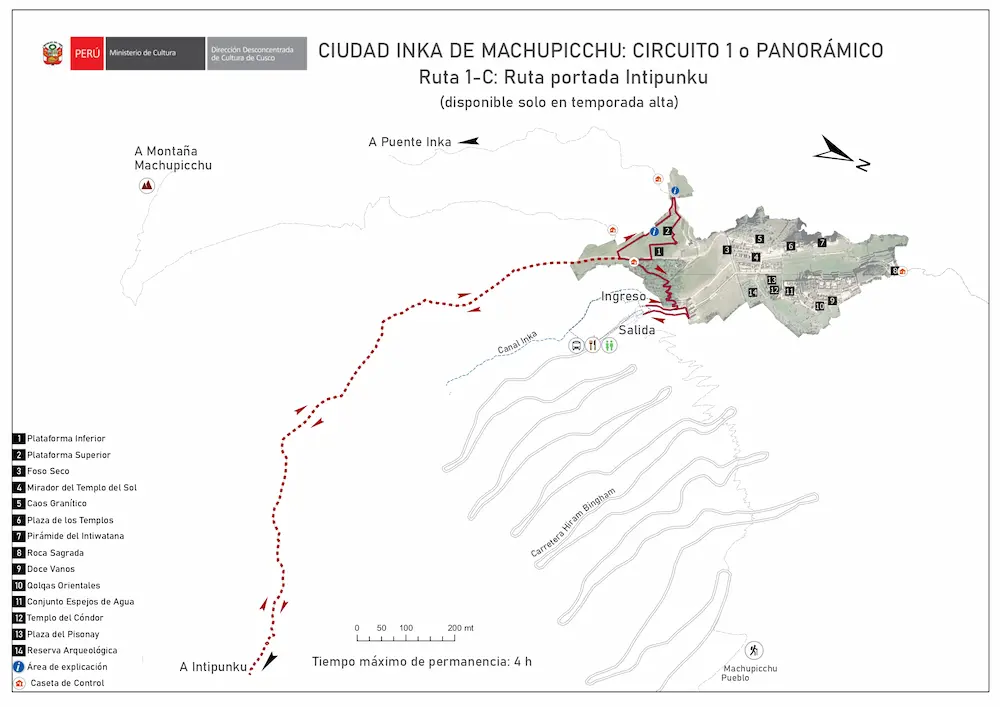
Image
Route-1-C-Inti-Punku-Sun-Gate

Route 1-D: Inca Bridge
This is one of those short walks that leaves a lasting impression. Open only during the high season, the route to the Inca Bridge doesn’t take long but the experience stays with you much longer than expected.

The trail hugs the edge of the mountain, winding gently through stone paths and lush vegetation. It’s not physically demanding, but it does give you that quiet sense of wonder as you realize you're walking the same path carved out by the Incas centuries ago. And then, almost suddenly, the bridge appears built directly into a sheer cliff face. It’s simple, yet stunning. A blend of engineering and courage that defies time.

Among all the Machu Picchu circuits, this one stands out for its intimacy. It’s not about big crowds or sweeping views, but about connecting with something quiet and powerful. If you're someone who enjoys small details, ancient secrets, and the feeling of being alone with history, the Inca Bridge route is something you shouldn’t skip.
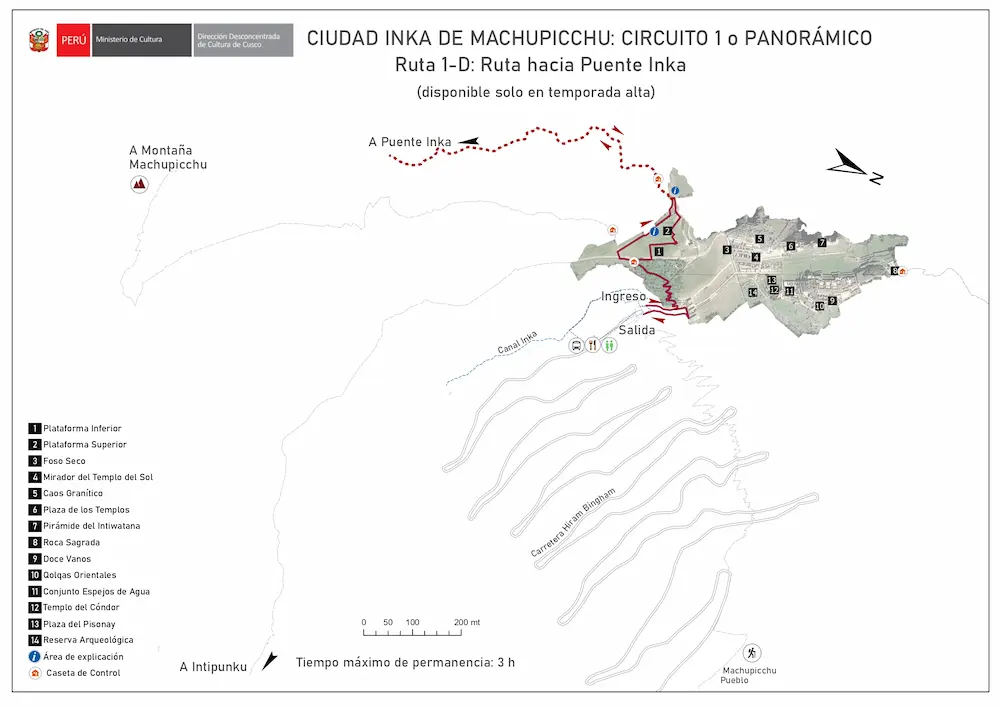
Image
Route-1-D-Inca-Bridge

Circuit 2 – Classic Machu Picchu (2 routes)

This is the kind of route that feels like walking through a memory even if it’s your first time there. You’re not rushing, you’re not climbing mountains. Instead, you’re slowly making your way through the core of Machu Picchu, where the stone walls feel close, the terraces stretch out beside you, and the silence says more than any guide ever could.

Of all the Machu Picchu circuits, this one is perhaps the most iconic not because it’s difficult or remote, but because it brings you face to face with the essence of the citadel. Here, you feel part of it.

Route 2-A: Standard Route
It’s not just a walk it’s a path full of presence. You’ll pass through the Temple of the Sun, where the light seems to fall with purpose. Then come the Three Windows, framing the mountains like a painting. And just when you think you’ve seen enough, there’s the Sacred Rock still, massive, and strangely comforting.

It’s less about taking photos and more about letting the place speak. Slowly. Quietly. Until you realize: this isn’t just a ruin. It’s a story you’ve stepped into.
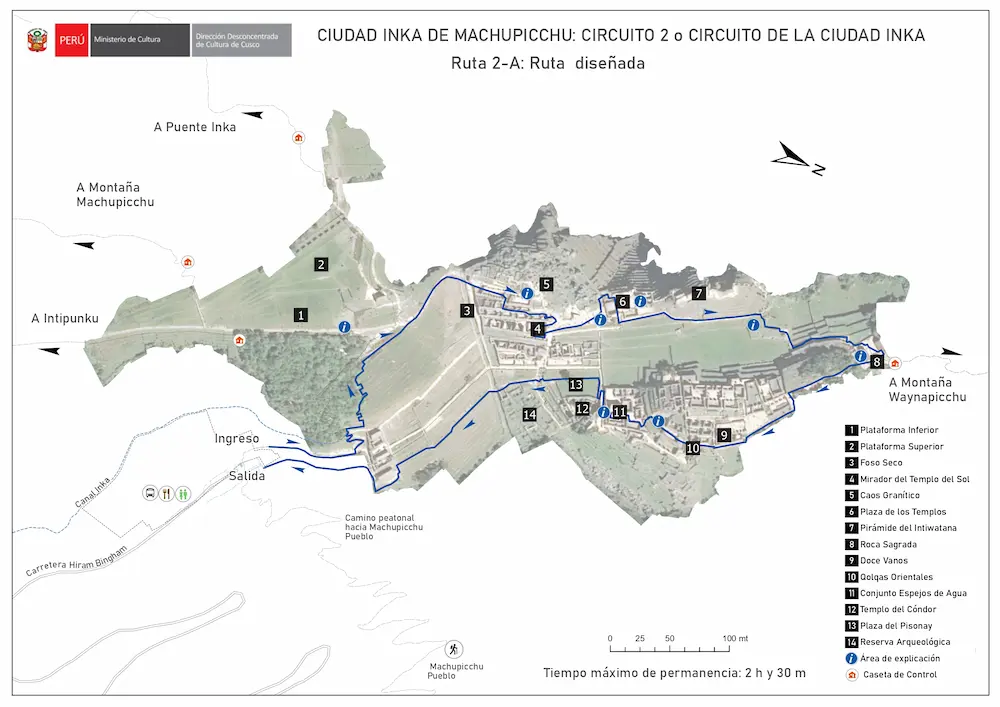
Image
Route-2-A-Standard-Route

Route 2-B: Lower Terrace
Not every visit to Machu Picchu has to involve climbing or long hours on your feet. Sometimes, what stays with you the most are the quiet paths the ones that let you breathe, look around, and simply take it all in. That’s what the Lower Terrace route offers: a softer, gentler way to experience the magic.

This path gives you a broad, open view of the terraces below and around the citadel. You’re not surrounded by temples or tight alleys instead, you find yourself walking alongside the agricultural areas that once fed an entire city. The openness here makes it perfect for travelers who want to move slowly, take wide-angle photos, or just sit and admire the incredible engineering of the Incas.

If the Standard Route is a dive into the spiritual and ceremonial core, the Lower Terrace is a reminder of how grounded and practical life here really was. It’s a lighter route, yes, but no less meaningful.
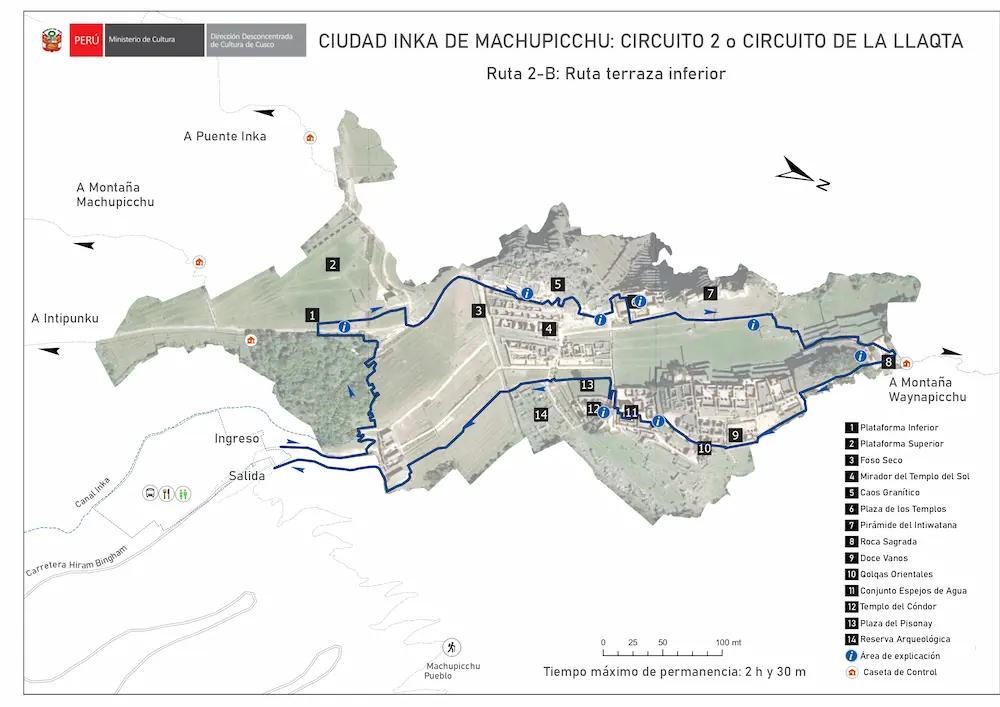
Image
Route-2-B-Lower-Terrace

Circuit 3 – Royal Machu Picchu (4 routes)

This circuit is for those who want more not just more time on the trail, but a deeper look into the quieter corners of the citadel. It’s more demanding, yes, but it also opens doors to parts of Machu Picchu that few take the time to explore. If you’re curious about the noble sectors and hidden places beyond the usual photos, this path might be what you're looking for.

Route 3-A: Huayna Picchu Mountain
This is one of the most talked-about hikes in all the Machu Picchu circuits, and for good reason. Climbing Huayna Picchu isn’t easy the steps are steep, narrow, and constant. It takes about three hours round-trip, and you’ll feel every minute of the climb. But once you're up there, the view is something else entirely. The entire citadel spreads below you, like a model carved into the mountainside.

The route starts with access to Machu Picchu itself before heading up the mountain. And for those who want to go even further, there’s the option to extend the hike to the Great Cavern a lesser-known site that adds about another hour. It's a trail for those who want the adventure and are ready to earn every bit of it.


Route 3-B: Royal Design
This route doesn’t ask much from your legs, but it says a lot to anyone paying attention. You won’t be climbing steep paths or reaching high lookouts instead, you’ll find yourself walking through the kind of places that make you stop and wonder how the Inca lived their daily lives.

You’ll pass by the old qolqas, which were storage buildings and to be honest, they still look sturdy enough to be used today. The layout feels practical, thought-through. Then there's the Inca House, which honestly catches you off guard. It's not just another ruin the cuts in the stone are too precise, almost like they were carved yesterday. There’s something in the silence around it that feels respectful.

And then there’s a small surprise: the water mirrors. Two carved basins that, under the right light, reflect the sky so clearly you might mistake them for something modern. But they’re not. They’re ancient, quiet, and kind of beautiful.

This isn’t the flashy route. It’s the thoughtful one. The one where less happens and somehow, that makes it more memorable.
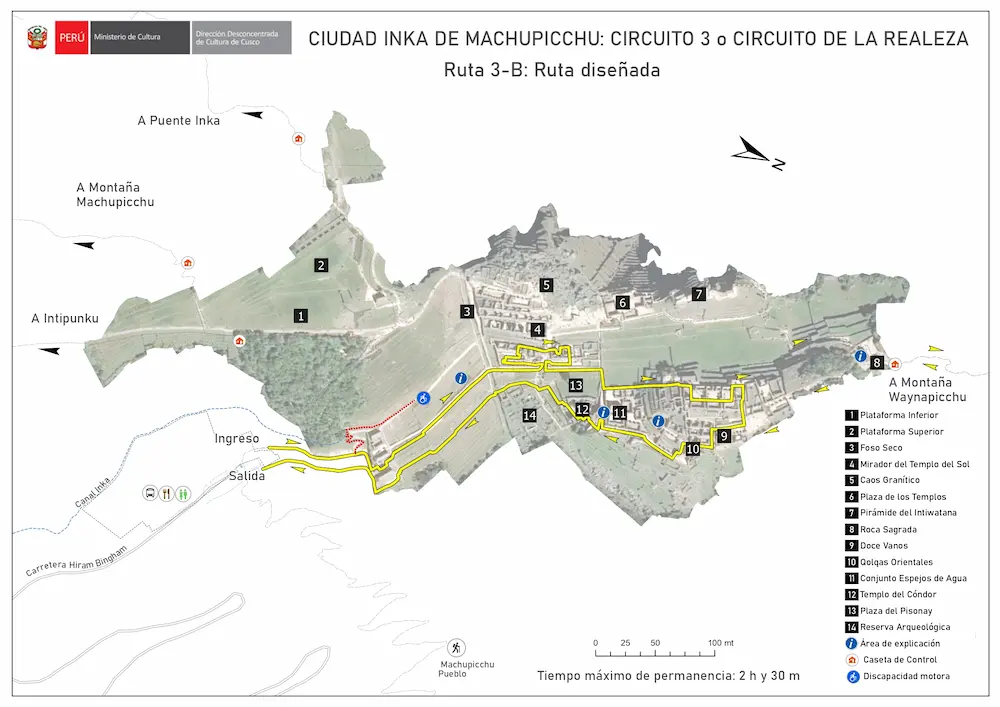
Image
Route-3-B-Royal-Design

Route 3-C: Great Cavern (high season only)
This isn’t a route you stumble across you have to really want to go there. The path to the Great Cavern is only open during the high season, and even then, it’s not the most visited. But maybe that’s part of the appeal.

It’s an extension of the Royal Circuit, and it takes you deeper into a less-explored corner of the site. The trail is quiet, a bit longer, and there’s a sense that not many people walk it which makes reaching the cavern feel oddly personal. When you arrive, you don’t find a grand chamber, but rather a carved space that clearly mattered. It’s subtle. Mysterious. You get the sense that this place had a purpose, even if no one tells you exactly what it was.

Among the different Machu Picchu circuits, this one feels like a hidden chapter. Not dramatic, but quietly powerful the kind of place that doesn’t shout, but stays with you for reasons you might not fully explain.
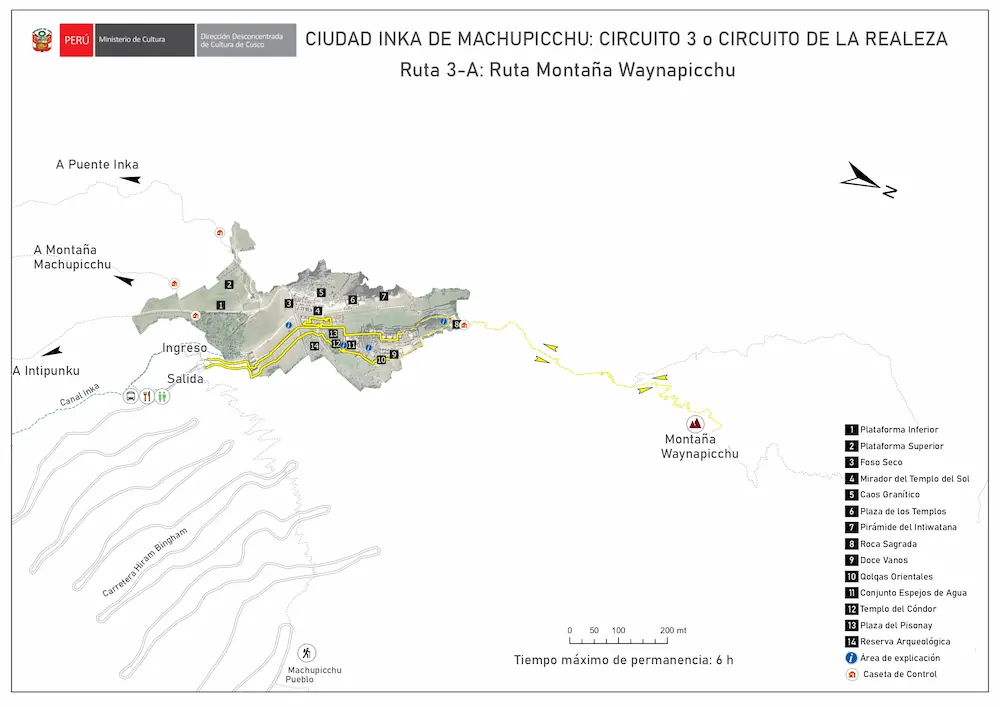
Image
Route-3-A-Huayna-Picchu-Mountain

Route 3-D: Huchuy Picchu (high season only)
If you’re looking for a shorter, quieter hike that still gives you something special, Huchuy Picchu might be exactly what you need. It doesn’t take long to reach the top maybe 30 to 45 minutes but that’s not what makes it interesting.

The trail itself feels tucked away. Most people don’t even realize it’s there. It starts off gently, with narrow steps carved into the hillside, and pretty soon you find yourself rising above the edge of the site. When you reach the viewpoint, it’s not the wide, dramatic postcard angle. It’s something else something more personal.

You see Machu Picchu from a slightly different angle, closer than you'd expect, and somehow more alive. The crowds feel distant, the noise fades, and for a moment, it’s just you and the mountain. No filters. No rush.

It’s one of those places that doesn’t need a big explanation. You go, you see, and something about it stays with you. Sometimes, the smallest routes offer the clearest moments.
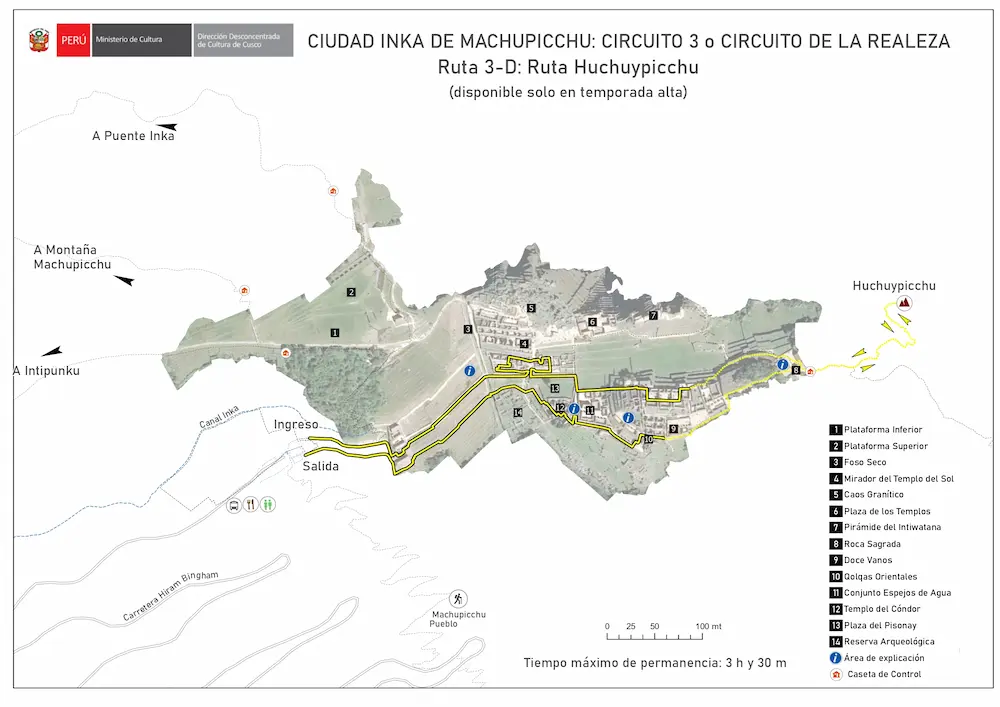
Image
Route-3-D-Huchuy-Picchu-high-season-only

Which Mountain to Choose at Machu Picchu?

Besides the citadel tour, you can climb one of three mountains, each offering a distinct experience. Your choice depends on fitness level, interests, and desired intensity. Choosing the right one also depends on which of the Machu Picchu circuits you book, as each circuit grants access to different trails.
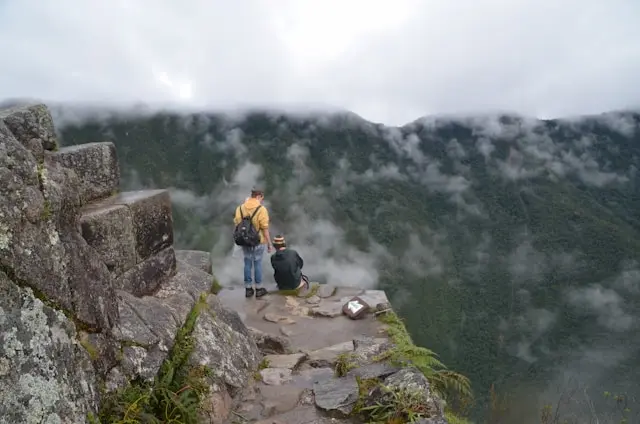
Image
Huayna-Picchu turist

Huayna Picchu (Waynapicchu)


That famous peak behind Machu Picchu in the postcard view. Climbing it is intense and thrilling.

  • Highlights: Aerial views of the citadel, mysterious Inca structures at the summit.
  • Difficulty: High—steep stairs, narrow paths, rope sections.
  • Duration: 2–3 hours round trip.
  • Important: Limited to 200 visitors/day. Book months in advance through the appropriate Machu Picchu circuits.

Machu Picchu Mountain


Higher than Huayna Picchu and less crowded.

  • Highlights: Panoramic views of the sanctuary, Urubamba River, and surrounding jungle mountains.
  • Difficulty: Moderate to high.
  • Duration: 3–4 hours round trip.
  • Ideal for: Hikers, landscape photographers, and peace seekers.

Huchuy Picchu


A shorter, easier climb.

  • Highlights: Direct view of the citadel with minimal effort.
  • Difficulty: Low.
  • Duration: 45 minutes to 1 hour.
  • Perfect for: Families, seniors, or anyone short on time.

You may also like: Festivities in Peru, celebrations for the second half of 2026
Image
What-to-Wear-to-Machu-Picchu-by-Season

What to Wear to Machu Picchu by Season

Machu Picchu sits over 2,400 m.a.s.l., with weather that shifts by the hour. Packing wisely can make or break your experience especially depending on which of the Machu Picchu circuits you choose. Some circuits involve longer hikes and panoramic viewpoints, while others focus on archaeological areas with more shade or stone paths.

Dry Season (April to October)

Most popular time, with clear skies and cool mornings.

Bring:

  • Breathable long-sleeve shirts
  • Convertible hiking pants (avoid jeans)
  • Fleece or light jacket for mornings/evenings
  • Wide-brimmed hat and sunglasses
  • Sunscreen
  • Broken-in trekking shoes

Extra tip: Pack a light windbreaker just in case weather changes quickly at viewpoints, especially along Machu Picchu circuits that include high-altitude stops like Machu Picchu Mountain or Inti Punku.

Rainy Season (November to March)

Expect showers, mud, and fewer crowds. Everything’s greener!

Bring:

  • Waterproof jacket or poncho
  • Quick-dry clothes (avoid cotton)
  • Spare socks (in a plastic bag)
  • Backpack with rain cover
  • Water-resistant hiking pants
  • Rubber-tipped trekking poles (optional)

Extra tip: Use grippy shoes and ziplock bags for your phone, passport, or tickets. This is essential for wet-weather Machu Picchu circuits, especially those that involve steps or narrow trails.

All year:

  • Refillable water bottle
  • Light snacks
  • Wet wipes or TP
  • Small, comfy backpack (large bags not allowed)

How Far in Advance Should I Buy My Ticket?

  • Circuits 1, 2, 3: 2 weeks in advance (low season), 1–2 months ahead (high season).
  • With Mountain Access: Book 2–3 months ahead. Spots fill up fast.

How Long Is the Trip from Aguas Calientes to Machu Picchu?

  • Bus: 30 minutes. Departures every 10–15 mins from 5:30 a.m.
  • Hike: 1.5 to 2 hours via stone steps. Moderate to high effort.

Important Recommendations

  • Always carry your passport and entry ticket (printed or digital).
  • No re-entry once you leave the archaeological site.
  • Metal poles, snacks, or drones are not allowed.
  • Follow marked routes and listen to certified guides if you take one.

You may also like: Learn to distinguish the differences between llama and alpaca
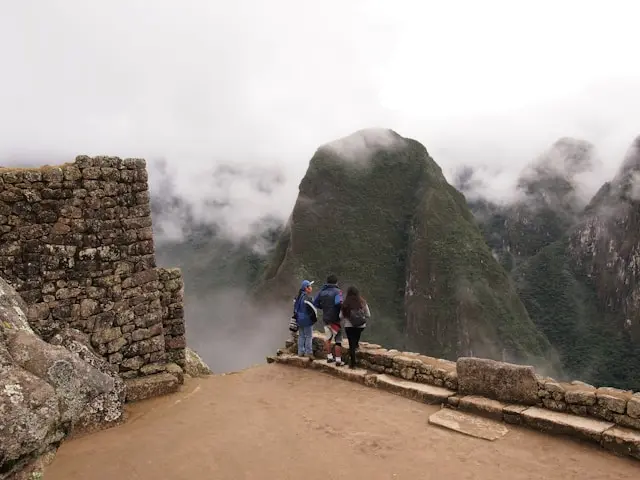
Image
Which-Machu-Picchu-Circuit-Is-Best

Which Machu Picchu Circuit Is Best for You?

First time in Machu Picchu? Go with Circuit 2.
It’s the most balanced option not too long, not too steep, and it covers the key areas you’ve probably heard about: the temples, the main plaza, and that classic viewpoint. If you're not sure where to start, this one won’t let you down.

Looking for unforgettable views? Circuit 1 or Machu Picchu Mountain is your path.
Circuit 1 includes panoramic routes with wide, open landscapes perfect if you want to take in the site from a distance. And if you're up for a hike, Machu Picchu Mountain gives you some of the most incredible views over the whole valley. It's not easy, but the scenery at the top is something you'll remember for years.

In it for the challenge? Try Circuit 3 with Huayna Picchu.
This one’s for people who like to earn their view. The hike up Huayna Picchu is steep and narrow, but it rewards you with dramatic angles and a unique sense of perspective. Add the Great Cavern to the route if you want something even more off the radar.

Prefer something short and easy? Stick with Circuit 3 or Huchuy Picchu.
Not every visit has to be intense. Huchuy Picchu is a gentle climb to a quieter viewpoint a nice alternative if you want the experience without pushing too hard. And some parts of Circuit 3 give you a good sense of the site without the effort of the bigger climbs.

Frequently asked questions about Machu Picchu circuits

Choosing between the different Machu Picchu circuits can be a bit overwhelming, especially if it’s your first time visiting. To help you plan with more confidence, here are some of the most common questions travelers ask answered in a simple way so you know what to expect before you arrive.

Which of the Machu Picchu circuits is best for first-time visitors?

Honestly, Circuit 2 is a safe and balanced choice. You get temples, plazas, and great views kind of a bit of everything. If it’s your first time and you don’t want to overthink it, that one covers the essentials.

Can I do more than one circuit on the same day?

Nope that’s one of the strict rules. One ticket gives you access to just one circuit and at a specific time. If you're hoping to explore more than one of the Machu Picchu circuits, you’ll need to buy a separate ticket.

Where can I get the classic postcard view of Machu Picchu?

That iconic view you’ve probably seen online? You’ll catch it best on Circuit 2-A or 1-B. Those routes go through the upper terraces, which open up to the entire citadel. It's one of the highlights of the circuits for photographers.

Are all the Machu Picchu circuits difficult to hike?

Not at all. Some are more demanding, like the hike to Huayna Picchu in Circuit 3. But others, like Route 1-B or 2-B, are much gentler and better suited for travelers who want the experience without the workout.

Do I really need a guide to explore the circuits?

Technically, you can go without one. But a guide gives you way more context stories, history, even small details you’d probably miss otherwise. Especially if you're choosing one of the more in-depth Machu Picchu circuits, it’s worth it.

Final Thoughts

Machu Picchu isn’t just a place it’s an experience. It’s living history, Andean energy, and a tribute to our ancestors’ brilliance. Walking through its terraces, temples, and trails isn’t just tourism it’s a soulful journey.

Understanding the Machu Picchu circuits lets you enjoy the site your way whether you’re chasing landscapes, immersing yourself in sacred spaces, or soaking in the mystical vibe.

Plan ahead, study your routes, and consider the weather. Get ready to walk, to climb, and to pause often in awe. Bring the right clothes, water, sunscreen, and above all, a mindset of respect and wonder.

Because yes, even if you've seen a thousand photos, being there changes everything.

So... which circuit will you choose?

Your journey to Machu Picchu starts now.

Show in Travel Guide (Home)
No
Subscribe to Machu Picchu