Planning an expedition to the world’s most famous Inca citadel requires precise knowledge of the Andean climate. Because the ruins are perched at 2,430 meters (7,970 feet) above sea level in a high- altitude cloud forest where the Andes mountains meet the Amazon basin the weather on machu picchu peru is highly dynamic and unpredictable.
Unlike traditional destinations with four distinct seasons, the weather on machu picchu operates strictly on a two-season cycle: dry and rainy. Knowing the exact temperature swings, humidity levels, and cloud cover patterns will dictate what gear you pack, how you photograph the ruins, and ultimately, which month you choose to travel.
Dry Season vs Rainy Season Temperature and Cloud Cover Patterns
The unique microclimate of the historic sanctuary means temperatures remain surprisingly consistent year-round. However, the contrast in precipitation completely transforms the landscape. Let’s break down the two dominant climate patterns that govern the region.
Sunlight and Morning Mist Expectations During the Andean Dry Season
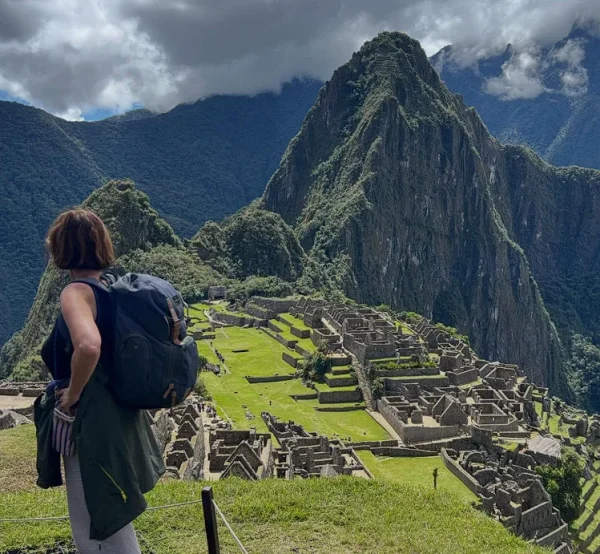
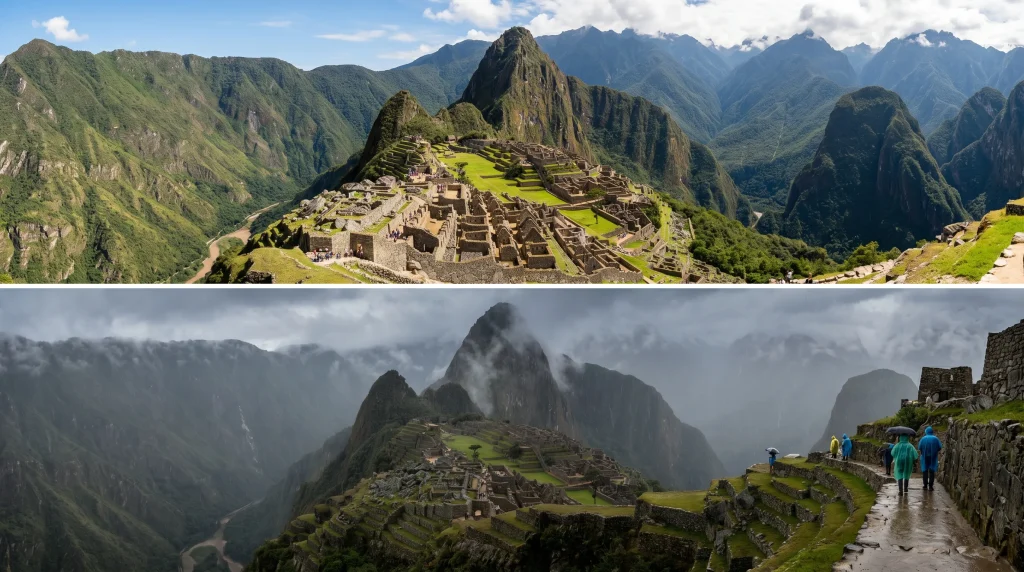
The dry season spans from May through October. During these months, the weather on machu picchu is renowned for bright, intense sunshine and clear, deep-blue skies. However, because it is a cloud forest, early mornings are almost always covered in a thick, atmospheric white mist that rolls through the peaks. This mist typically burns off between 8:30 AM and 9:30 AM as the intense high-altitude sun breaks through.
Nights and early mornings are freezing, often dropping to 6°C – 8°C (43°F – 46°F), while midday temperatures peak comfortably around 21°C (70°F). Due to the altitude and lack of cloud cover, the UV index is extreme, making severe sunburn a real risk even on cool days.
Rainfall Levels and Humidity During the Historic Sanctuary Wet Season
From November through April, the wet season commands the landscape. The weather on machu picchu peru becomes highly humid, with the region receiving up to 2,000 millimeters (about 80 inches) of rain annually. Showers are usually heavy, intense afternoon downpours rather than all-day drizzle.
February is the absolute peak of the wet season, which is exactly why authorities close the classic Inca Trail for the entire month for maintenance and safety. The upside to the rain is that temperatures are slightly warmer, there are fewer tourist crowds, and the surrounding jungle bursts into a spectacular, vibrant emerald green.
Month by Month Temperature Variations at the Inca Citadel
To master your itinerary, you need hard data. This comprehensive table breaks down the weather on machu picchu peru month by month, detailing temperatures, rainfall, crowd levels, and what you must wear to stay comfortable.
| Month | Avg. Temp (°C) | Rainfall & Climate | Tourist Crowds | Essential Gear Recommendation |
|---|---|---|---|---|
| January | 13°C – 21°C | High Rain (140mm) | Low | Heavy-duty Gore-Tex jacket, waterproof trekking boots, and dry bags. |
| February | 13°C – 21°C | Max Rain (150mm+) | Lowest | Sturdy umbrellas, gaiters, and high-traction footwear (Inca Trail closed). |
| March & April | 12°C – 22°C | Decreasing Rain | Medium | Breathable waterproof shells and strong insect repellent (high bug season). |
| May & June | 9°C – 21°C | Very Dry (15mm) | High | Warm fleece jackets for 5:00 AM starts, wide-brimmed hats, and sunglasses. |
| July & August | 8°C – 21°C | Peak Dry (10mm) | Maximum | Thermal base layers for freezing nights, SPF 50+ sunscreen, and lip balm. |
| September & Oct | 10°C – 22°C | Occasional Showers | Medium | Lightweight, packable rain ponchos and versatile zip-off hiking pants. |
| November & Dec | 11°C – 22°C | Increasing Rain | Medium-High | Waterproof backpack covers and quick-dry synthetic clothing (no cotton). |
Transition Months and What to Wear for Altitude Climate Changes
The “shoulder seasons” of April/May and September/October are highly favored by expert trekkers and photographers. During these months, the weather on machu picchu presents a mix of both extremes: you might hike in a crisp, sunny morning, experience a sudden afternoon downpour, and end the day with a clear sunset.
To survive these rapid altitude climate changes, you must master the “layering system.” Start with a synthetic, moisture-wicking t-shirt, add a micro-fleece for the early morning chill, and always keep a lightweight, waterproof shell at the top of your daypack to deploy quickly when the clouds break.
Clarifying the Weather on Machu Picchu Base Antarctica
It is a very common point of confusion for online searchers analyzing climate charts: there is a completely different location that officially shares the name of the Inca citadel. If you are researching the weather on machu picchu base antarctica, you are pulling meteorological data for the Peruvian scientific research station (Estación Científica Antártica Machu Picchu) located on King George Island in Admiralty Bay.
The Extreme Climate of the Peruvian Scientific Research Station
Unlike the tropical cloud forest of Cusco, the weather on machu picchu base antarctica is strictly polar and unforgiving. Temperatures here frequently plummet to -20°C (-4°F) or lower during the winter, characterized by violent blizzard winds, thick sea ice, and relentless snowfall. The station is engineered to withstand extreme isolation and freezing conditions, operating in a completely different hemisphere and climate zone than the archaeological ruins.
Why Researchers Track the Weather on Machu Picchu Base Antarctica in January
Because of the lethal winter conditions, the Antarctic base is primarily operational only during the brief Austral summer. This is exactly why meteorologists and supply chains closely monitor the weather on machu picchu base antarctica in january.
During January, temperatures occasionally rise just above freezing (around 1°C to 3°C). This minor thaw melts enough sea ice to allow the Peruvian Navy’s oceanographic vessels to safely resupply the base. It gives scientists a crucial, narrow window to conduct vital climatological, biological, and environmental research before the ocean freezes over again and seals the base off from the rest of the world.
Frequently Asked Questions About Machu Picchu Weather
The best months to experience the ideal weather on machu picchu are May, September, and October. These “shoulder” months offer a perfect balance: the heavy summer rains have stopped, the landscapes are still incredibly green, and you avoid the massive tourist crowds and freezing morning temperatures of the peak dry season (July and August).
Yes, especially during the early mornings and nights of the dry season (June to August). While daytime temperatures can reach a comfortable 21°C (70°F) under the intense Andean sun, the early morning hours before sunrise can drop to 6°C (43°F). Packing warm layers is essential to handle the dynamic weather on machu picchu peru.
No. During the wet season (December to March), the weather on machu picchu peru usually follows a predictable pattern: clear or slightly misty mornings followed by heavy, intense downpours in the mid-to-late afternoon. Continuous, all-day torrential rain is rare, meaning you can still enjoy exploring the ruins perfectly if you book an early morning entrance ticket.
<p> If you see negative temperatures and blizzard conditions on your smartphone weather app, you are likely looking at the <strong>weather on machu picchu base antarctica</strong>. This is a Peruvian scientific research station located near the South Pole, which shares the same name but has a completely different polar climate. Always ensure your app is set specifically to “Machu Picchu, Cusco, Peru.” </p>
The classic 4-day Inca Trail is open for most of the rainy season (November, December, January, and March), but it is strictly closed for the entire month of February. This mandatory closure is for trail maintenance and safety precautions due to the risk of landslides caused by the peak rainfall of the weather on machu picchu peru